LERMA CATFISH
Ictalurus dugesii (Bean 1880)
Identification: The Lerma Catfish has 11-13 short rakers on the 1st gill arch, and usually 9-10 pectoral fin rays and 20-27 anal rays. The length of the dorsal spine is shorter or equal to the fleshy interorbital distance. There are 5-14 large serrae on pectoral spine of juvenile. The supraoccipital spine is not in contact with the supraneural.
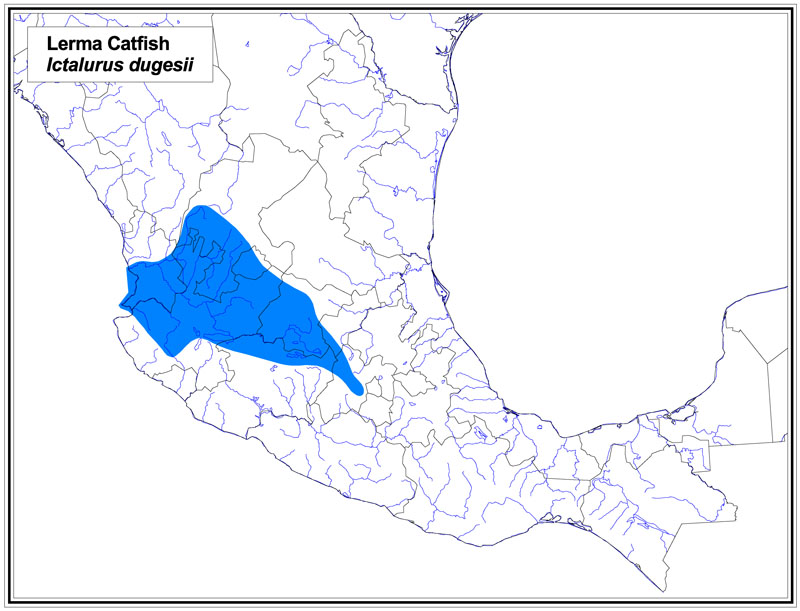
Range: The Lerma Catfish occurs in the Rio Lerma and Rio Ameca drainages on the Pacific Slope of Mexico.
Habitat: The Lerma Catfish lives in clear to turbid, quiet pools over rock, sand or mud in creeks and small to medium-sized rivers; reservoirs. Often found near vegetation.
Similar species: The Headwater Catfish, I. lupus, has 13-17 long rakers on the 1st gill arch. The Yaqui Catfish, I. pricei, has 16-24 rakers on the 1st gill arch and usually 11 pectoral fin rays. The Rio Verde Catfish, I. mexicanus, has the dorsal spine longer than the fleshy interorbital distance and 2-3 very small serrae on the pectoral spine of the juvenile. The Channel Catfish, I. punctatus, has 26-32 anal rays and the supraoccipital spine in contact with the supraneural.