Florida Museum of Natural History
logo

Introducing Environmental Archaeology
EA History
Staff
Staff Publications
EA In The News
EA Program Policies
EA Comparative Databases

EA Program Research:

Donate to Environmental Archaeology


What is Environmental Archaeology?

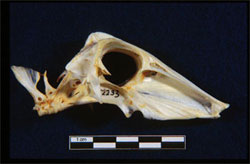
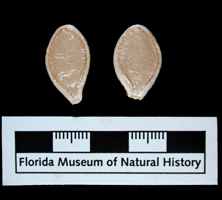
Environmental archaeology is the study of past human interactions with the natural world-a world that encompasses plants, animals, and landscape. Environmental archaeology researchers attempt to reconstruct not only the ancient environs associated with archaeological sites, but also the use of those environs by people, the impact people had on the world around them, and the way ancient peoples perceived their surroundings and the plants and animals on which they relied. Environmental archaeology is traditionally divided into three subfields, including zooarchaeology (the study of animal remains), archaeobotany (the study of plant remains) and geoarchaeology (the study of the abiotic landscape). Zooarchaeologists study the skeletons of vertebrate and invertebrate animals, including both the large animals (macrofauna) and the very small animals (microfauna including anything from rodents to shrimp or foraminifera). Archaeobotanists study plant remains that are preserved at archaeological sites including macroremains such as wood, seeds, nuts, etc. Because these are fragile, they are only preserved in special conditions (dessicated, charred, frozen, waterlogged, or preserved as impressions in baked clay or daub). Archaeobotanists also study microremains including pollen, phytoliths, and spores, often found in the soils, vessel residues, or stable waterbodies around archaeological sites. Geoarchaeologists study a wide range of data, including everything from global climate, regional distribution of resources like stone for tools or clay for pots, local geomorphology or topography, and the clues that soil can provide in studies of ancient land-use. All environmental archaeologists, regardless of speciality, also often rely on biomolecular sciences for their research, studying DNA, stable isotopes, or heavy metals to reveal even more detail about ancient environments.
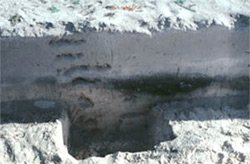
Here at the FLMNH Environmental Archaeology Program, we have specialists in each of the major subfields, and each specialist has particular expertise in one or more facet of these subfields. We specialize therefore in the zooarchaeology of macro- and microfauna, both vertebrate and invertebrate, including research at the biomolecular level; in macrobotanical analysis particularly of charred and waterlogged plant remains and woods; and in archaeopedology, the study of ancient soils from archaeological landscapes.


THE FLMNH ENVIRONMENTAL ARCHAEOLOGY PROGRAM COLLECTIONS

The Environmental Archaeology (EA) Program collections include modern comparative and archaeological specimens of zoological, botanical, and pedological materials. The collections are strongest in zoological comparative and archaeological specimens as this was the original focus of the Program, but we continue to add holdings in both archaeobotanical/macrobotanical comparative, and archaeopedological and modern soils. Our Environmental Archaeology collections are integrated, combining both comparative and archaeological materials, and are one of only a few such collections in the United States or the world 1 . Our osteological fish comparative collection is the fifth largest in North America just behind the National Museum's 2 . The region of our greatest strength is the southeastern United States and the Caribbean. Our comparative collections from northwestern South America and Mesoamerica are not complete in range and taxonomic coverage, but are expanding due to active research efforts in those areas.

Our modern comparative materials include a total of approximately 9,200 zoological comparative specimens of invertebrate and vertebrate skeletal elements. For most of these, our database includes basic weights and measures of the living organism and its skeletal parts. These specimens were collected with the ultimate goal of complete coverage of the taxonomic diversity of our region of study, but also include multiple specimens of some taxa varying by age, sex, and individual morphology. Our botanical comparative collection is comprised of macrobotanical specimens including 300+ seeds (carbonized and unmodified) and 50+ woods of tropical and temperate species. The modern comparative soil collection includes approximately 1,000 catalogued control samples. Every effort is made to include detailed collection data with all modern comparative specimens. Such data include, for example, information on locality, habitat, and season of collection. These data are accumulated for incorporation into historical databases on climate and environmental change. Additionally, detailed analytical data on specimens (including morphometrics, chemical analyses, etc.) are also collected in many cases.

The archaeological materials housed by the EA Program include 609 permanently accessioned zooarchaeological collections (by site) including almost 3 million catalogued specimens. We also house 70 archaeobotanical collections (by site) which we are currently working toward adding to our permanent collections. Twenty of the 70 sites are part of our waterlogged plant remain collections and four of these sites have both a dry and wet component. Archaeopedological collections include 2,650 catalogued soil samples. Accessioned archaeological collections have extensive associated cultural documentation including site reports, analyses, and selected background literature. The EA Program also houses laboratory reference materials and the recently donated Elizabeth Wing book and reprint collection.

The entire modern zoological comparative collection and associated morphometric data, as well as approximately half of the zooarchaeological data, have been entered into the EA Program Access database. The soils and botanical collection data are entered on Excel spreadsheets, by site, and are being added to the master EA Program database in the near future.

The EA program has a total of 3096 square feet of collection and research space (excluding individual offices used by Emery and Walker). This space contains compactorized archaeological collections, modern comparative collections, student and researcher work space, a collection manager office, general laboratory, and computer/archive room. We also have sink and storage space in a shared wet preparation area. Approximately half of the shelf space in the department's Ford Library is occupied by the Wing library.


RESEARCH IN THE FLMNH ENVIRONMENTAL ARCHAEOLOGY PROGRAM

The primary focus of the Environmental Archaeology Program is research into the ancient relationship between people and their environments, including all aspects of that relationship, from the biotic to the abiotic, and from the physical to the symbolic. The Environmental Archaeology Program faculty and staff conduct research primarily in the southeastern United States, the Caribbean, Mexico and Middle America, and northwestern South America. Our research includes the analysis of macrobotanical, archaeopedological, and vertebrate and invertebrate zooarchaeological remains, as well as the analysis of modern specimens for comparative and experimental data. Much of this research is conducted in collaboration with archaeologists and other environmental archaeology specialists from around the world. Our research is funded by grants and contracts, and results in publications in peer review journals and leading technical and public formats.

One current mandate of the EA Program is to expand on the existing foundations of excellence in zooarchaeological research and include more emphasis on archaeobotanical and geoarchaeological aspects of environmental archaeology. The integration of these three fields in research, in collections growth, and in the appropriate use of data associated with these fields is essential. This will require work at the levels of research project design, collections acquisition, curation, and data cataloguing.

Since research is our primary focus, it is also imperative that our research goals are given precedence regardless of the format of the research (personal, grant funded, contract, etc.). Regardless of the origin of funds to support our research, or the collaboration that underlies it, in every case our research is within the regional and chronological considerations of the EA team and furthers the research goals of the EA Program either directly or through the accumulation of baseline data to ensure complete regional coverage and the development of foundations for future research in new areas. In view of our collaborative, interdisciplinary, and integrative work, it is essential that we recognize the importance of acquisition of data as well as physical objects and are therefore proactive in creating a policy for EA Program ownership and use of intellectual property based first on UF and FLMNH legal policy, and second on the specific requirements of EA Program research.


EA Program Collections Research
The EA Program emphasizes direct research on the modern and archaeological collections. These collections represent a valuable resource for understanding ancient and modern populations and communities, and are far more than a simple analytical tool. In particular, research by Wing over the past 20 years has emphasized gathering specific specimen and environmental data for all modern comparative specimens acquired by the EA Program. Zooarchaeological data on bone, meat, and body weights has allowed the development of formulae for correctly calculating meat contributions based on the archaeological recovery of bony elements. Likewise, Wing has emphasized the importance of allometry as a metric equivalency between element and body size that can be useful for zooarchaeologists. This study requires detailed osteometrics on specific skeletal elements for certain taxa. Standardized data collection methods and techniques have been developed to ensure that this important information is collected each time a specimen enters the collection.

A second type of EA Program collection-based research is more specifically directed at the development of excellence in basic analytical techniques and tests the efficacy of various archaeological sampling methods and recovery strategies. Fine-gauge sieving has become a standard requirement for zooarchaeological and archaeobotanical analyses, and yet it is still not practiced by all archaeologists. Wing and Quitmyer began generating zooarchaeological data on the utility of this type of sampling years ago and all zooarchaeological analyses in the EA Program continue to gather that data to provide a compelling argument to the archaeologists. As well, over the past decade, Ruhl has compiled archaeobotanical information to evaluate the efficacy of plant recovery strategies at Florida sites by comparing edaphic and other environmental conditions, sample volume, and processing methods with the plant data generated.

A third category of collection-based research carried out in the EA Program lab augments the archaeological studies and also provides data to other disciplines. Scudder's analyzed midden soils have provided archaeologically dated, high-phosphorus samples to soil scientists working on the synthesis and survival of phosphorus compounds in natural soils. On-going research by Quitmyer on invertebrate seasonality through annual collection, sectioning, and isotopic testing of modern marine bivalves. Quitmyer's work with FLMNH scientist Dick Franz's on gopher tortoises of the southeastern US added the Holocene gopher tortoise record that would not otherwise have been available to the paleontologist. The modern zooarchaeological comparative collections also allowed allometric modeling of ancient gopher tortoise body size.


Standards in Archaeological Research Methods
Environmental archaeology is dependent on accurate archaeological sampling and collection procedures. Far too often environmental archaeologists are not involved in research projects at an early enough stage and are asked to analyze samples that are inadequate in many ways. To improve standards in environmental archaeology, it is necessary to improve archaeological procedures, from research design through to final collection stabilization. Whenever possible, the EA Program personnel attempt to be part of the archaeological process from the initial stages, including spending time in the field with the archaeologists at each site. The EA Program has also created a variety of publications over the years that are designed to educate other archaeologists in appropriate environmental archaeology data recovery and stabilization methods.


TEACHING AND THE FLMNH ENVIRONMENTAL ARCHAEOLOGY PROGRAM

The FLMNH is a research department within the University of Florida, but its faculty teaches within the various UF teaching departments as a service to the University. Our missions to interpret our natural and cultural heritage include disseminating that knowledge to the undergraduates and graduate students of UF and other institutions. The Environmental Archaeology Program faculty and staff teach both University of Florida and other students in a variety of ways. Zooarchaeology has been taught in the past by Wing, Walker, and deFrance (Assistant Professor, UF) and will continue to be taught by Emery, Walker, and deFrance on a rotating basis. Emery now also teaches courses on environmental archaeology including a discussion seminar on ancient environmental lessons and soon, a lab course on methods in environmental archaeology.

Drs. Emery and Walker take on graduate students from various UF departments, guide them in their research or incorporate them into their own ongoing research, and act as committee chair or member. They also take on graduate students from other institutions and guided them in their work and act on their committees if requested.

Undergraduates are also welcomed into the EA Program as part of traditional classes, as interns taking independent study classes with EA staff and faculty as Federal College work study, student employees, and as volunteers. These are valuable research opportunities contribute to a broad educational experience.


PUBLIC EDUCATION, EXHIBITS, AND THE FLMNH ENVIRONMENTAL ARCHAEOLOGY PROGRAM

Education is not limited to college students and our role as educators is not bounded by the UF campus. Ancient environments can provide important lessons on appropriate strategies for sustainable living, and part of our role is the dissemination of these lessons to the public. As part of this role we show the collections to visitors and reporters, and participate in high school education through, for example, the future scientist program (Center for Precollegiate Education and Training), the Summer Teachers Program, and the Undergraduate Research Assistant Program. We also assist in the development of exhibits and programs at the Powell Hall Exhibit Center and elsewhere on campus, maintain an active webpage (www.flmnh.ufl.edu/envarch) that incorporates information about environmental archaeology, the EA Program research, and the FLMNH programs, and provide public lectures to local schools and various professional and avocational organizations.


SERVICE AND THE FLMNH ENVIRONMENTAL ARCHAEOLOGY PROGRAM

The Environmental Archaeology Program provides a variety of services to the FLMNH, University of Florida, as well as State, National, and International organizations and research institutions of all types. The primary service categories for our work include Contract services (for governmental research and private organizations and companies), and professional activities (including service to the Museum, academic professional organizations, and non-academic professional organizations).

Contracts have been discussed in terms of their value for Environmental Archaeology Program research and as a source of funding. We take on contracts from County, State, and Federal agencies involved in environmental and archaeological impact assessment as well as private consulting firms, and avocational and private organizations.

The EA Program faculty and staff donate considerable time and effort to various academic professional organizations. Wing organized several conferences and acted in important roles in ICAZ, the Society for Ethnobiology and other environmental archaeology societies. Emery continues this tradition with committee activity with the SAA. Staff members also carry heavy committee responsibilities, and Quitmyer is currently organizing a symposium in archaeomalacology. These activities enhance the visibility of the EA Program and the FLMNH to the academic world and should be encouraged.

1 Statement based on comparative research by Irvy Quitmyer 2002
2 Poss and Collette 1995