Abstracts of AES Scientific Papers
|
American Elasmobranch Society 1998 Annual Meeting
Guelph, Ontario, Canada
Editor's Note: The pages which follow list most of the papers presented at the
1998 meetings. Some abstracts were communicated after the initial deadline and have not
yet been added to this list. Certain special characters transmitted electronically are not
faithfully retained, and those corrections are being made. All corrections should be in
place by the end of September. Constructive critique is welcomed. (JCC)
ABSTRACTS - Part 2: Neer through Yano
Neer, Julie A. and Cailliet, Gregor M.
Aspects of the life history of the Pacific electric ray, Torpedo californica
(Ayres), in central and southern California
Pacific electric rays were collected from central and southern California from July
1994 through January 1996 for an age and growth, reproduction and demography study.
Vertebral centra were used for ageing. The maximum age estimate from vertebral centra was
16 years. The von Bertalanffy growth model provided the best fit to the size at age
estimate data, predicting an asymptotic total length (TL) of 1372 mm for females and 921
mm for males. Estimated size (and age) at sexual maturity is 600 mm TL (6 years) for males
and 840 mm TL (11 years) in females. Pacific electric rays have a low fecundity of
approximately 17 young per litter. Time of partuition could not be determined.
Instantaneous mortality estimates (z) ranged from 0.048 to 0.277, depending on the
longevity estimates used. Best demographic estimates indicate that the Pacific electric
ray population is at or slightly exceeding a stable equilibrium with a generation time of
12.7 to 14.7 years.
New, J.G.
Comparative Anatomy of the Elasmobranch Cerebellum: Theme and Variations of a
Sensorimotor Interface
The cerebellum of elasmobranch fishes demonstrates a wide range of variation in size
and complexity across taxa. Previous studies have demonstrated that the cerebellum of
squaliform sharks is relatively simple, with a single smooth corpus, whereas that of
galeomorph sharks is relatively much larger and multilobate, with numerous sulci in each
lobe. The majority of previous studies have focussed on those taxa possessing smaller and
simpler cerebelli. The purpose of this paper is to examine in detail the anatomy of the
cerebellum of carcharhiniform sharks, particularly Carcharhinus limbatus and Spyrna lewini
and compare the structure and cytoarchitecture with those previously described in
elasmobranchs with smaller and simpler cerebellar structures. Models of cerebellar
function and sensorimotor integration in other vertebrates will be compared with what is
known of the physiology and role of the cerebellum in elasmobranchs to generate hypotheses
explaining the wide variety of cerebellar morphologies in elasmobranchs.
Pratt, H.L. Jr. and J.C. Carrier
The Reproductive Behavior of Elasmobranchs.
The study of elasmobranch reproductive behavior, a relatively new endeavor, has emerged
from four overlapping areas: inferences from fresh caught animals, captive observations,
underwater and field observations of live animals, and laboratory studies of reproductive
structure and function. Several common behaviors have been described from various species
which include: sexual segregation, courtship behavior and copulation. Sexual segregation
is the seasonal aggregating behavior common to many elasmobranch species such as: Squalus
acanthias, Sphyrna lewini, and Prionace glauca. Courtship behavior has been
inferred for: Carcharhinus plumbeus, C. limbatus, P. glauca, Odontaspis taurus,
Dasyatis centroura, D. sabina, and others through the appearance of tooth cuts on the
female's body and noted in more detail with underwater observations on C.
melanopterus, Trianodon obesus, Ginglymostoma cirratum, among others. Copulation has
been directly observed in captive settings in: Scyliorhinus canicula, S. torazame, T.
obesus, Aetobatus narinari, Rhinoptera javanica, Raja eglanteria, and Heterodontus
francisci, and in the wild for three species of urolophids, and for T. obesus,
and G. cirratum. Ongoing studies in G. cirratum are continuing with
research into paternity, sperm competition and social structure by characterizing members
of the population through diver identified tagging, acoustic telemetry, and DNA
fingerprinting of wild animals. Two wild, freshly-mated females are captured annually for
laboratory observations on gestation and associated changes in reproductive steroid
hormones.
Robinson, Michael P. and Motta, Philip J.
The effects of scale on the feeding kinematics of the nurse shark, Ginglymostoma
cirratum.
Successful inertial suction feeding depends, in part, on the speed of the feeding
sequence. One variable potentially important to the speed of this behavior is the size of
the animal. The effects of scale on the muscular dynamics of aquatic vertebrates are still
uncertain. We present data on the scaling of the prey capture kinematics of the nurse
shark, Ginglymostoma cirratum, an inertial suction feeder. Morphometrics of the
head and feeding apparatus were analyzed in twelve specimens ranging from 71 to 244 cm TL.
These data indicated isometric growth of the feeding apparatus. The kinematics of prey
capture in another twelve specimens (33 to 268 cm) were recorded with high speed video and
subsequently analyzed. The maximal excursions of angular variables remained constant
through ontogeny, while the maxima of the linear excursions increased. The time required
to reach the maximum excursion of the kinematic variables also increased with increasing
animal size. The slopes of the log-transformed data were not significantly different from
0.333, thus these data are consistent with a model of muscular scaling initially proposed
for largemouth bass by Richard and Wainwright (1995). This pattern of scaling does not
appear to apply to sharks in general.
Robinson, Michael P.
Kinematics of shark pectoral fin movements and their implications for lift-production.
Elasmobranchs, negatively buoyant animals, must produce dynamic lift to avoid sinking.
Current models of shark locomotion assume that lift is produced posteriorly by the
heterocercal caudal fin and anteriorly by the pectoral fins and head. These two components
of lift produce torques at the center of mass that negate one another. All models have
assumed that the pectoral fins are static during swimming. Using a dual video camera
system I recorded spiny dogfish, {i/Squalus acanthias}, swimming in a large flume. Marks
placed on the fins divided them into separate segments. Three-dimensional kinematic
analyses of these individual segments of the fins and head of the shark demonstrated
manipulation of the pectoral fins by the sharks during swimming. The angle of the pectoral
fin was modified during steady swimming and was correlated with the position of the caudal
fin during its beat. An index of lift was calculated for each fraction of the pectoral fin
and head. The head appears to produce significantly more lift during steady swimming and
while the animal is ascending in the water column. The negative lift produced by the
pectoral fins appears to be important in angling the animal down when it begins a descent.
Schulze, Margo B., Brewster-Geisz, Karyl, and Lent, Rebecca
Atlantic shark management update: developing a combined fishery management plan for
Atlantic sharks, tunas, and swordfish
The Highly Migratory Species (HMS) Management Division of the National Marine Fisheries
Service (NMFS) is responsible for management of Atlantic tunas, swordfish, billfish and
sharks. Thirty-nine species of Atlantic sharks are grouped into 4 management units - large
coastal sharks, pelagic sharks, small coastal sharks, and prohibited species. In the
"Report to Congress: Status of the Fisheries of the United States" (September,
1997), NMFS identified all large coastal sharks and prohibited species as overfished, and
pelagic and small coastal sharks as fully fished. The Magnuson-Stevens Fishery
Conservation and Management Act of 1996, as amended, requires that all species designated
as overfished must have fishery management plans (FMPs) or FMP amendments that include
rebuilding plans submitted for Secretarial review within one year (September, 1998) and
that NMFS establish an advisory panel for each FMP or amendment. The HMS Management
Division is developing a combined HMS plan, with assistance from an HMS Advisory Panel,
which will build on the existing plans for sharks and swordfish and will add a new
management framework for tunas. An FMP amendment for Atlantic billfish will be prepared
separately. An update on the status of the HMS plan will be provided.
Silva, A.A., G. Menezes and J. J. Pereira
A first glance at pelagic shark catches in the Azores.
This paper reports a first attempt to estimate pelagic shark catches in the
northeastern Atlantic Ocean around the Azores. Blue shark (Prionace glauca) and shortfin
mako (Isurus oxyrinchus) commercial catches reported for the Azorean archipelago as well
as non-reported fishing data from logbooks of swordfish longliners operating in the area
are presented for the period 1993-1996. Three major fleet components catching pelagic
sharks are identified according to vessel characteristics and fishing regime: open deck
wooden boats, small covered deck boats (gross tonnage less than 100 tons) and large
covered deck boats (GRT exceeding 100 tons). The latter vessel class lands most of the
catches in Portuguese and Spanish mainland ports, accounting for 86-89% and 71-85% of the
total estimated blue shark and mako catches taken in the Azores during the study period.
Catch rates for blue shark and swordfish exhibit a pronounced seasonal and asynchronic
nature. While the highest catch levels for the former species are obtained in the Spring
(averaging 807 Kg/1000 hooks), the fishing season for the latter targeted species is from
August to February. The implications of this pattern for future management are discussed.
Blue shark bycatch represents a major proportion of the total catches taken by the Azorean
swordfish longline fishery, reaching a minimum and a maximum of 39% and 91% respectively
during October and June. Blue shark catches have been gradually increasing over the period
1993-1996, peaking at an estimated maximum of 2,433 mt in 1996. Shortfin mako catch levels
have increased to an estimated maximum of 76 mt in 1995, followed by a decline to 54 mt in
1996. An observed increase of pelagic shark catch rates over the study period is probably
due to a shift of fishing effort towards pelagic sharks during times of low abundance of
swordfish.
SIMS, DAVID W., and QUAYLE, VICTORIA A.
Selective foraging behaviour of basking sharks on zooplankton in tidal fronts
Individual and grouped basking sharks (Cetorhinus maximus) filter-feeding on
zooplankton at the water's surface were tracked visually together with zooplankton
sampling from their feeding paths. Along tidal slicks they exhibited area-restricted
searching behaviour and actively selected areas containing high densities of large
zooplankton above a threshold level. Basking sharks remained in the most profitable
patches transported by tidal currents for up to 27h and moved between patches over 24-48h
periods. Between years, the location of shark foraging areas changed according to the
effects of prevailing weather conditions on frontal boundary sharpness and the maintenance
of frontal upwellings. Our results show that basking sharks are selective filter-feeders
on specific zooplankton assemblages and therefore useful as biological indicators of
abundance trends in zooplankton species influenced by climatic fluctuations of the North
Atlantic Oscillation (NAO)
Sisneros, Joseph A.
What is the current status of chemical shark repellents?
Efforts by the US Navy to develop a chemical shark repellent during the post W.W.II
years were unsuccessful and later abandoned. Interest in chemical shark repellents was
renewed by the discovery of pardaxin, a natural shark repellent secreted by the Moses sole
(Pardachirus marmoratus). The surfactant-like nature of pardaxin led researchers to
test the shark repellency of various surfactants. The most effective surfactant tested to
date is the alkyl sulfate surfactant sodium dodecyl sulfate (SDS). Swim-through repellency
tests were conducted in a roundabout test tank using swell sharks, Cephaloscyllium
ventriosum, to determine if repellent efficacy of alkyl sulfate surfactants was
affected by carbon chain length, ethylene oxide (EO) groups, and counterions. Results
indicate repellency increases as alkyl chain length increases from octyl to dodecyl,
decreases with the addition of EO groups, and is not affected by counterions. SDS is the
most effective known chemical repellent, but it does not meet the Navys potency
requirement for a classic surrounding-cloud type repellent of 100 parts per billion. Thus,
SDS is only practical as a directional repellent such as in a squirt application. Recent
work on semiochemicals may offer a new prospective direction for the search of a more
effective chemical shark repellent.
Smale, Malcolm J.
A review of South African feeding studies of elasmobranch fishes: Perspectives and
future directions.
A review of the South African literature over the last decade shows that more than 20
papers have been published dealing with elasmobranch feeding, although many were part of
general studies of their biology. They describe the feeding of more than 50 elasmobranch
species based on identification of recently ingested prey. Accurate prey identification
was possible in many studies using digestion-resistant prey hard parts such as cephalopod
beaks and fish otoliths, which allowed more precise understanding of the impact of each
species. The relationship between predator size and prey choice is crucial but was often
not described. Although such studies provide insights into prey taken, on their own they
are poor reflections of the complex interactions between predator and prey over time.
Studies of predator/prey interactions in the wild have been initiated and such studies are
vital to clearer understanding of predation. The large size of most chondrichthyans limits
their suitability in laboratory based experimental studies, but the rapid advances in the
technology of electronic tracking devices is facilitating remote data collection in the
wild, thereby > augmenting direct observations. This promising area of research has the
potential to clarify details of behaviour and feeding ecology that otherwise would be
unobtainable. Keywords: elasmobranchs, feeding, ecology, predation, review
Stevens, J.
Archival tagging of school sharks in southern Australia
School sharks, Galeorhinus galeus, are an important commercial species in the
Australian Southern Shark Fishery. A current project is using archival tags to try and
answer certain questions on vertical distribution, 'onshelf' and 'offshelf' movement
components, Tasman Sea distribution, pupping migrations and pupping areas. A 'dummy'
tagging experiment was carried out to evaluate the suitability of internal versus
externally located tags and between unstreamlined and hydrodynamically shaped external
tags. The overall recapture rate after three years was 15% and although unstreamlined
external tags were returned at a lower rate (11%) than streamlined externals (16%) and
internal tags (19%) these differences were not statistically significant. In November
1997, 30 archival tags were deployed on school sharks in waters off South Australia; these
tags were mounted externally on the first dorsal fin and were semi-streamlined. One tag
was returned after 7 days and another after 23 days. No further returns have been made to
date. Both recaptures showed an interesting diurnal vertical migration between as deep as
500 m during the day to near the surface at night. Geo-positioning from the light data are
discussed. Immediate plans are to release a further batch of fish with internal tags.
Strong, Wesley R.
Elasmobranch behavioral ecology: oxymoron or opportunity?
Behaviorally and ecologically, sharks and their allies exhibit remarkable diversity.
Over the past several decades, Don Nelson and his contemporaries made enormous progress in
the understanding of shark behavior. The vexing task of relating this behavior to species
and community ecology now stands in plain view. The study of behavioral ecology can, in
the broad sense, be construed to include almost anything the animal does within the
context of its environment. As a discipline, however, behavioral ecology has specific
stated goals, principally to understand the evolution of animal behaviors. Sharks in
general are not well suited to these goals. As a result, empirical work is often limited
to descriptions of life history, distribution and abundance and basic investigations of
morphological and behavioral adaptations. Critically assessing how the latter affect
survivorship and fitness is a formidable task, one that largely remains in the domain of
those who study teleosts, birds, etc. Nonetheless, elasmobranchs possess a number of
unique traits. And given their long-held positions as apex predators of the world ocean,
much work remains to be done in the area of predation. Understanding sharks' roles in the
ecosystems they inhabit is central to species management and, ultimately, to the
"holy grail" of successful, system-wide management.
Summers, A.P.
Trabecular prismatic cartilage: a novel solution to strengthening the jaws of a
cartilaginous fish
A synapomorphy of the cartilaginous fishes (Chondrichthyes) is that some, or all, of
the skeleton is composed of calcified cartilage known as prismatic cartilage. The surface
of prismatic cartilage is a mosaic of plates of calcium apatite crystals called tesserae.
These tesserae surround a core of hyaline cartilage much as the rind surrounds the pulpy
fruit of an orange and serve to stiffen the skeletal element. In both jaw cartilage of the
cownose ray, Rhinoptera bonasus, struts of calcification run through the hyaline cartilage
core. Cownose rays feed on mollusks, ophiuroids and other hard prey. Tooth plates of
adults show distinct wear patterns where the prey is usually crushed. A sagittal section
through this 'trabecular cartilage' shows that the struts are positioned so as to prevent
buckling in this area. The common ancestor of cartilaginous and bony fishes is thought to
have had a bony endoskeleton. The lamellar bone of the tesserae and vertebrae of
chondrichthians is evidence that the skeleton has not lost osteogenic potential entirely.
The data presented here indicate that a novel developmental and biochemical process is
also at work in the cartilage. Data from neonate individuals indicates that teh process of
trabeculation is not epigenetic, but rather is part of a fixed developmental pattern. Bone
is typically strengthened through endosteal deposition and trabeculation. In a remarkable
example of convergence, multiple layers of tesserae and strut formation serve the same
purpose in cartilage.
Thom, Tim J., O'Connell, Mark J., Lucas, Martyn C., Joplin, Lynn, and Downie,
Alexander.
Local occurrence of basking sharks (Cetorhinus maximus Gunnerus) in relation to
spatio-temporal patterns of zooplankton abundance
The distribution of basking sharks (Cetorhinus maximus) around the Isle of Arran
in the Clyde sea area on the west coast of Scotland, UK was investigated during July 1997.
A network of shore based volunteers conducted visual searches between 06-00 and 22-00 from
seven vantage points for a total of 1538 hours over 20 days between July 6 and 28. 29
sightings were recorded. A plankton sampling programmewas carried out in the same area and
over the same time period. Themajority of shark sightings occurred in the afternoon and
evening corresponding to an increase in zooplankton abundance during this period. Three
peaks in shark sightings occurred over the study period which followed peaks in
zooplankton abundance with a lag of one to three days. The spatial distribution of shark
sightings was also associated with the distribution of zooplankton in the area. Increases
in the number of sharks occurred when zooplankton dry weights were at the maximum normally
found in the area. This study, has shown, therefore, that fine-scale spatio-temporal
variability in the distribution of basking sharks can be explained in terms of patchiness
in the distribution and abundance of zooplankton.
Thom, Tim J., Hoelzel, A. R., O'Connell, Mark J., and Lucas, Martyn C.
The structure of basking shark Cetorhinus maximus populations in the North-East
Atlantic - development of genetic markers.
Basking shark populations have been subject to exploitation for many years and are
currently considered to be endangered in European waters. However, little is known of
their population structure. In the recent past population structure assessments have been
made on the basis of capture-mark-recapture studies or differentiation of meristic and
morphological characteristics of different stocks. However, for a species such as the
basking shark which are not easy to tag in large numbers and which little is known about
their ecology a new approach is required. Molecular genetic methods are increasingly being
used with success in determining the stock structure of commercially important fish
species in both marine and freshwater environments.In particular, the use of
microsatellite DNA sequences is finding increasing use in fisheries stock assessment. This
poster presents reports on work to develop microsatellite DNA markers for use in assessing
the population structure and migratory behaviour of basking sharks in the north-east
Atlantic.
Tricas, Timothy C.
Neuroecology of elasmobranch fishes: Relating the brain to the real world.
Ethological studies on elasmobranch fishes have attempted to explain the adaptive value
of specific behaviors. For example, laboratory studies have characterized the taxis
responses during orientation to acoustic, olfactory, electric and visual stimuli. These
studies complement field research that describes the motor patterns involved in natural
behaviors such as reproductive interactions and feeding. Although lab and field studies
have provided good descriptions of behavioral motor patterns, relatively little
information is obtained on how sensory and central processing systems initiate and form
these often complex behaviors. The ampullary electrosense of the elasmobranch is presented
as a model system in which the peripheral morphology, neural response properties and
central neuroanatomy can be interpreted in relation to the ecological factors that shape
their behavior. Vector analysis of the peripheral organization of the ampullary canal
system and neural response properties provide useful tools for predicting different
ecological functions for the ampullary clusters. Chronic recording of electrosensory
neurons in the alert swimming animal permit integration of neural activity with motor
behavior. The mechanisms by which sensory input and central processing shape elasmobranch
behavior can be better understood when interpreted in relation to the natural ecology of
each species. KEYWORDS: ampullae of Lorenzini, behavior, electroreception, ethology,
sensory biology
Voegeli, Frederick
Ultrasonic telemetry, tracking and automated monitoring technology.
The tools for remote monitoring of marine animal behaviour have grown significantly in
the last few years. The availability of micro-controllers in smaller low power packages
has enabled the development of more sophisticated ultrasonic transmitters and battery
powered automated monitoring sites. A brief historical perspective is presented leading to
description of new systems that combine archived sensor data with ultrasonic data
download. These systems provide multiple years of data gathering with the ability to
gather the data and reprogram the device without recapture of the animal.
Wetherbee, Bradley, M.
Buoyancy in deep-sea sharks from the Chatham Rise, New Zealand
Although deep-sea sharks approach neutral buoyancy through a large oily liver that
contains low-density lipids such as squalene, there have been few comparisons of buoyancy
within and among species of sharks. Buoyancy and chemical composition of the liver oil of
sharks collected in deep-water trawls from the Chatham Rise, New Zealand were compared.
Although there appears to be strong selection for neutral buoyancy in these sharks,
buoyancy characteristics of sharks varied with species, size, sex and reproductive state.
Livers of smaller sharks contain more squalene and are less dense than livers of larger
sharks. However, livers of larger sharks contain a greater proportion of oil than livers
of smaller sharks, and the whole body of sharks is nearly uniformly neutrally buoyant
regardless of size of shark. Livers of mature male sharks contain more squalene and are
less dense than those of mature females, but the non-liver tissue in females is less dense
than that of males, and the whole bodies of both sexes are equally neutrally buoyant.
Regulation of buoyancy of species of sharks found in shallow water differs considerably
from that of deeper species, and appears to rely more on hydrodynamic lift provided by
lifting surfaces such as fins.
Key words: sharks, buoyancy, liver lipids, deep-sea
Wetherbee, Bradley, M.
Review of rate of consumption, food transit and digestive efficiency in sharks.
Sharks are important apex consumers in the marine environment and quantification of
energy flow through sharks is important for understanding their impact in marine
ecosystems. However, there have been relatively few studies on rates of consumption (daily
ration) in sharks and it is difficult to generalize about the role of sharks in the flow
of energy in an ecosystem. Estimates of the daily ration of sharks generally either
incorporate data on the duration and rate of food emptying from the stomach and field
observations on prey items ingested, or involve bioenergetic models based on a balanced
energy budget. Several factors that may influence rates of consumption are poorly
understood in elasmobranchs. There have been few studies on the efficiency of food
digestion, absorption and conversion to growth, and the passage of food through the
digestive tract, despite the importance of these factors on energy flow through the
trophic level occupied by sharks. This study reviews the current state of knowledge on
rates of consumption, rates of food transit through the stomach and entire digestive
tract, and the efficiency with which ingested food is converted to energy stored as growth
in sharks.
Key words: consumption, rate of food passage, digestive efficiency, sharks
Wilga, C.D. and P. J. Motta
EVOLUTIONARY INNOVATIONS IN THE FEEDING MECHANISM OF ELASMOBRANCHS
A major conclusion from comparative studies of feeding mechanisms in lower vertebrates
is that some of the biomechanical couplings involved in mouth opening have been retained
throughout evolution. However, recent studies of the jaw mechanism indicate that
elasmobranchs differ from other lower vertebrates in that the geniohyoideus coupling is
the primary mechanism for lower jaw depression rather than the rectus cervicus coupling.
In addition, previous studies of the feeding mechanism in lower vertebrates indicate that
structural differences among taxa may arise by the addition of a novel structure or as a
result of modification of the existing musculoskeletal apparatus. Accompanying such
changes, the ancestral motor pattern may be retained or the timing of motor activity may
be altered. Evolutionary innovations in the musculoskeletal apparatus mediating upper jaw
protrusion in elasmobranchs has involved both the addition of a novel feature, the dorsal
preorbitalis coupling, and by the modification of an existing structure, the levator
palatoquadrati coupling, while retaining the ancestral system, the ventral preorbitalis
coupling. These changes in the musculoskeletal apparatus have involved conservation of the
motor pattern in the ancestral mechanism and alteration of the motor pattern in the
modified mechanism.
Wyffels, Jennifer T., Bodine, A. B., Wourms, J. P., Luer, Carl A., and Walsh,
Cathy J.
Ultrastructure of early oogenesis in juvenile Clearnose skates, Raja eglanteria
The ultrastructure of the pre-vitellogenic stages of oogenesis in juvenile Raja
eglanteria are described. Stage 1 comprises a single follicle cell and oocyte. In
stage 2, two follicle cells surround an oocyte that has a thin cytoplasmic shell and a
large germinal vesicle with condensed chromosomes. In stage 3, 6-8 follicle cells adhere
via tight junctions to the oocyte. Both cells lack microvilli. The ooplasm is weakly
eosinophilic and contains occasional lipid droplets, mitochondria, glycogen rosettes and
ribosomes. In stage 4, a monolayer of squamous follicle cells extend flattened processes
that interdigitate and encapsulate the oocyte. Microvilli extend from these processes and
the oocyte into the intercellular space. The cytoplasm contains spherical lipid droplets
surrounded by mitochondria. The germinal vesicle has dispersed chromatin and a single
nucleolus. A monolayer of follicle cells that contain many mitochondria and well developed
golgi complexes invest stage 5 oocytes. The intercellular space is wider and contains
amorphous material. Microvilli, clathrin coated, and non-coated pits occur on the oocyte
surface. The cytoplasm is homogeneous, contains ribosomes, small electron dense particles,
non-membrane bound lipid droplets, and peripheral clusters of mitochondria. Yolk platelets
are absent. The large germinal vesicle contains chromosomes in the lampbrush
configuration. KEYWORDS: ultrastructure, histology, oogenesis, clearnose skate
Yaptinchay, Arnel Andrew S.P., Uy, Roel, and Alava, Moonyeen Nida R.
Catch and Effort Data of Whale Sharks in the Philippines
Abstract: Catch volume and trade of the whale shark fishery for the 1997-1998 season
was monitored by WWF-Philippines and Silliman University. Methods of data collection
include site-visits to coastal villages involved in whale shark and manta fishery, market
surveys, fishers' interviews and daily landing-site enumeration. Eight fishery sites were
identified in the 1997 season, tha major landiong sites of which were in Pamilacan, Bohol
and Talisayan, Misamis Oriental. A fishery site in Sorsogon, Luzon is recently operational
for the 1998 season. Fishery profiles and changes in activity patterns related to whale
shark fishery in these sites are presented. Increasing fishing effort, due to increasing
demand, and decreasing catch per unit effort characterized the fishery. Management
strategies employing Integrated Conservation and Development projects protecting both
whale sharks and the fishing population dependent on them was recommended in the previous
year. This recommendation is being evaluated against a government directive on total ban
on whale shark fishery and trade.
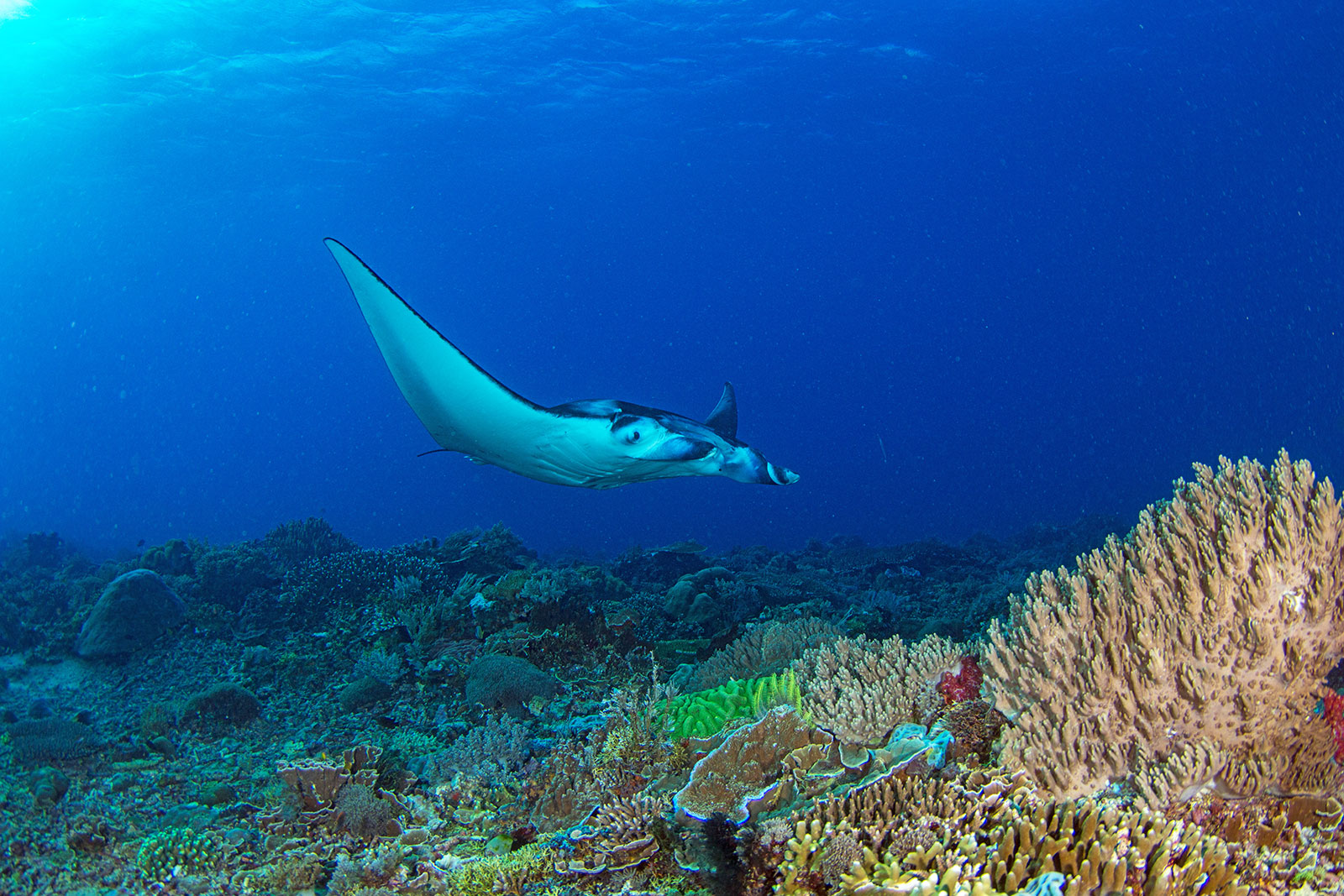
Yano, Kazunari, Sato, Fumihiko, and Takahashi, Tomoko
Observation of the mating behavior of the manta ray, Manta birostris, at the
Ogasawara Islands, Japan.
On 11 July 1997, the mating behavior of wild manta rays, Manta birostris, was
observed while skin diving in Chichijima, the Ogasawara Islands, Japan, and was recorded
with 49 underwater photographs and about 20 minutes of video tape. The female manta ray
involved was estimated to be approximately 5-5.5 m in disc width (DW). The two males
involved were slightly smaller than the female, and were estimated to be 4-4.5 m DW.
Copulating behaviors of the two different males were observed in the present study and
their behaviors were almost the same. The males chased behind the tail of the female for
20-30 minutes. The manta rays swam fast during this chasing phase of their mating
behavior. The males nipped the tip of the left pectoral fin of the female during each
copulation event, both of which occurred within one meter of the surface. The mating
behavior of the manta rays is divided into the following five steps. Male chases behind
the tail of the female, and attacks her several times while chasing her (chasing behavior,
step 1). Male nips the tip of the pectoral fin of the female and then the male moves to
the ventral surface of the female (nipping behavior, step 2). Male inserts a clasper into
the cloaca of the female (copulating behavior, step 3). Male removes the clasper from the
cloaca of the female, but maintains his oral hold of her pectoral fin (post-copulating
behavior, step 4). Male releases the pectoral fin of the female, setting her free
(separating behavior, step 5). The copulation of Manta birostris is of the
abdomen-to-abdomen type.
|
|
|
|