Confirmed Megamouth Shark Sightings
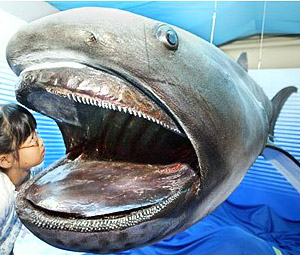 There have been 273 confirmed occurrences of megamouth sharks around the world and we are investigating reports of additional individuals.
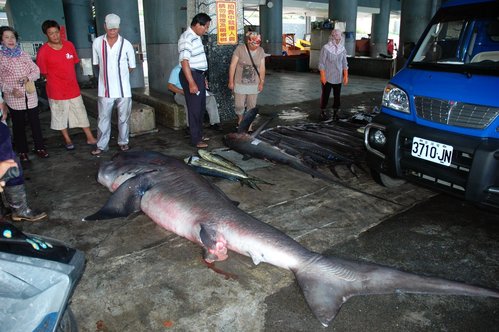
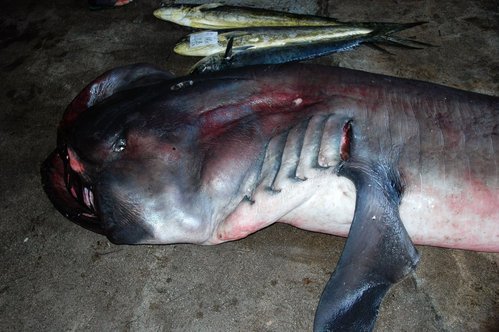
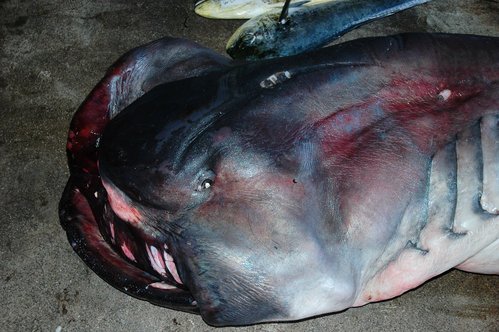
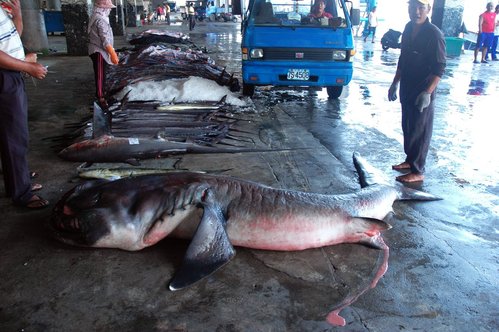
There is a small area in Taiwan where this species is frequently caught as bycatch in commercial drift nets. These localized frequent sightings are likely due to commercial fisheries targeting fish feeding off the same plankton the megamouths are. Research into this phenomenon is ongoing. Outside of this area, the megamouth shark has been knowingly encountered so few times that the scientific community has a list and extensive notes on each shark encountered. The megamouth shark has a rounded snout and a large mouth on its bulbous head, and its body tapers back to a moderate caudal (tail) fin with a heavier top lobe. Dark gray-brown on top and light gray to white below, they are thought to grow to 17 feet long, though possibly larger specimens have been spotted. Read more about the megamouth shark…
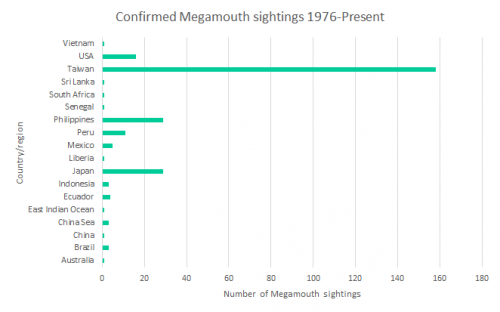
The following sightings are listed by date:
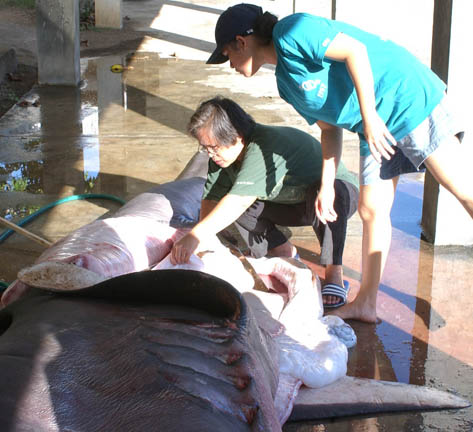
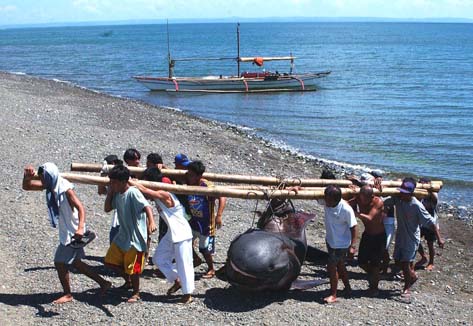
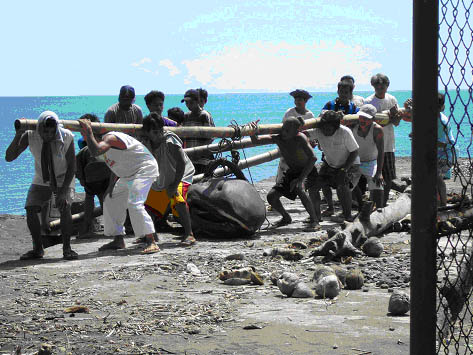
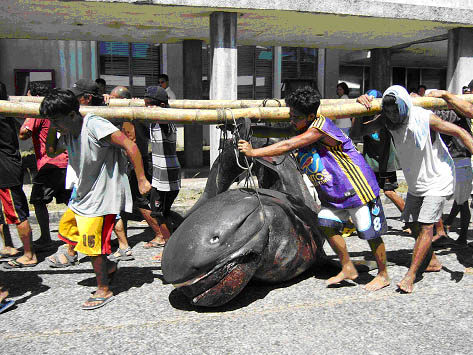
Location: Camiguin, Philippines
Date: July 31 2022
Sex: M
Length: Unknown
Disposition: Shark washed ashore
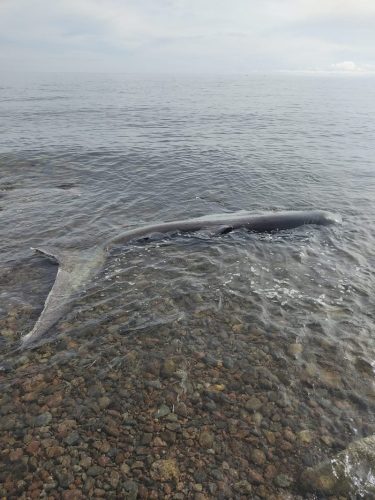
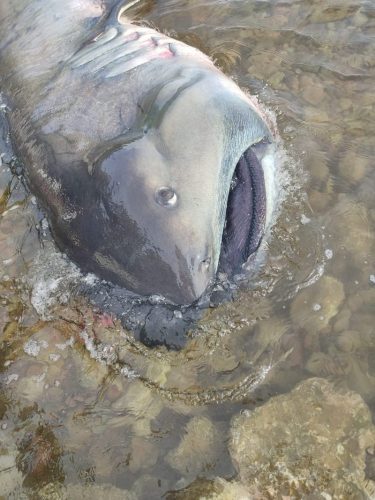
Location: Sorsogon, Philippines
Date: 11 June 2022
Sex: F
Length: ~450 cm
Disposition: Shark washed ashore
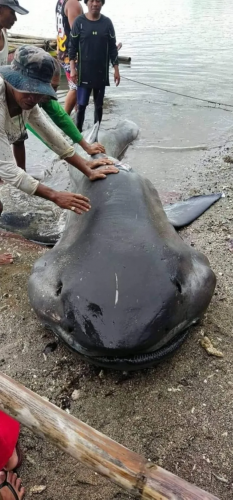
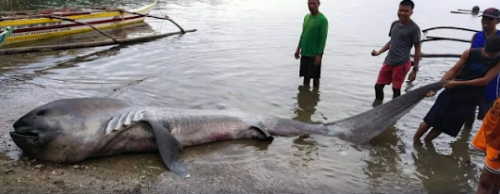
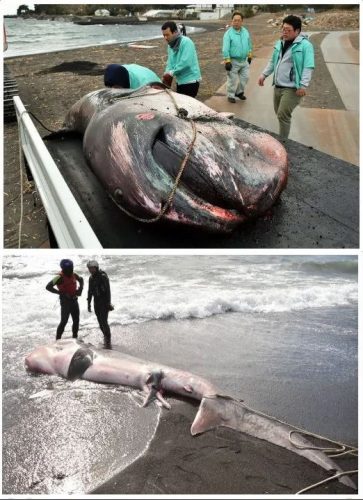
Location: San Roque, Philippines
Date: 29 December 2021
Sex: Male
Length: 500cm
Disposition: Washed ashore dead

Location: Tateyama Bay, Japan
Date: 14 June 2021
Sex: Unknown
Length: Unkown
Disposition: Shark seen by divers.
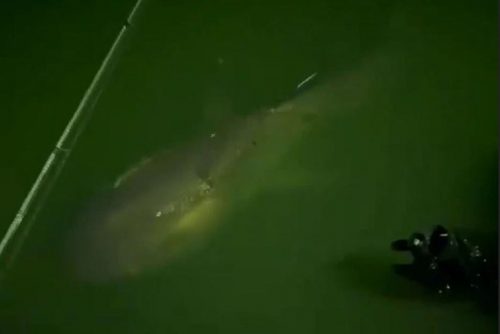
Location: Leyte, Philippines
Date: 28 May 2021
Sex: Unknown
Length: Unkown
Disposition: Shark washed ashore dead.
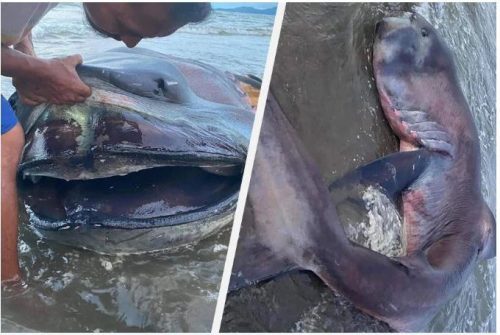
Location: Lianjiang, China
Date: 13 March 2021
Sex: F
Length: 199 cm
Disposition: Shark was caught via commercial fishing boat.
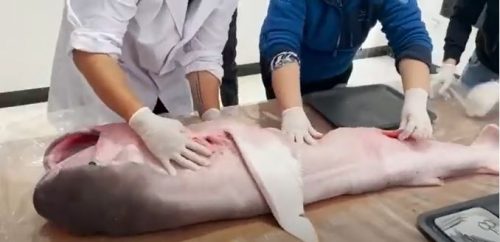
Location: Hualien County, Taiwan
Date: 18 June 2020
Sex: F
Length: 482 cm
Disposition: Shark caught in drift net
Sources:
Yu, Chi-Ju, Shoou-Jeng Joung, Hua-Hsun Hsu, Chia-Yen Lin, Tzu-Chi Hsieh, Kwang-Ming Liu, and Atsuko Yamaguchi. 2021. “Spatial–Temporal Distribution of Megamouth Shark, Megachasma pelagios, Inferred from over 250 Individuals Recorded in the Three Oceans” Animals 11, no. 10: 2947. https://doi.org/10.3390/ani11102947.
Image: Taiwan News
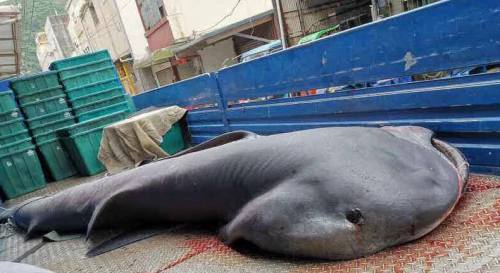
Location: Hualien County, Taiwan
Date: 17 June 2020
Sex: F
Length: 594 cm
Disposition: Shark caught in drift net
Sources:
Yu, Chi-Ju, Shoou-Jeng Joung, Hua-Hsun Hsu, Chia-Yen Lin, Tzu-Chi Hsieh, Kwang-Ming Liu, and Atsuko Yamaguchi. 2021. “Spatial–Temporal Distribution of Megamouth Shark, Megachasma pelagios, Inferred from over 250 Individuals Recorded in the Three Oceans” Animals 11, no. 10: 2947. https://doi.org/10.3390/ani11102947.
Image: Taiwan News
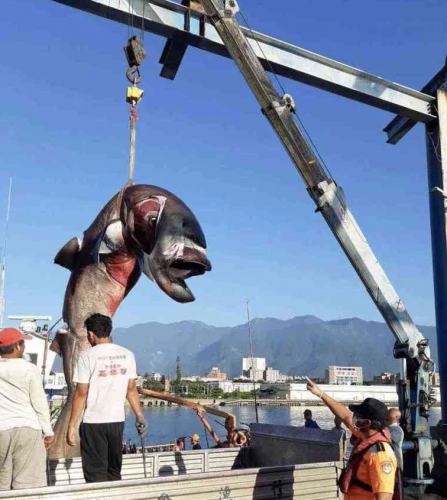
Location: Hualien County, Taiwan
Date: 16 June 2020
Sex: M
Length: 378 cm
Disposition: Shark caught in drift net
Sources:
Yu, Chi-Ju, Shoou-Jeng Joung, Hua-Hsun Hsu, Chia-Yen Lin, Tzu-Chi Hsieh, Kwang-Ming Liu, and Atsuko Yamaguchi. 2021. “Spatial–Temporal Distribution of Megamouth Shark, Megachasma pelagios, Inferred from over 250 Individuals Recorded in the Three Oceans” Animals 11, no. 10: 2947. https://doi.org/10.3390/ani11102947.
Image: The Maritime Executive
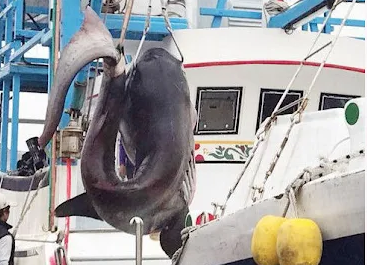
Location: Hualien County, Taiwan
Date: 15 June 2020
Sex: F
Length: 462 cm
Disposition: Shark caught in drift net
Sources:
Yu, Chi-Ju, Shoou-Jeng Joung, Hua-Hsun Hsu, Chia-Yen Lin, Tzu-Chi Hsieh, Kwang-Ming Liu, and Atsuko Yamaguchi. 2021. “Spatial–Temporal Distribution of Megamouth Shark, Megachasma pelagios, Inferred from over 250 Individuals Recorded in the Three Oceans” Animals 11, no. 10: 2947. https://doi.org/10.3390/ani11102947.
Image: Taiwan News
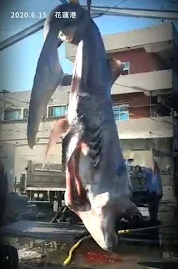
Location: Tateyama, Japan
Date: 11 June 2020
Sex: F
Length: ~600 cm
Disposition: Shark was caught via set net
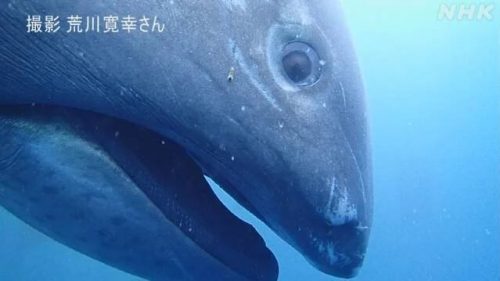
Location: Buenavista, Philippines
Date: 06 June 2020
Sex: Unknown
Length: ~600 cm
Disposition: Shark found stranded
Source: ABS-CBN News
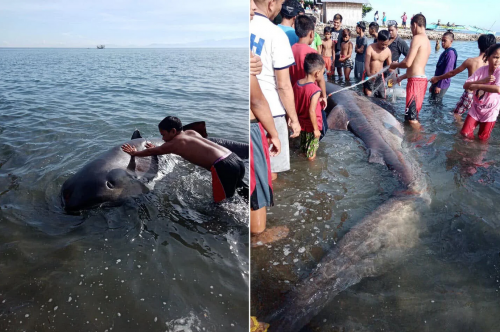
Location: Liberia
Date: 26 March 2020
Sex: M
Length: 380 cm
Disposition: Shark was caught via gill net
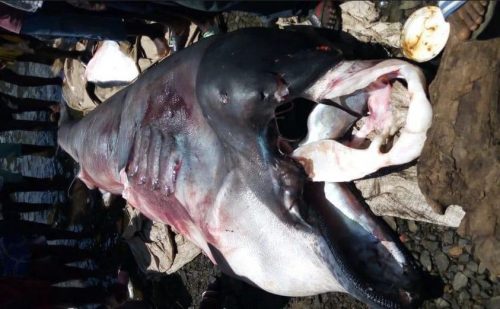
Location: San Diego, USA
Date: 23 October 2019
Sex: Unkown
Length: ~450 cm
Disposition: Shark was sighted and not caught.
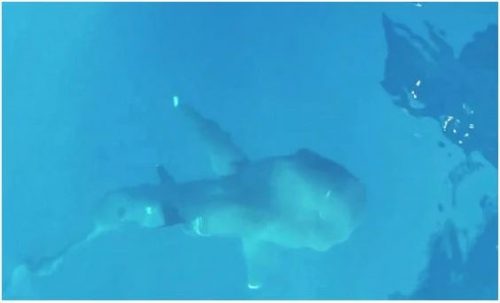
Location: Paita, Peru
Date: 16 October 2019
Sex: M
Length: >400 cm
Disposition: Shark was caught via gill net
Source: Acuña-Perales, N., Córdova-Zavaleta, F., Alfaro-Shigueto, J. and Mangel, J.C., 2021. First records of the megamouth shark Megachasma pelagios (Taylor, Compagno & Struhsaker, 1983) as bycatch in Peruvian small-scale net fisheries. Marine Biodiversity Records, 14(1), pp.1-7.
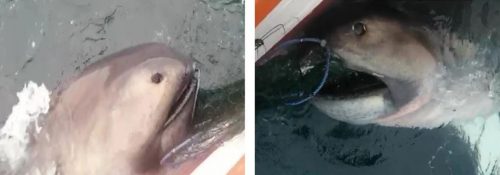
Location: Paita, Peru
Date: 14 October 2019
Sex: M
Length: >400 cm
Disposition: Shark was caught via gill net
Source: Acuña-Perales, N., Córdova-Zavaleta, F., Alfaro-Shigueto, J. and Mangel, J.C., 2021. First records of the megamouth shark Megachasma pelagios (Taylor, Compagno & Struhsaker, 1983) as bycatch in Peruvian small-scale net fisheries. Marine Biodiversity Records, 14(1), pp.1-7.
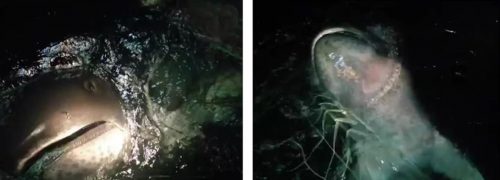
Location: San Jose, Peru
Date: 7 August 2019
Sex: M
Length: 400 cm
Disposition: Shark was caught via gill net.
Source: Acuña-Perales, N., Córdova-Zavaleta, F., Alfaro-Shigueto, J. and Mangel, J.C., 2021. First records of the megamouth shark Megachasma pelagios (Taylor, Compagno & Struhsaker, 1983) as bycatch in Peruvian small-scale net fisheries. Marine Biodiversity Records, 14(1), pp.1-7.
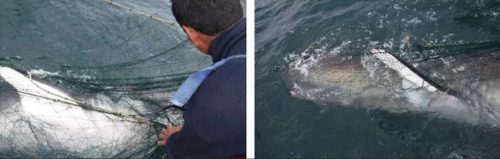
Location: San Jose, Peru
Date: 4 August 2019
Sex: M
Length: 375 cm
Disposition: Shark was caught via gill net.
Source: Acuña-Perales, N., Córdova-Zavaleta, F., Alfaro-Shigueto, J. and Mangel, J.C., 2021. First records of the megamouth shark Megachasma pelagios (Taylor, Compagno & Struhsaker, 1983) as bycatch in Peruvian small-scale net fisheries. Marine Biodiversity Records, 14(1), pp.1-7.
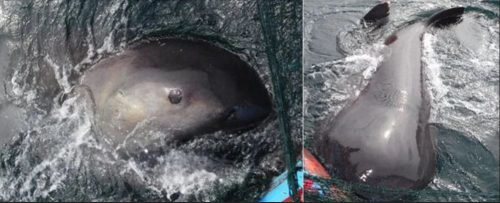
Location: Baloy City Cagayan de Oro, Philippines
Date: 05 July 2019
Sex: Unknown
Length: ~300 cm
Disposition: Shark caught in fishing net
Source: Animal Scene
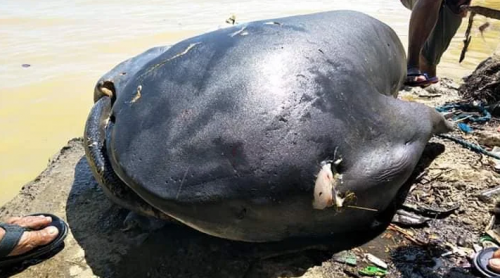
Location: Slaverry, Peru
Date: 24 June 2019
Sex: Unkown
Length: 215 cm
Disposition: Shark was caught via gill net.
Source: Acuña-Perales, N., Córdova-Zavaleta, F., Alfaro-Shigueto, J. and Mangel, J.C., 2021. First records of the megamouth shark Megachasma pelagios (Taylor, Compagno & Struhsaker, 1983) as bycatch in Peruvian small-scale net fisheries. Marine Biodiversity Records, 14(1), pp.1-7.
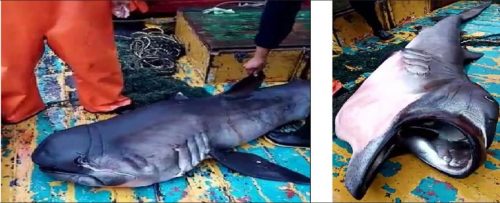
Location: Lambayeque, Peru
Date: 12 June 2019
Sex: F
Length: >300 cm
Disposition: This shark was caught via a seine net.
Source: Kelez, S., Napuri, R.M., Pfennig, A.M., Martinez, O.C. and Carrasco, A.T., 2020. First reports of Megamouth Shark, Megachasma pelagios Taylor, Compagno & Struhsaker, 1983 (Lamniformes, Megachasmidae). Peru. Check List, 16(5), pp.1361-1367.
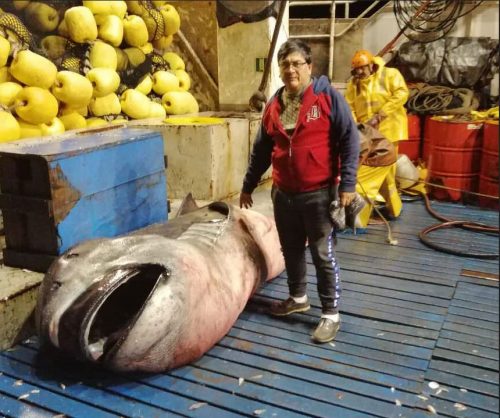
Location: Hualien County, Taiwan
Date: 06 May 2019
Sex: F
Length: 350 cm
Disposition: Unknown
Source: Taiwan English News
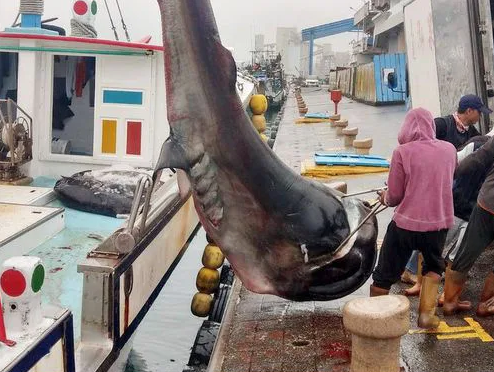
Location: Hualien County, Taiwan
Date: 06 May 2019
Sex: M
Length: 495 cm
Disposition: Shark caught in drift net
Source: The Maritime Executive
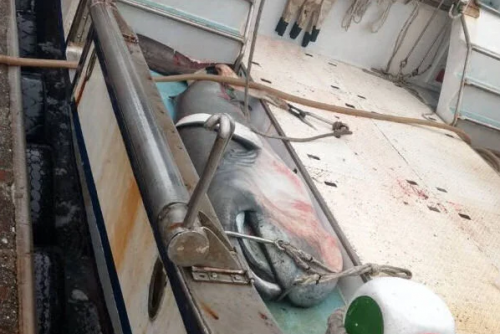
Location: San Jose de Oro, Philippines
Date: 20 April 2019
Sex: Unknown
Length: ~480 cm
Disposition: Shark found stranded
Source: Palawan Daily News
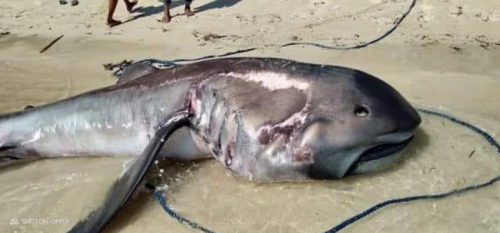
Location: Mancora District, Peru
Date: 3 Mar 2019
Sex: unknown
Length: 470 cm
Disposition: This shark was caught via a gill net.
Source: Acuña-Perales, N., Córdova-Zavaleta, F., Alfaro-Shigueto, J. and Mangel, J.C., 2021. First records of the megamouth shark Megachasma pelagios (Taylor, Compagno & Struhsaker, 1983) as bycatch in Peruvian small-scale net fisheries. Marine Biodiversity Records, 14(1), pp.1-7.
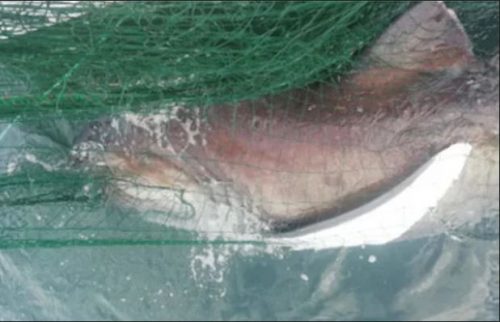
Location: Numazu, Japan
Date: 28 Jan 2019
Sex: M
Length: ~400
Disposition: This shark was found stranded.
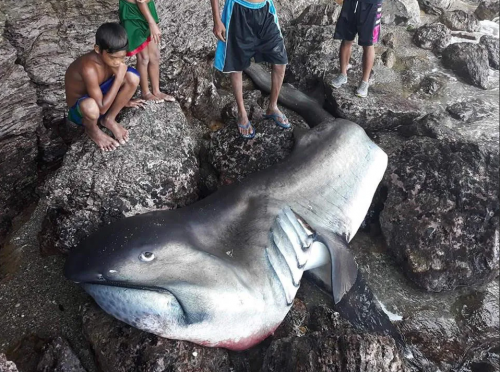
Location: Villaflor, Philippines
Date: 19 October 2018
Sex: Unknown
Length: >200 cm
Disposition: Shark found stranded
Source: Facebook post by Marine Wildlife Watch of the Philippines
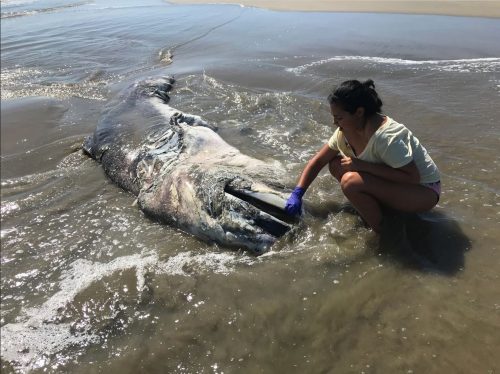
Location: Pedra do Sal, Brazil
Date: 23 Sep 2018
Sex: M
Length: >100 cm
Disposition: This shark was found stranded.
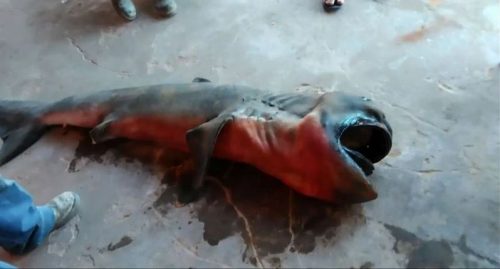
Location: El Ñuro, Peru
Date: 25 July 2018
Sex: Unknown
Length: 370 cm
Disposition: This shark was found stranded.
Source: Kelez, S., Napuri, R.M., Pfennig, A.M., Martinez, O.C. and Carrasco, A.T., 2020. First reports of Megamouth Shark, Megachasma pelagios Taylor, Compagno & Struhsaker, 1983 (Lamniformes, Megachasmidae). Peru. Check List, 16(5), pp.1361-1367.
Location: Taiwan
Date: 17 May 2018
Sex: F
Length: 565 cm
Disposition: Tagged and Released by Paul Clerkin at Location 23 deg, 57’ N, 121 deg 42 ‘ E. Collected data of 242 days. Plus also 1 month high resolution tag.
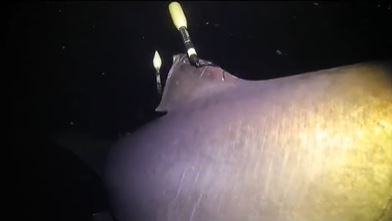
Location: Taiwan
Date: 17 May 2018
Sex: M
Length: 410 cm
Disposition: Tagged and Released by Paul Clerkin at Location 23 deg, 57’ N, 121 deg 42 ‘ E. Collected data of 242 days. Plus also 1 month high resolution tag.
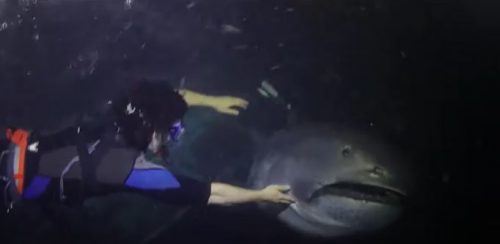
Location: Taiwan
Date: 11 May 2018
Sex: F
Length: 437 cm
Disposition: The shark was caught via a drift net. It was found at a depth of 12,140 ft (3700 m). Tagged and Released by Paul Clerkin
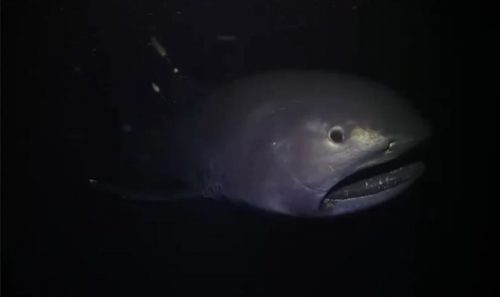
Location: Bayawan City, Philippines
Date: 11 February 2018
Sex: M
Length: 434 cm
Disposition: Shark caught in gill net
Source: Facebook post by Dumaguetedotnet
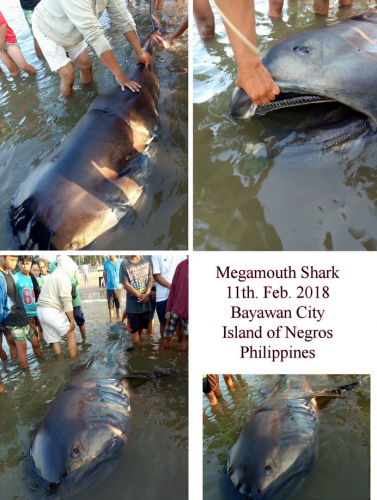
Location: Shotgun, Indonesia
Date: 25 July 2017
Sex: F
Length: ~500 cm
Disposition: Shark sighted but not caught
Source: Earth Touch News Network
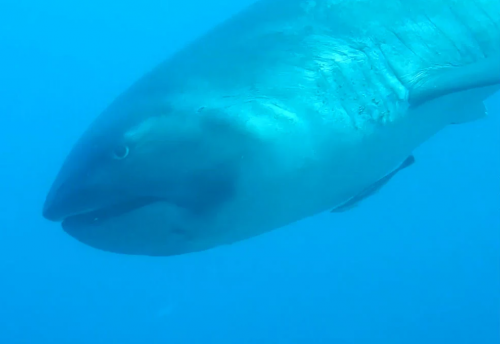
Location: Mie, Japan
Date: 26 May 2017
Sex: F
Length: 510 cm
Disposition: The shark was caught via a set net in the Kumano Sea. It was found at a depth of 5900 ft (1800 m).
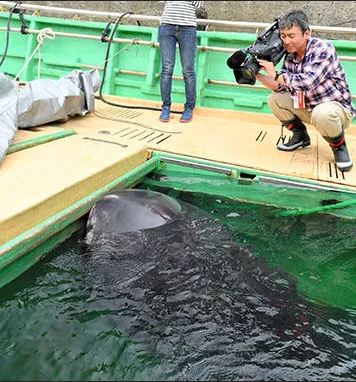
Location: Tateyama, Japan
Date: 22 May 2017
Sex: F
Length: 540 cm
Disposition: Found alive in a net. Was later transferred to another ocean net were it sadly died whilst so called scientists observed her! The Skeleton of this shark was put on display at the Kamogawa Seaworld.
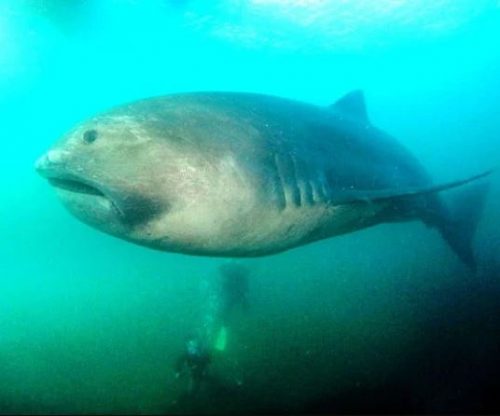
Location: Barangay Baluarte, Philippines
Date: 01 May 2017
Sex: Unknown
Length: ~300 cm
Disposition: Shark was stranded
Source: ABS-CBN
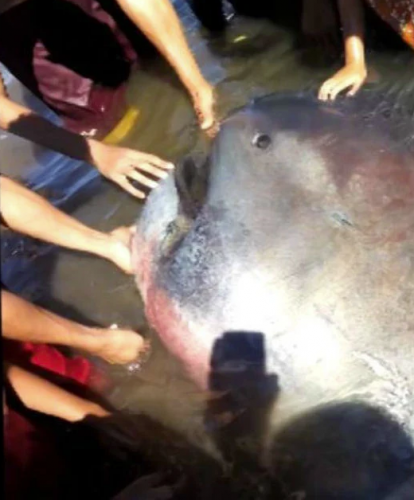
Location: Yacila, Peru
Date: 21 Nov 2016
Sex: unknown
Length: ~350 cm
Disposition: The shark was caught via a gill net.
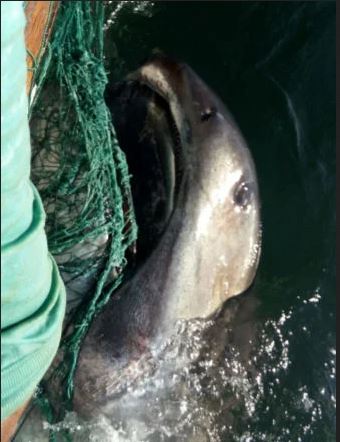
Location: Mie Prefecture, Japan
Date: 15 Apr 2016
Sex: F
Length: 500 cm
Disposition: This shark was caught 3 miles from Owase Port in Mie Prefecture. It was 16.5 ft (5 m) long and weighed one ton. It was bought by a local fish monger and shipped elsewhere.
Photos © NBC News
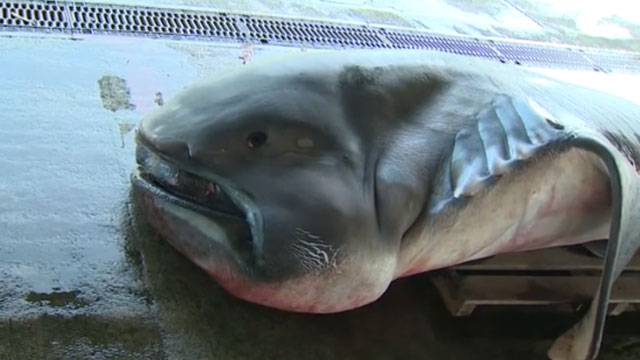
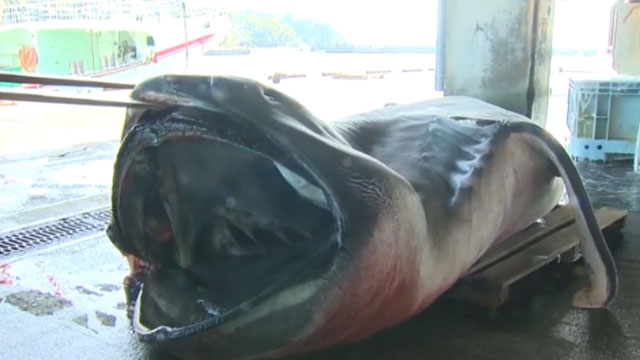
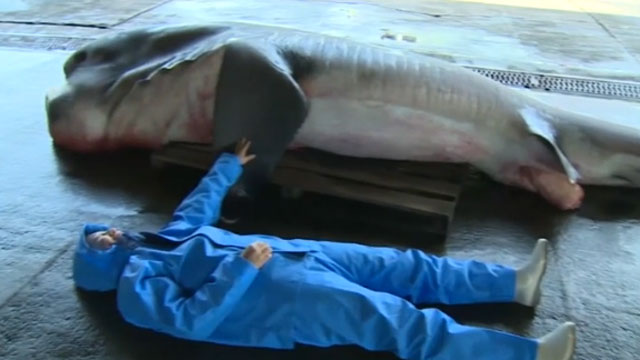
Location: Banderas Bay Beach, State of Nayarit, Mexico
Date: 24 December 2015
Sex: Unknown
Length: 530 cm
Disposition: This shark was stranded onshore of Banderas Bay Beach, in the State of Nayarit, Mexico. The body could not be recovered. Photo © Biologist Juan Marín Vázquez of Puerto Vallarta, Jalisco, México.
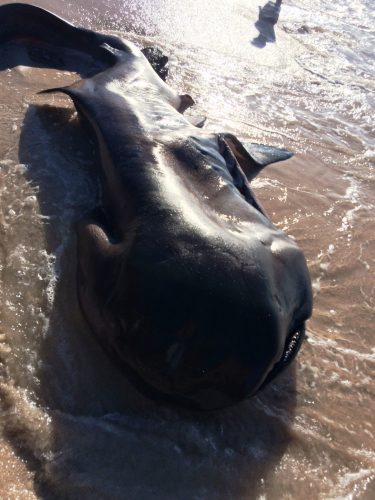
Location: Balingasag, Misamis Oriental, Philippines
Date: November 2015
Sex: Unknown
Length: Unknown
Disposition: This shark was caught with nets by fishermen in Balingasag, Misamis Oriental. The shark was butchered and eaten by locals. Photo © Marine Wildlife Watch of the Philippines
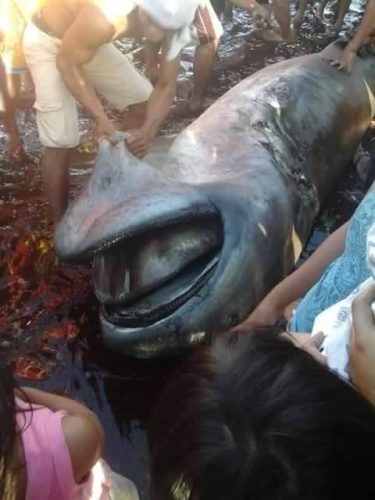
Location: Nghe An, Vietnam
Date: 2 June 2015
Sex: Unknown
Length: 500 cm
Disposition: This shark was found dead washed ashore. Photo © Thanhniennews.com
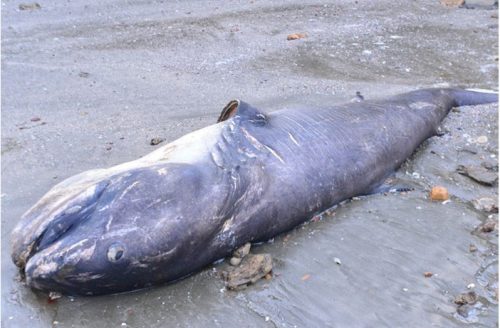
Location: Marigondon, Pioduran, Albay, Philippines
Date: 28 Jan 2015
Sex: M
Length: 457 cm
Disposition: This shark washed ashore dead. It was placed in ice to prepare for preservation.
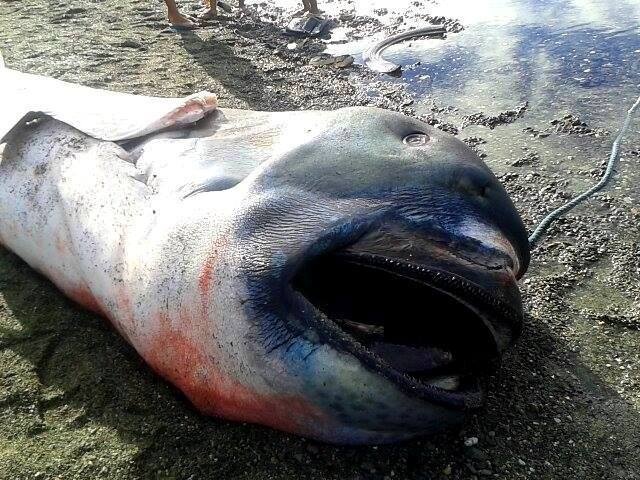
Location: Caught in Cagayan de Oro City, Philippines
Date: June 30, 2014
Sex: F
Length: 549 cm
Disposition: This shark weighed between 881-1,102 lbs. It washed ashore dead and cause of death is being investigated. It will be buried by officials.
Source: Alex Buttigieg
Article
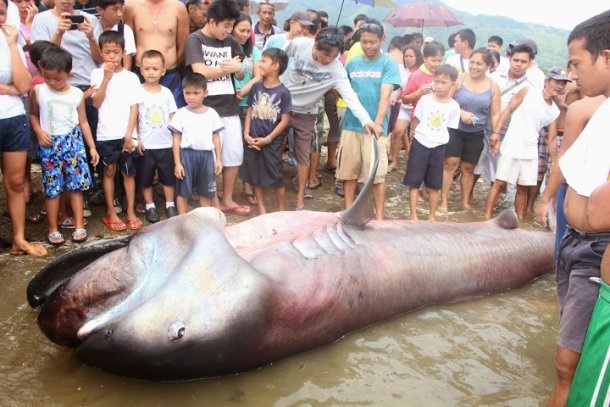
A female megamouth shark was caught in a fisherman’s net on Monday June 30th 2014. Weighing 1,102 lbs and measuring 18 feet long she struggled in the fisherman’s net and died the same morning. Officers of the Bureau of Fisheries and Aquatic Resources in northern Mindanao are investigating the cause of death. They advised the public against consuming the shark since cause of death was unknown, and they decided to bury the shark instead. Prior to this shark’s burial her skin was scalped off to be stuffed and displayed at D’ Bone Collector Museum in Davao City, and some parts of her body were sent to the Bureau of Fisheries and Aquatic Resources central office for further examination.
 Location: Off the coast of Shizuoka, Japan
Date: April 2014
Sex: F
Length: 396 cm
Disposition: This shark weighed 1,500 lbs. Dissected by The Marine Science Museum in Shizuoka, Japan and is currently on display at the museum.
Article
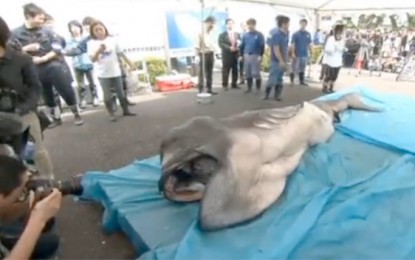
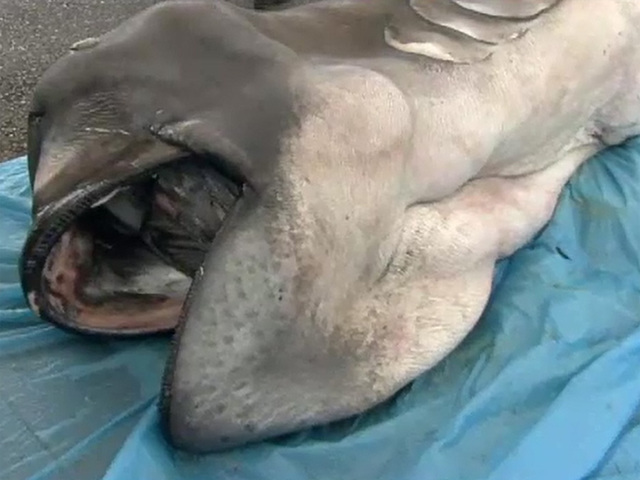
A female megamouth shark was caught off the coast of Shizouka, Japan. This shark was caught at a depth of 2,600 ft and weighed 1,500 lbs. A public autopsy was performed in front of 1,500 people by The Marine Science Museum in Shizuoka, Japan. This specimen is now on display at the museum.
Location: Sabang West, Bugasong, Antique, Philippines
Date: March 14, 2014
Sex: Unknown
Length: Unknown
Disposition: Unknown
Sources: Alex Buttigieg
Article
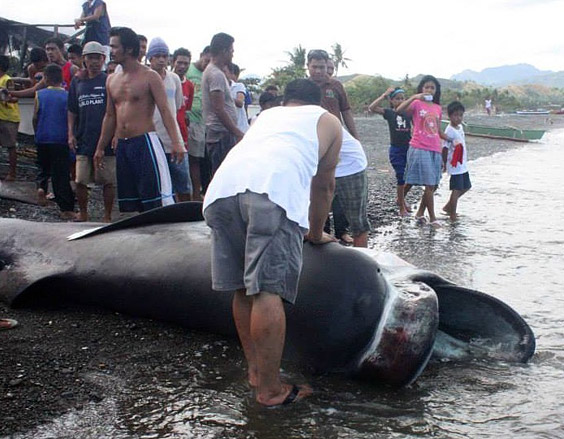
A megamouth shark washed ashore Sabang West, Bugasong, Antique, Philippines.
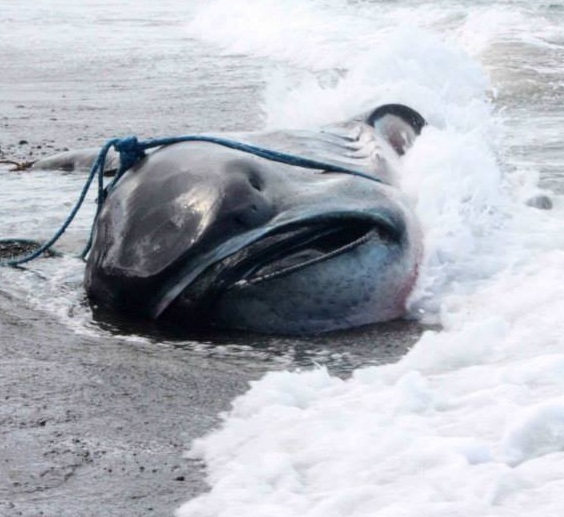
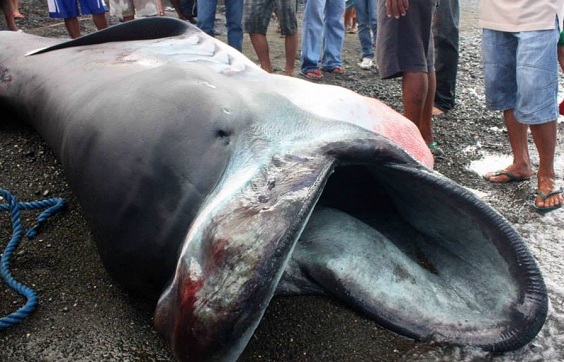
Location: Manazuru, Japan
Date: Sept 6, 2013
Sex: F
Length: 577cm
Disposition: Caught and killed.
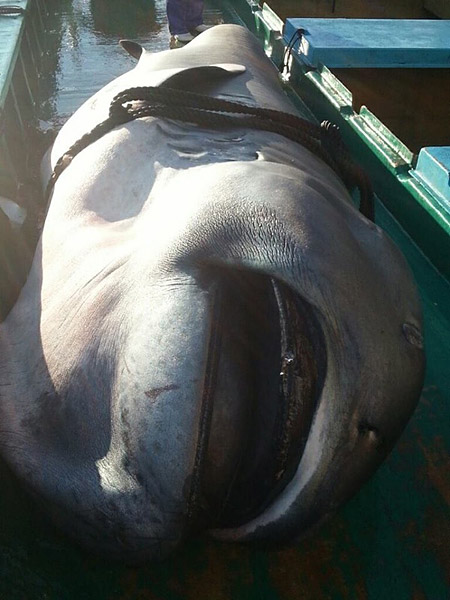
Location: Sagami Bay, Japan
Date: 13 Jan 2013
Sex: F
Length: 487 cm
Disposition: Filmed for Discovery Shark Week 2013
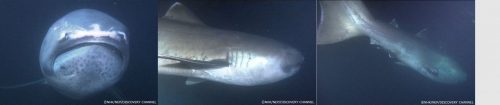
Photos © NHK/NEP/Discovery Channel
Off Eastern Taiwan
Date: Oct 16, 2012
Sex: F
Length: 600 cm
Disposition: The organs were preserved and donated to a university and the meat was sold.
Article
A female Megamouth shark was caught off eastern Taiwan on Oct 16th, 2012. It measured 429 cm without its tail which was broken when the shark was hauled back to the harbor. The fish dealer who purchased the shark estimated the shark would have been 6 m TL. The shark was estimated to weigh 800~900kg. The organs were preserved and donated to a university and the meat was sold.
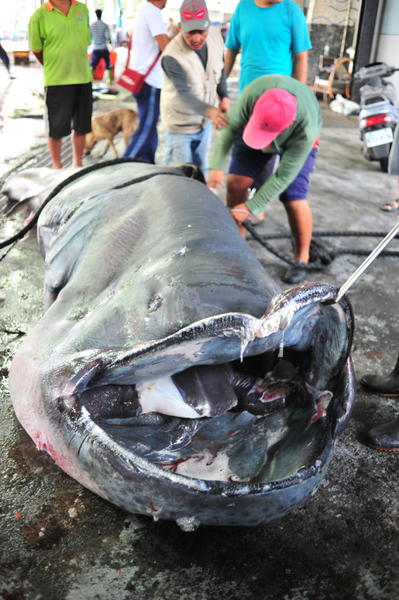
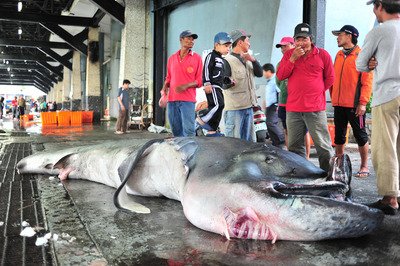
Location: Bajo Cope, Ecuador
Date: 30 Mar 2012
Sex: M
Length: Unknown
Disposition: This shark was caught via a gill net.
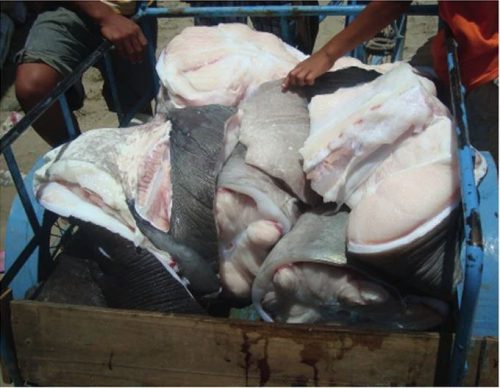
Location: Sea of China
Date: January, 2012
Sex: Unknown
Length: 565 cm
Disposition: Unknown
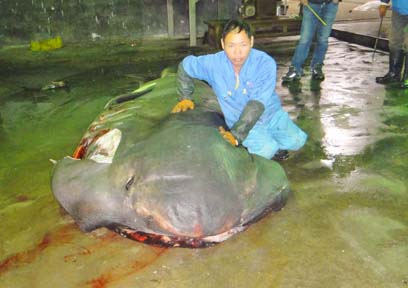
Location: Santa Rosa de Salinas, Ecuador
Date: Nov 2011
Sex: F
Length: 243 cm
Disposition: the f/v “María josé ii” caught specimen in a gillnet at 2°7.902’ s, 81°23.883’ w.
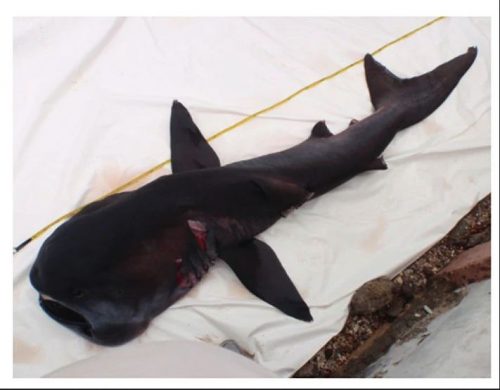
Location: Sagami Bay, Japan
Date: July 1, 2011
Sex: F
Length: 300 cm
Disposition: Kanagawa Prefectural Museum of Natural History
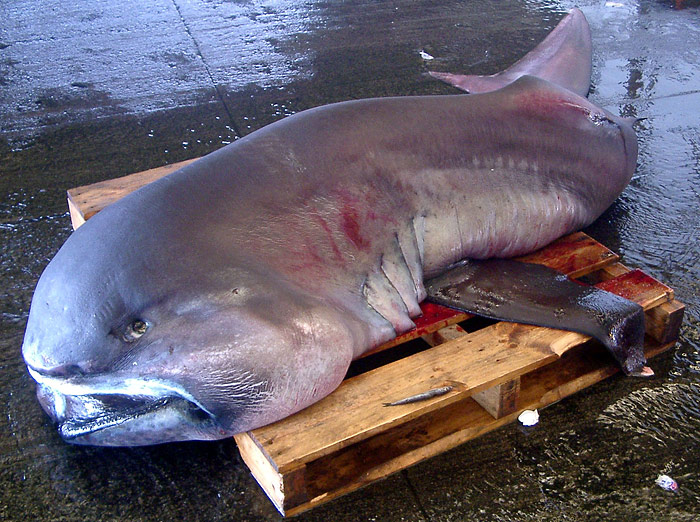
Location: Shizuoka, Japan
Date: 23 June 2010
Sex: F
Length: 570 cm
Disposition: Trapped in nets, filmed and killed later.
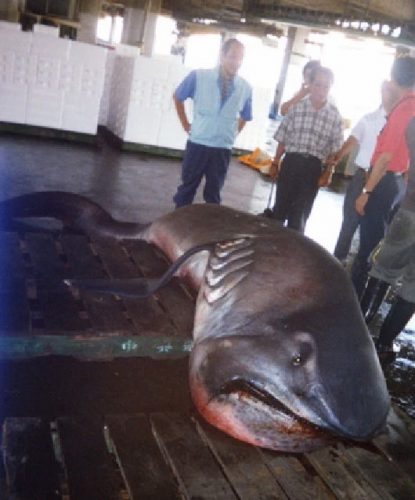
Location: Pamilacan Island, Bohol, Philippines
Date: 2010
Sex: Unknown
Length: Unknown
Disposition: This megamouth was landed on the island in 2010 and butchered. The jaws are kept at a private residence.
Sources: Mr. Arnel Yaptinchay and Marine Wildlife Watch of the Philippines
Photos courtesy of Carlos Libosada, Jr
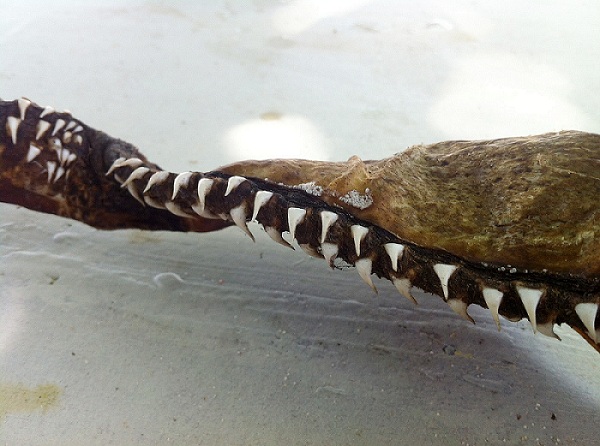
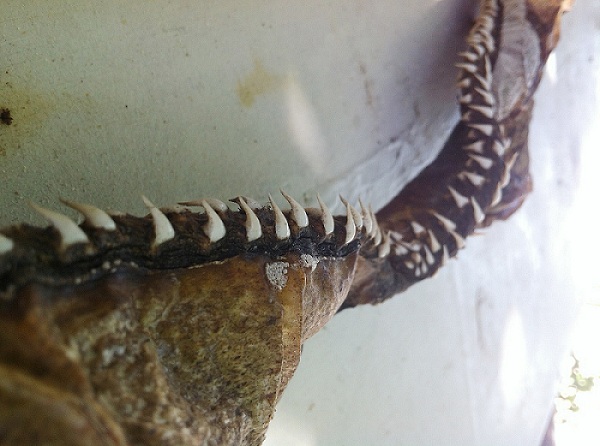
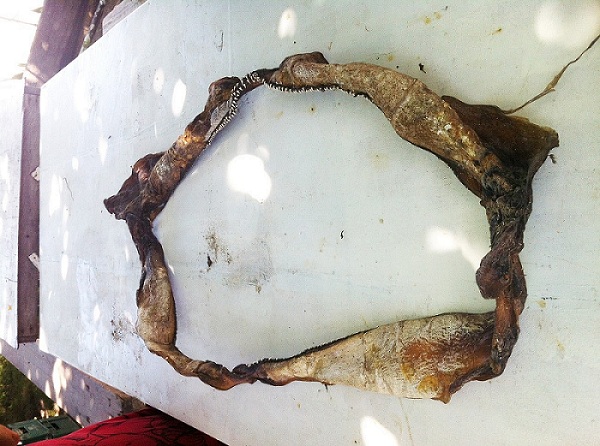
Location: Off Eastern Taiwan
Date: June 19, 2010
Sex: Unknown
Length: 700 cm
Disposition: The body was not intact however, the jaw was saved. The flesh was sold at market for consumption.
Source: Victor Lin
Article
Photographs courtesy Victor Lin
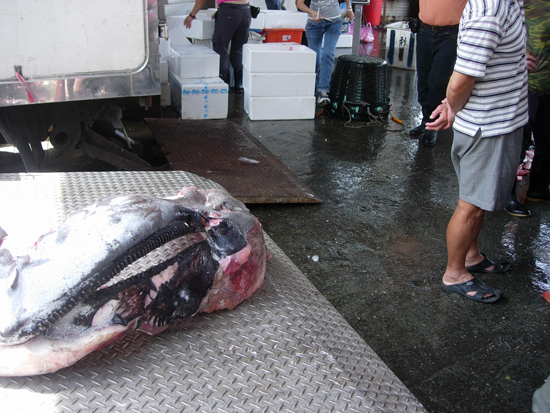
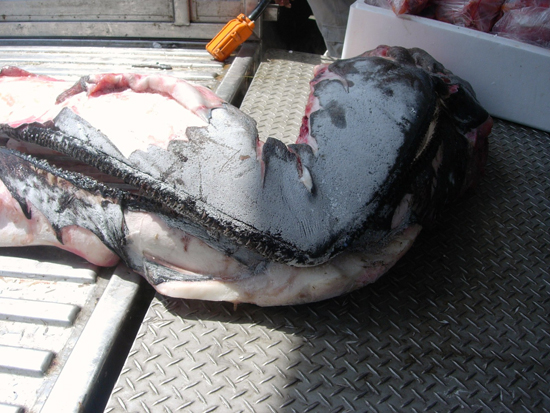
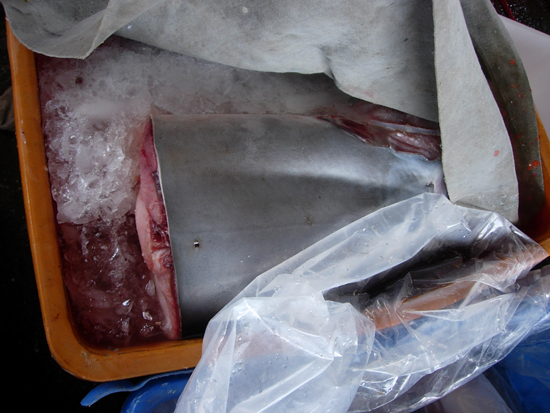
A megamouth shark was purchased by a fish dealer in North East Taiwan however it was in poor condition, described as tattered and broken or perhaps even cut open. The jaw was saved and photos taken by Mr. Victor Lin. Since the remaining body was not intact, Mr. Lin estimated the following for this specimen:
Length: unknown
Weight: around 770kg
Sex: unknown
Location: Eastern Taiwan
He also noted that megamouth sharks are mainly captured in Taiwan during May to July.
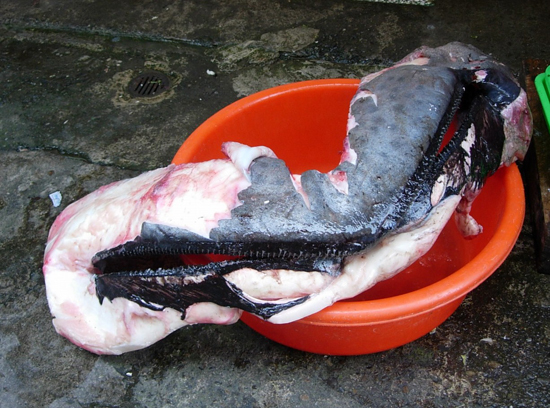
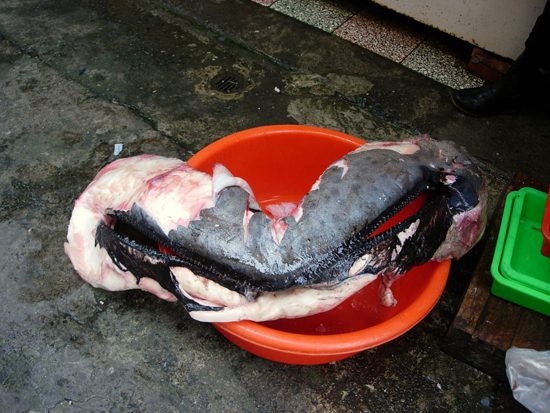
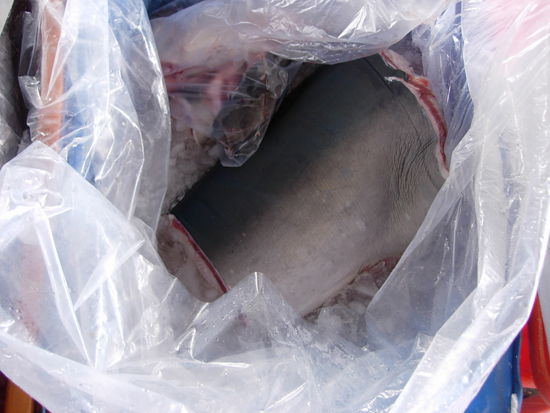
Location: Off southeastern China (Taiwan Straits)
Date: April 25, 2010
Sex: M
Length: ~400 cm
Disposition: It was donated to an educational facility or museum. The flesh was sold at market for consumption.
Source: Victor Lin
Article
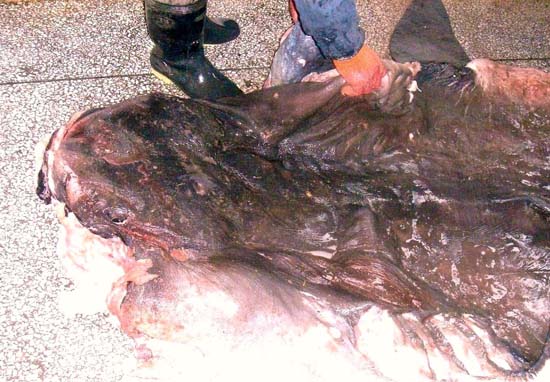
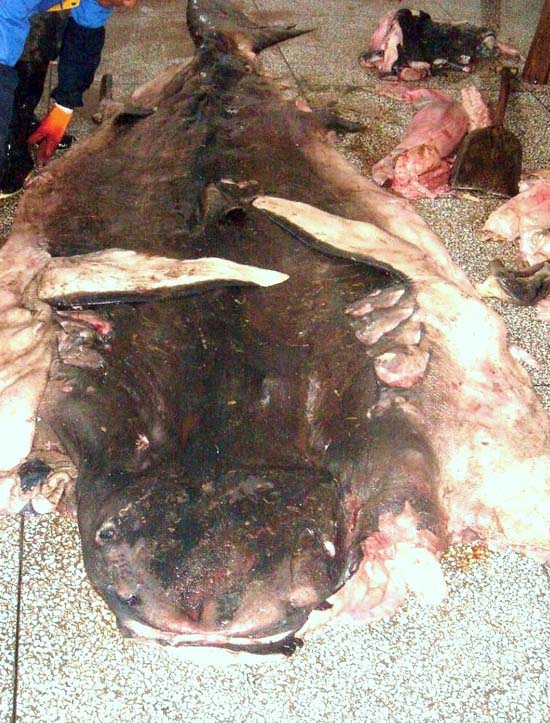
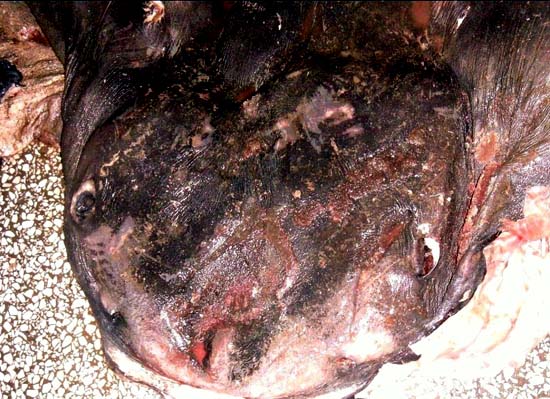
On April 25 this year a friend who lives near the beach informed me that there was a megamouth shark caught and it was brought to a fishery product factory. I asked him to go there and take some pictures. When he arrived, the shark was already skinned. The fresh was cut into chunks and distributed to retail sellers. Only the skin and the broken jaw were presented at the factory. After a long phone-negotiation, the owner of the factory agreed to save the skin and jaw for me.
The specimen is a male and length currently unknown however it probably can be estimated after the specimen is thawed. At this time, the estimate is at least 4 meters in length. The weight was estimated at over 1,000 kg with the skin alone weighing 100-200 kg. The mounted shark will be donated to a museum or other educational facility.
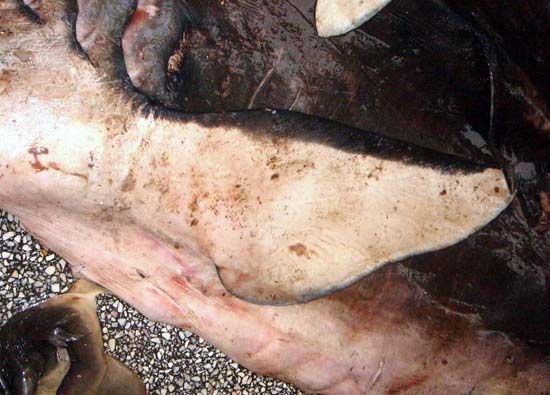
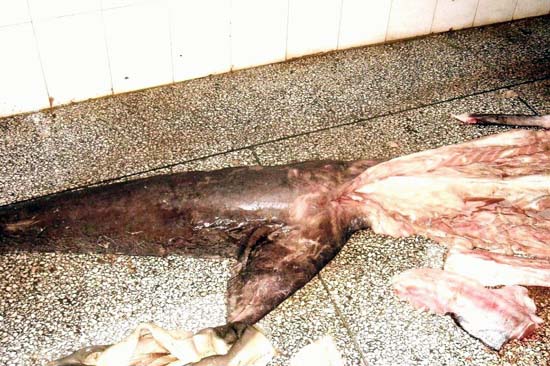
Location: Benitos Islands, Mexico
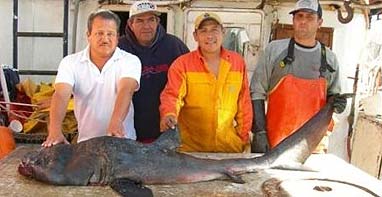
Date: November 6, 2009
Sex: Unknown
Length: 200 cm
Disposition: It is unclear what happened to this specimen.
Source: Escibedi Fernando Camacho (El Mexicano)
Article
The 49th specimen of the megamouth shark was captured by Ensenanda fishermen on the fishing vessel Famtasma del Mar about 18 miles southwest of the Benitos Islands (Mexico). The ship’s captain, Eden Ruvicel and crew members Esteban Romero, Jesus Molina, and Joshua Samuel Von Borsten were those who identified the two meter long shark when it became entangled in their net.
Miguel Escobedo, a graduate CICESE, Master of Science, said this capture is of great scientific importance since it was found in the same region as the previous Mexican capture in 2006 (#38).
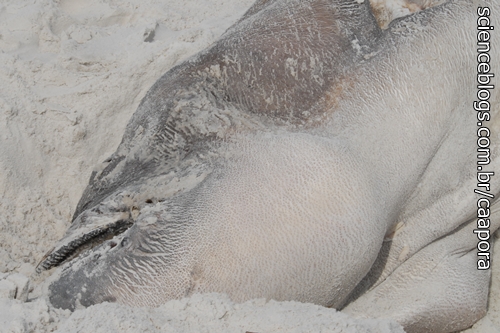
Location: Rio de Janeiro, Brazil
Date: July 9, 2009
Sex: M
Length: 539 cm
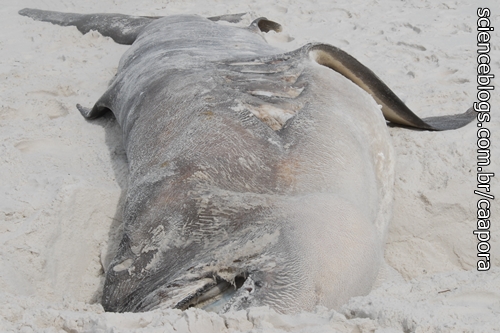
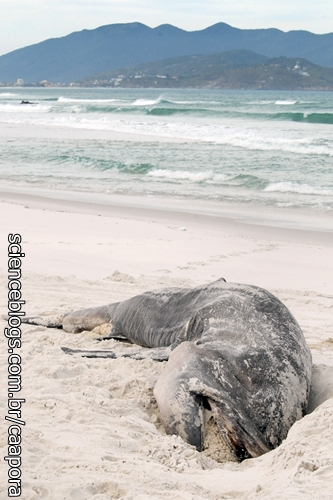
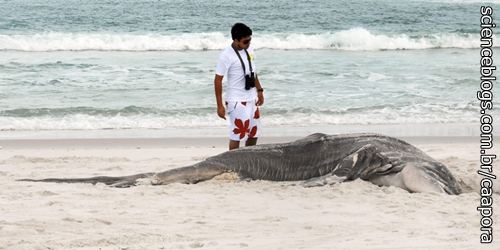
Disposition: This megamouth was reported beached on the shoreline, appearing to have died of natural causes.
Source: Ulisses Leite Gomes of Rio de Janeiro and Alex Buttigieg of Malta
Article
Photos courtesy: scienceblogs.com.br/caapora
On 9 July, an adult male Megachasma pelagios – rare shark described for the first time in 80 years – was found beached and dead newborn in Praia Grande, Arraial do Cabo (RJ), by Brazilian researchers who subscribe to this article. The specimen represents the 47th M. pelagios known in the world and only the third recorded in the Atlantic Ocean. A young animal had been captured off the coast of Sao Paulo in 1995 and another found in the same year in Dakar, Senegal.
The discovery was made during one of the regular monitoring conducted by the Project Beach Birds, Marine Mammals and Turtles of the Campos Basin, conducted by the National School of Public Health, Fiocruz, habitats within the Project – Environmental Heterogeneity in the Campos Basin, coordinated by Research Center (Cenpes) from Petrobras.
With 5.39 m in length, the specimen appeared to have died of natural causes, since there were no marks that could be attributed to the net capture or collision with a motor boat. The autopsy showed that the shark’s stomach was completely empty, which may indicate that he was not eating for a while.
According to Luciano Lima and Bruno Rennó, authors of the discovery and researchers of the Project Marine Birds, Turtles and Mammals from the Campos Basin, the Megamouth is considered one of the rarest sharks in the world. Despite its large size, reaching up to 6 meters in total length and an unmistakable appearance due to its enormous head resembling a tadpole, the species was only described in the early 80’s. Biologists say that another particularity of such species is its gentle behaviour, much probably related to its feeding strategy, preying upon tiny zooplankton, captured just like whales do.
Location: Taiwan
Date: June 9, 2009
Sex: F
Length: 390 cm
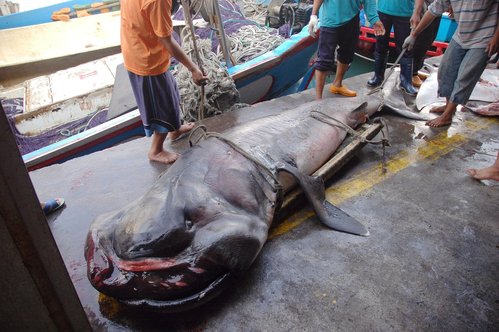
Disposition: This megamouth shark was sold to a local shark museum where it will be preserved and displayed.
Source: Victor Linn
Article
Photos courtesy Victor Linn
A megamouth shark was caught off east Taiwan on June 9. It was 390 cm long and weighed 350kg and appeared to be a female. A local shark museum bought it and will mount it for display.
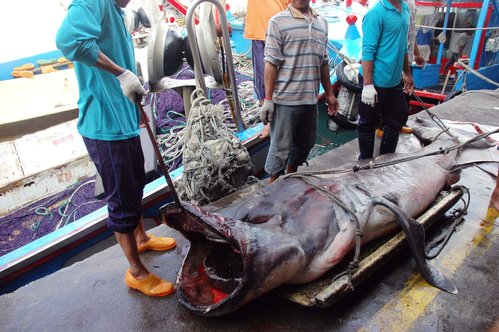
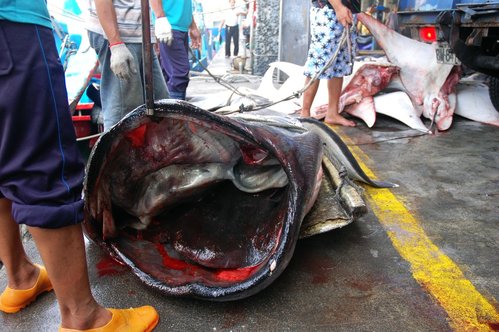
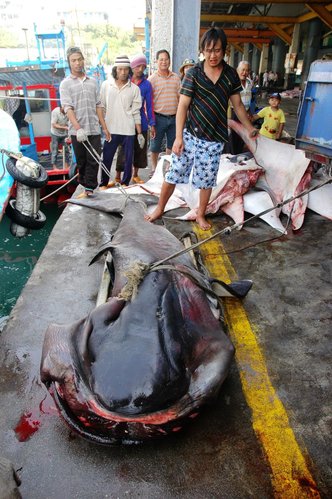
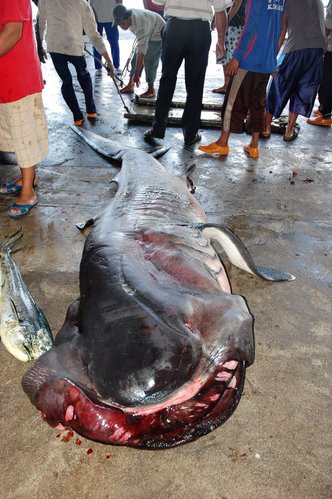
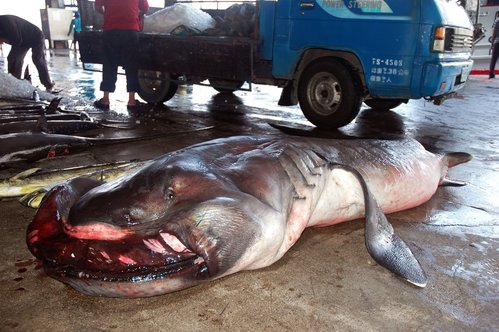
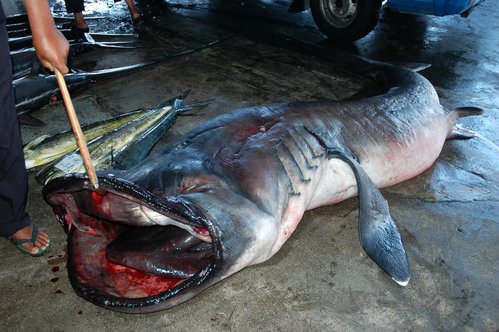
Location: Philippines
Date: March 31, 2009
Sex: M
Length: 400 cm?
Disposition: This megamouth shark was sold for human consumption.
Source:
Elson Q. Aca
Project Manager
Whale Shark Tracking in Donsol, Sorsogon Project
World Wide Fund for Nature – Philippines (WWF-Phils)
Email: eaca@wwf.org.ph
Mobile Nos.: +63 918 9220738
+63 921 2188811

Article
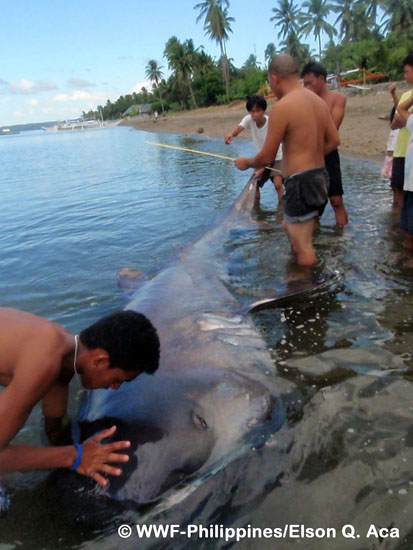
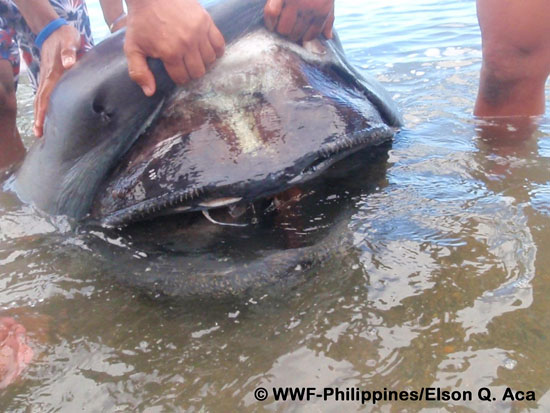
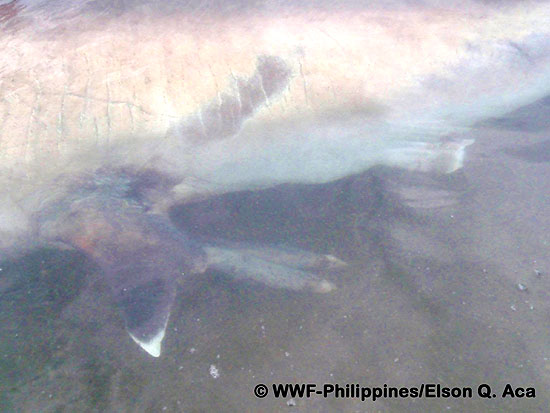
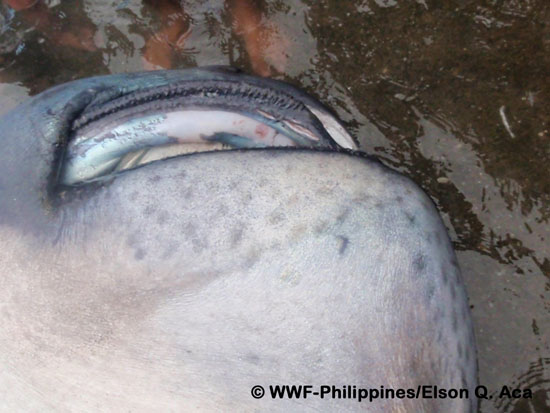
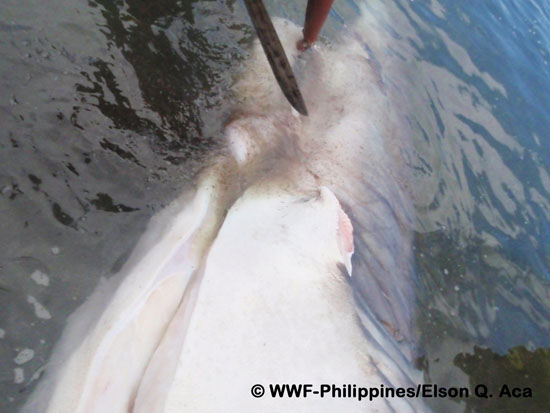
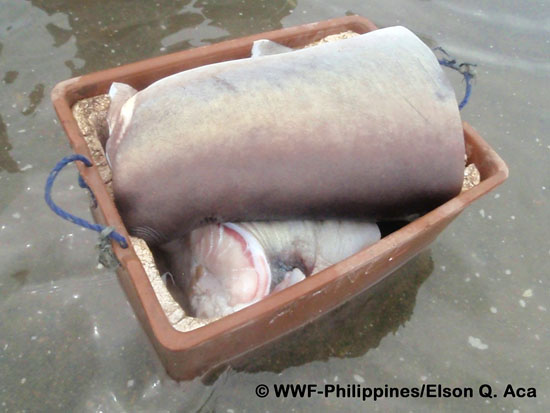
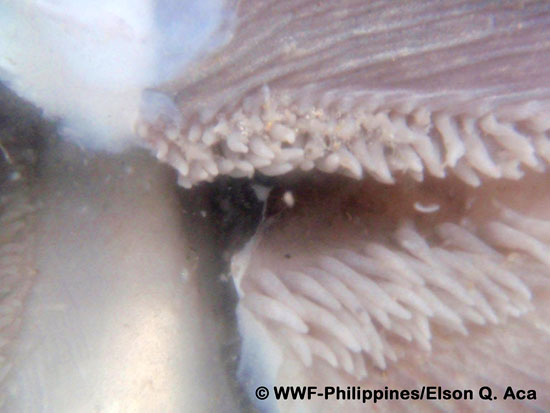
Megamouth shark in Whale Shark waters
Photos © Elson Q. Aca
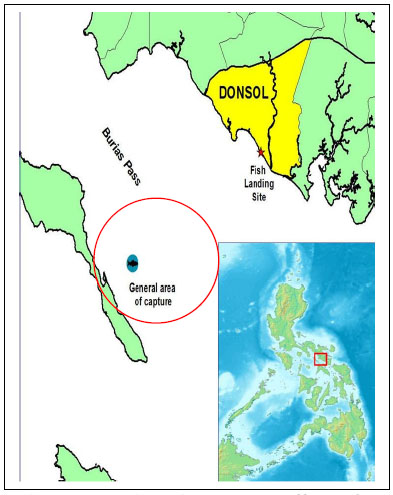
Every year whale sharks visits Donsol to feed on Burias pass’ plankton rich waters. And now, we have documented another filter feeding shark in these waters but in a most unfortunate circumstance.
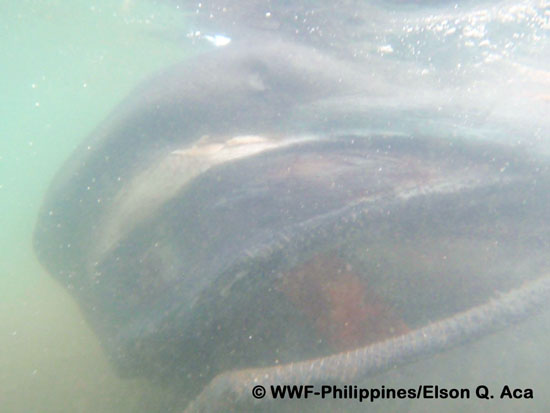
In the morning of March 30, 2009 fishermen from Donsol caught on their gill nets a megamouth shark (Megachasma pelagios) while fishing for Alumahan (Rastrelliger kanagurta) and Tulingan (Auxis rochei) on the eastern coast of Burias island on the waters of Burias pass. Already dead and unable to put the shark on board, they tied it up and dragged it to Barangay Dancalan, Donsol, Sorsogon.
People have been notified and news reached WWFPhilippines office in Donsol in order for proper identification and documentation of the catch. Elson Q. Aca, project manager of the Donsol Field office, responded to the call to investigate on the matter.
 Upon reaching the site, the fishermen were cooperative in giving out information about the catch and even help out in measuring the shark. Mr. Aca provided necessary information about the shark and answers questions of the onlookers about its existence. It was also an opportune time to interview fishermen about the regularity of the catch and it seems that in the 1970s or 1980s a similar animal was caught in the area, butchered and eaten by locals. No other detailed information was gotten from that shark.
The recent shark measures four (4) meters long and roughly 400-500kg was a male and has some cuts near the left side of the mouth. It was accidentally caught in the eastern side of Burias island with a depth of approximately 200 meters using a gill net. The stomach content was investigated and saw several balaw (shrimp larvae) inside. The fishermen continued chopping the shark for distribution and probably for selling. Mr. Aca recommended that the shark would not be consumed since the reason of its death is not known. Possibility of a disease may be transferred to humans when the meat is digested. However, shark and ray meat cooked in coconut milk, chilli pepper and malunggay is a local delicacy called kinunot. The selling of any shark meat in the area cost around Php 40 to 70 per kilo and the ironic thing was, it would cost much cheaper if it comes from a shark that is not well known like this one coming from a megamouth.
This incident only put emphasis the importance of these waters in terms of biodiversity of its marine life. We don’t however want to these animals as part of just some statistics like those of a megamouth whose identification is based on just the number of sighting/stranding (less than 50). Ample protection should be taken because it could be a haven for the two (of three) filter feeding sharks namely the whale shark and megamouth. Megamouth shark presence isn’t surprising if you consider the existence of food in the area. Who knows in the future the basking shark (the other filter feeding shark) will find its way to these waters too. Let’s continue to provide them a healthy environment so that we could pass on our children a living planet (and not the one they only read on books as part of history).
Location: off Eastern Taiwan
Date: July 10, 2008
Sex: Unknown
Length: 500-550 cm?
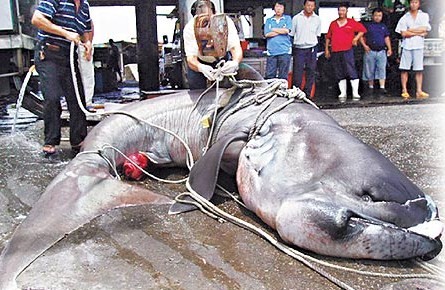
Disposition: 5-5.5 meters in length judging from the photo taken of this specimen, and weighed 870 kg.
Source: Victor Lin
Article
Found off eastern Taiwan
This megamouth was reported to be 9 meters in length by the media, however it is more likely to have been 5-5.5 meters in length judging from the photo taken of this specimen. It weighed 870 kg.
Location: off Taiwan
Date: June 30, 2008
Sex: Unknown
Length: Unknown
Disposition: The only information on this megamouth capture is its weight (200 kg+) and capture date. There is no data on length or sex, nor are there any additional photos.
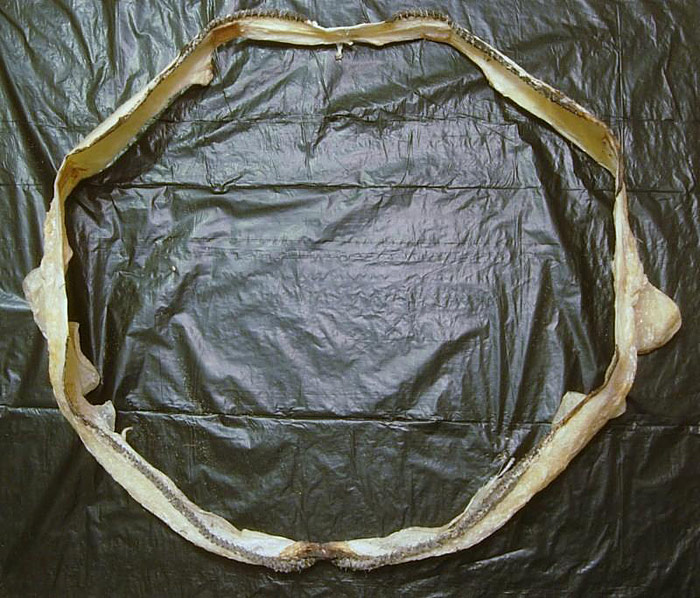
Location: Hinunangan, Southern Leyte, Philippines
Date: September 27, 2007
Sex: Unknown
Length: 274 cm
Disposition: This megamouth was found dead along the shores of Hinunangan.
Source: Ian Joey Tajonera
Article
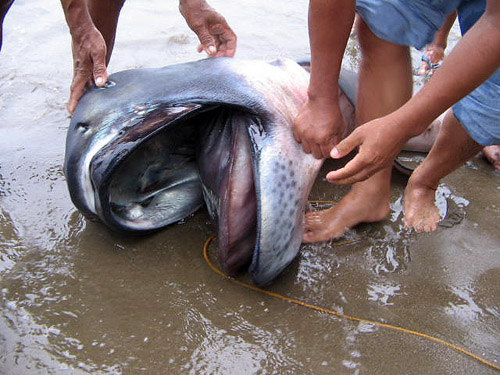
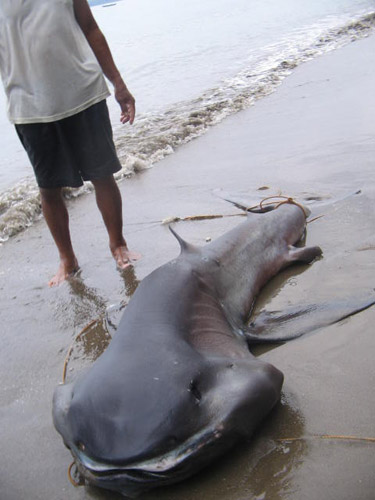
Megamouth Found Dead, Stranded On Beach In Hinunangan, Philippines
Photos courtesy of Mr. Marlou Pan
A megamouth shark was found stranded and dead along the beach in Hinunangan, Philippines on September 27, 2007. This specimen was 274 cm in length, weight is unknown.
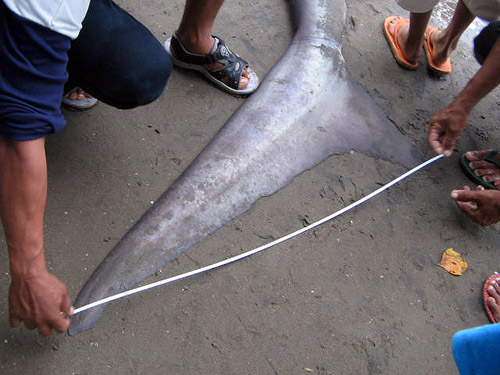
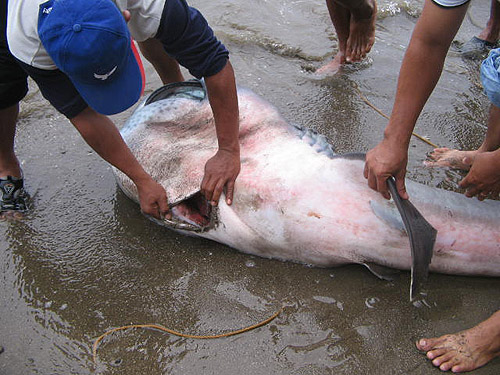
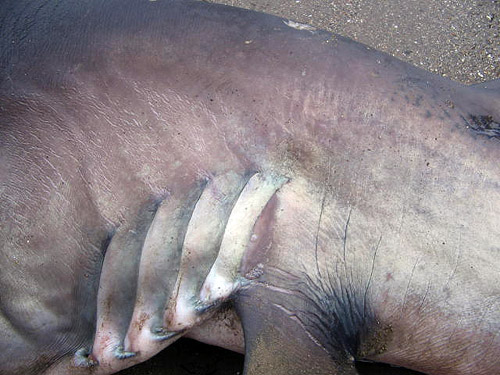
Location: Off the coast of Japan
Date: July 2007
Sex: Unknown
Length: 400 cm
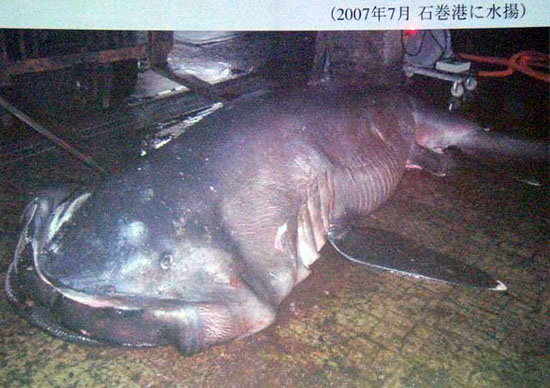
Disposition: This megamouth caught off the coast of Japan, weighed 450 kg.
Source: Victor Lin
A megamouth shark was caught off the coast of Japan in July 2007. It measured 400 cm in length and weighed 450 kilograms. The photo below was found in a Japanese newspaper.
Location: Sagami Bay, Japan
Date: June 2007
Sex: F
Length: 540 cm
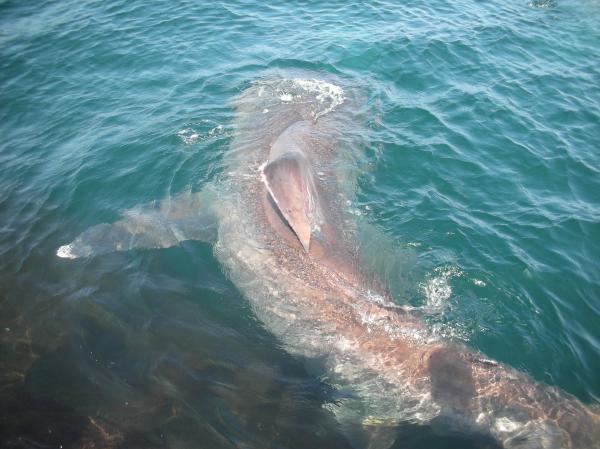
Disposition: This megamouth was found alive in a net. It was filmed, tagged, and released.
Location: Tortugas Bay, west coast of Baja California, México
Date: November 16, 2006
Sex: F
Length: 214.9 cm
Disposition: On display at Regional Fisheries Center of Ensenada, located in Mexico.
Source:
M. en C. José Leonardo Castillo Géniz
Centro Regional de Investigación Pesquera de Ensenada
Instituto Nacional de la Pesca
Carr. Tijuana-Ensenada km 97.5
El Sauzal de Rodríguez, A.P. 1306
Ensenada. B.C., Mexico. Phone: (646) 174-6135 y 174-6140
ptiburon@yahoo.com.mx
Article
The First Megamouth Shark, Megachasma pelagios, Found in Mexican Waters
Photos by José Leonardo Castillo-Geniz
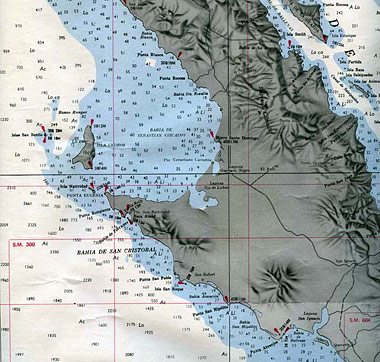 On November 16, 2006, the crew of the F/V “Corina del Mar” (a commercial shark boat based in Ensenada, B.C., Mexico), under Captain Edén Magaña, and his crewmen Eleazar Murillo, Jesús Molina y Samuel Van-Borsted, accidentally caught a “very rare” shark in waters in front of Tortugas Bay (BCS), on the Pacific coast of the Baja California Peninsula, Mexico.
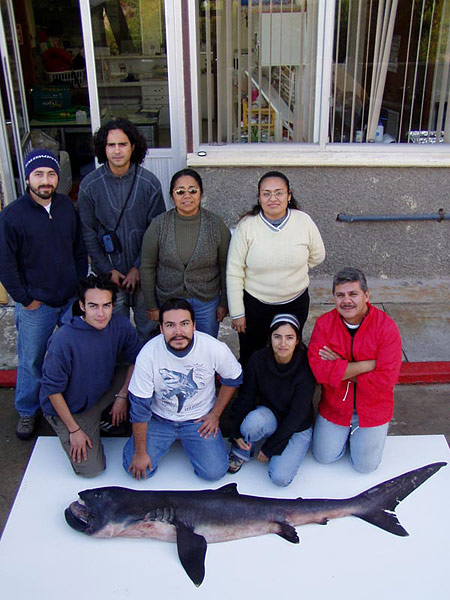
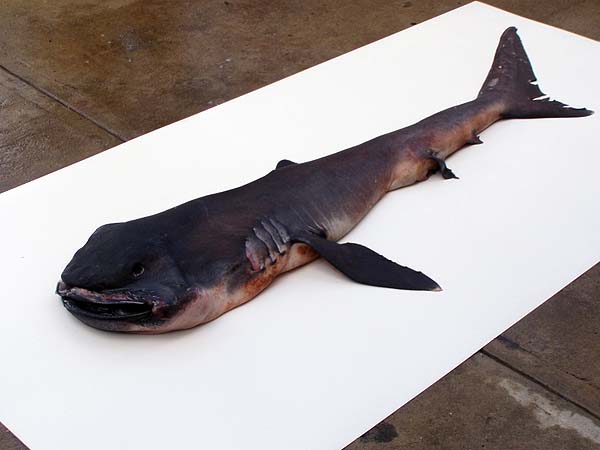
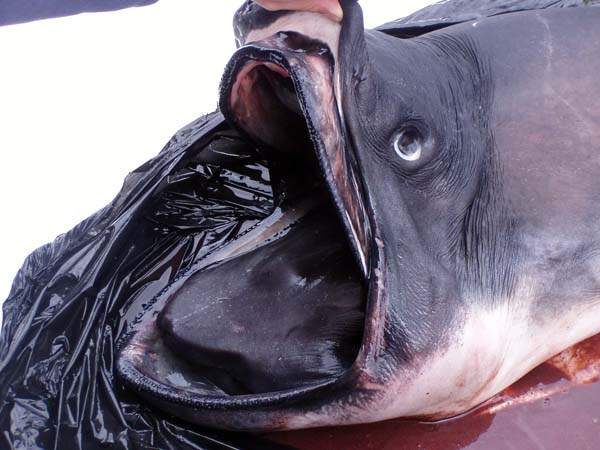
After their return to the Port of the Sauzal in Ensenada, convinced of the rarity of the shark, and its possible scientific importance, the owner of the ship Saúl Romero and the Captain Magaña invited José Leonardo Castillo-Géniz, a shark specialist from the Ensenada’s Regional Fisheries Research Center of the National Fisheries Institute of Mexico, on November 27 to examine and possibly identify the shark species. According to the shark biologist Castillo-Géniz, he observed the elongated and flabby body of the animal, its particularly huge and terminal mouth, and a group of black circular spots over its “inferior lip” of its jaw. These observations gave him the first hint about the possible identity of the specimen, and some minutes after the initial shock from the excitement, he identified the shark and confirmed it as the first record of the megamouth shark (“tiburón bocón” in Spanish), Megachasma pelagios to be captured and documented in the waters off of Mexico.
According to Captain Magaña, the megamouth was captured off Tortugas Bay, in B.C.S., Mexico. This is a region that also includes Cedros Island and Sebastían Vizcaíno Bay in the western coast of the Baja Peninsula and is considered by the fishermen as a traditional fishery ground for sharks, including makos Isurus oxyrinchus, and thresher sharks Alopias vulpinus.
With the support of the local fishery company “Pesquera Cortés”, the megamouth was frozen and conserved immediately for posterior examination. In the morning of November 28th, a team of technicians and students (Arturo Ocampo, Carmen Rodríguez, Alfonso Medellín, Ely Cuevas, Miguel Olvera, Santa Rodríguez, Erick Oñanate, Omar Santana, Jenny Chong y Nadia Olivares) from the fishery ecology laboratory of CICESE, lead by Castillo-Géniz, conducted the first examination of the shark. The specimen was determined to be an immature female with a total length of 214.9 cm and body weight of 27 kilograms. Several morphometric measurements were taken as well as samples of the stomach content, teeth, and dermal denticles. This information and data will be generated in the next weeks, allowing specialists to describe in detail the first record of Megachasma pelagios in Mexican waters. Given the stage of sexual immaturity of the shark, the shark team decided not to conduct a dissection of the body, because there is the intention of maintaining the shark intact for future public exhibition in Mexico.
The presence of the megamouth shark confirms the enormous diversity of sharks and rays that inhabit in Mexican waters.
Location: Sagami Bay, Yugawara (Kanagawa prefecture), Japan
Date: May 2, 2006
Sex: Female
Length: 570 cm
Disposition: On display at Keikyu Aburatsubo Marine Park, in Kanagawa, Japan.
This megamouth was found alive in a fixed shore net along the coast of Sagami Bay, Yugawara, Kanagawa prefecture in Japan. A film crew was onhand and shot a film of this specimen. However, when it was pulled out of the water, the megamouth had already died. It will be placed on display at Keikyu Aburatsubo Marine Park in Kanagawa, Japan.
Article
The below is from a Japanese Newspaper dated May 1, 2006:
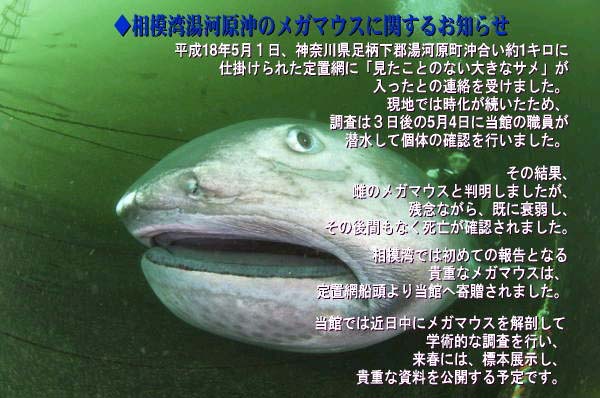
Translation:
Fishermen from Sagami Bay told the staff of Aburatsubo Marine Park that “the big shark is in the set net”. But they couldn’t land it because of the wind conditions. After three days, the staff observed the shark in the set net and identified it as a female megamouth shark. Soon afterwards, she died. This is the first record of a megamouth shark from Sagami Bay. It will be dissected and investigated, and later exhibited at the Aburatsubo Marine Park in Kanagawa, Japan.
Location: China Sea
Date: May 23, 2006
Sex: Unknown
Length: 470 cm
Disposition: Unknown
Source: Victor Lin
This megamouth was captured in the China Sea on March 23, 2006. The specimen measured 4.7 meters in length and weighed 650 kilograms.
Photo courtesy Victor Lin
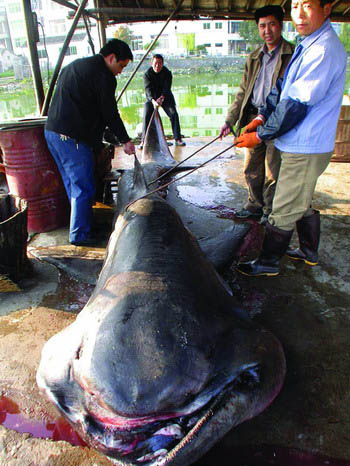
Location: Barra, Macabalan, Cagayan de Oro City, Philippines
Date: March 12, 2006
Sex: F
Length: 226 cm
Disposition: Accidental gill net capture by fishermen.Died before it could be set free.
Source: Angelilah Cabig
Article
Caught Off Of Barra, Macabalan, Cagayan de Oro City, Philippines
Photos © Mr. Edward B. Yasay
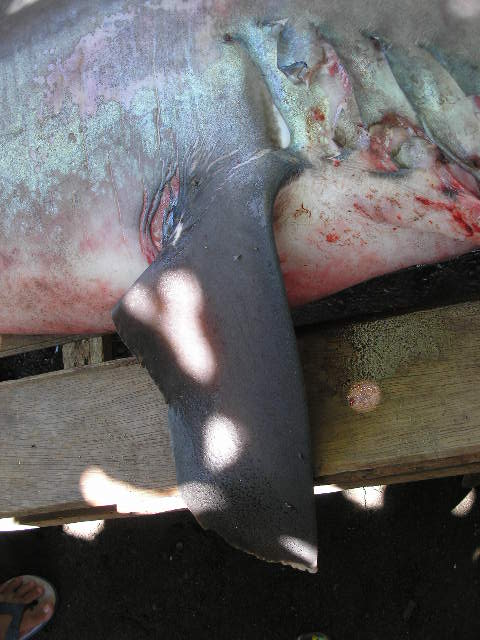
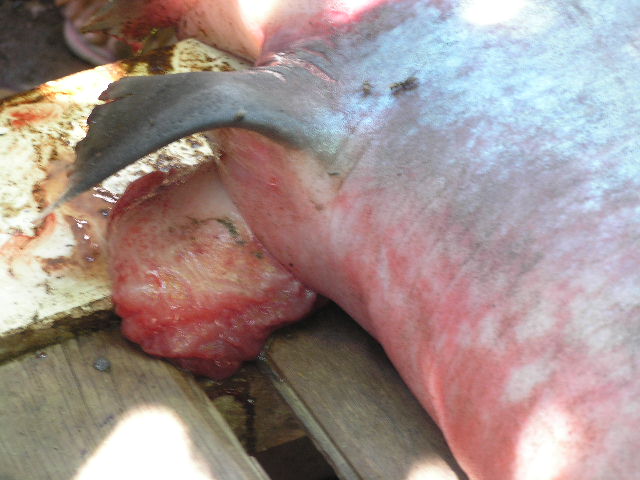
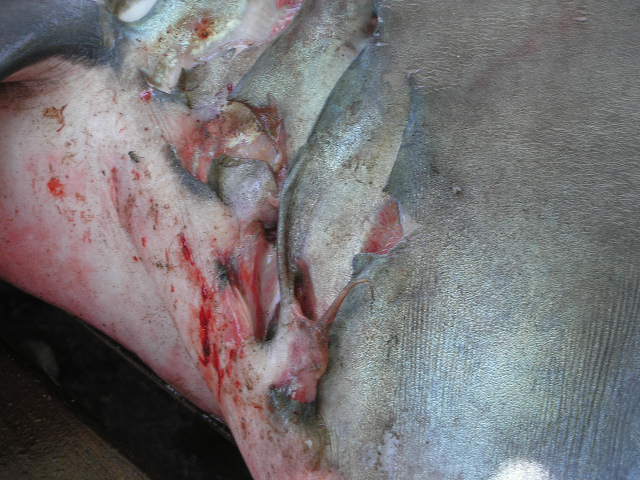
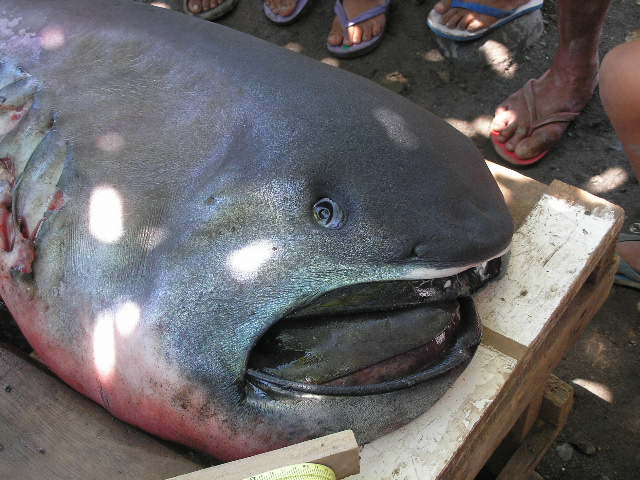
Mr. Edward B. Yasay investigated and identified the fish as megamouth shark which was entangled in a fisherman’s gill net during early morning of March 12, 2006. The shark was already dead when he arrived to the area. It measured 7 feet and 5 inches long and weighed 60-80 kilograms.
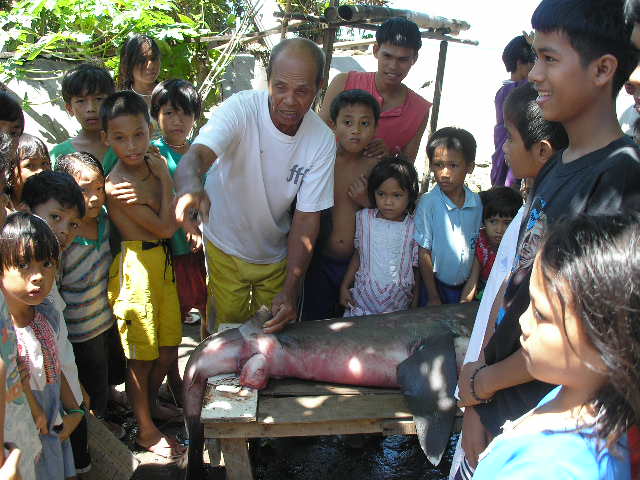
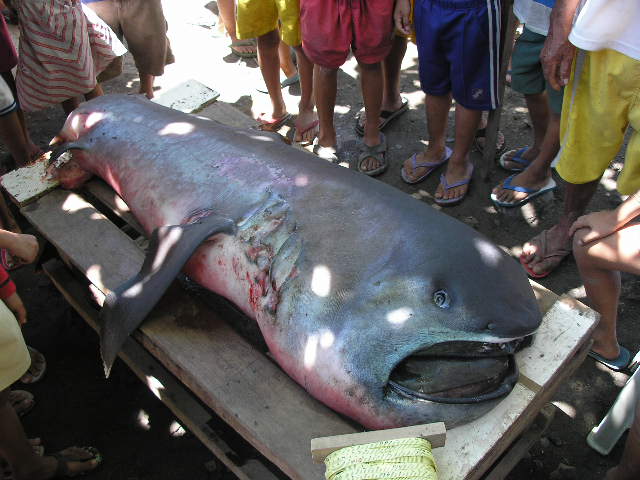
Location: Bayawan City, Southern Oriental Negros, Philippines
Date: January 26, 2006
Sex: F
Length: 500 cm
Disposition: Accidental capture by fishermen. Died before it could be set free.
Article
Release from: Ian Sala of the Bayawan City Department of Agriculture
Photo © Angelo Gasendo of Bayawan City
This megamouth became entangled in a fishing net at approximately 1 a.m. on January 26, 2006. The Department of Agriculture received the fish at 7 a.m. in Barangay Pagatban about 4 kilometers from the shore. The female specimen was 5 meters in length and weighed 750 kilograms. She was already very weak from the capture and died at 7:15 a.m. There was loss of blood from the gills, however there were no wounds on its back as previously reported. The megamouth must have drowned due to the long entanglement in the fish net. The stomach was opened, revealing very small shrimp that it had been feeding on. After inspection of the remains of this fish, it was buried.
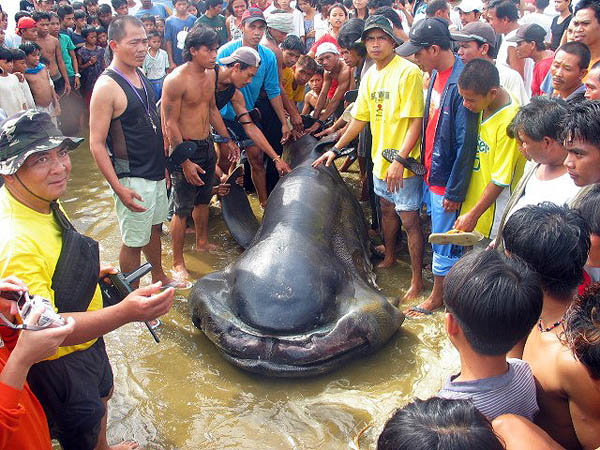
Location: Hualieng, Eastern Taiwan
Date: June 5, 2005
Sex: Unknown
Length: Unknown
Source: Victor Lin
This megamouth has been captured and landed in the waters off Hualien, Taiwan. The specimen weighed between 400-500 kg, and the sex was undetermined. This was the fifth megamouth to be caught in these waters within approximately a one month period.
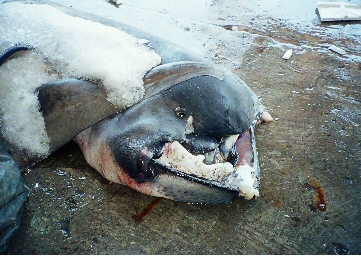
Location: Hualieng, Eastern Taiwan
Date: May 5, 2005
Sex: F
Length: Unknown
Disposition: Weighed 807 kilograms, Dissection at Taipei Zoo/Academia Sinica
Source: John Y. Wang and Shih-Chu Yang
This megamouth has been captured and landed in the waters off Hualien, Taiwan. This specimen was a female that weighed 807 kg which was even heavier than the previous female and more likely to be pregnant. She was sold to Kwung-Tsao Shao at the Academia Sinica and was shipped directly to the Taipei Zoo for dissection. This was the fourth megamouth to be caught in these waters within a two week period.
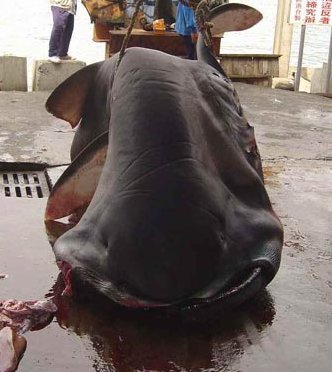
Location: Hualieng, Eastern Taiwan
Date: May 4, 2005
Sex: F
Length: 709 cm?
Disposition: Dissection at Taipei Zoo/Academia Sinica
Source: John Y. Wang and Shih-Chu Yang
This megamouth was captured by an ocean sunfish drift-netter off the central east coast of Taiwan and landed at Hualien Port. The female megamouth shark weighed 689 kg and measured 709 cm in length as determined by Shih-Chu Yang. She also collected at least one ectoparasite from the specimen. Based upon the shape of the belly, it was guessed that the shark may have been pregnant. The carcass is currently undergoing dissection at the Taipei Zoo/Academia Sinica.
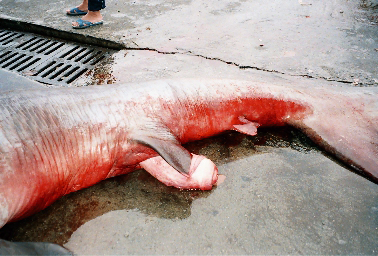
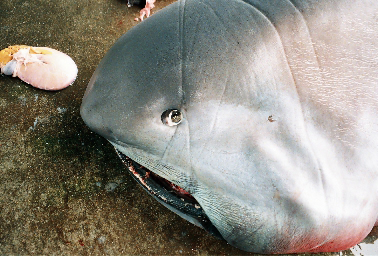
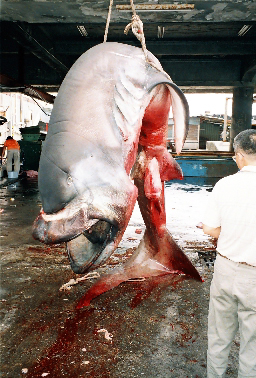
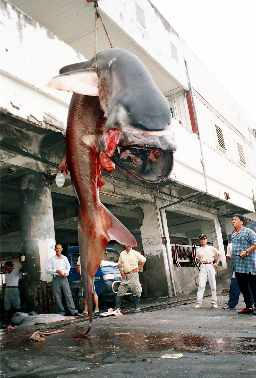
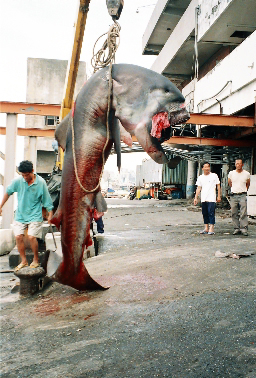
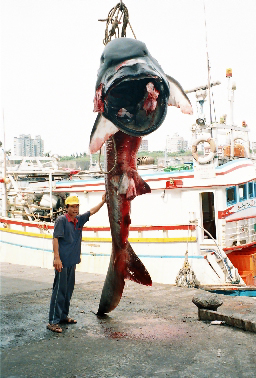
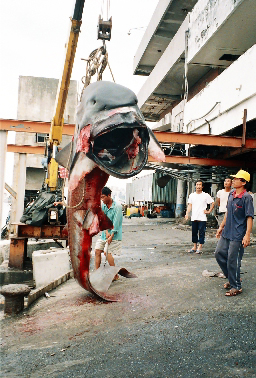
Location: Kisei-cho, Nishiki, Mie, Japan
Date: January 23, 2005
Sex: F
Length: 528 cm
Disposition: Frozen (pending), Toba Aquarium
Sourses: Masami Furuta, Toba Aquarium
Article
Photos © Masami Furuta
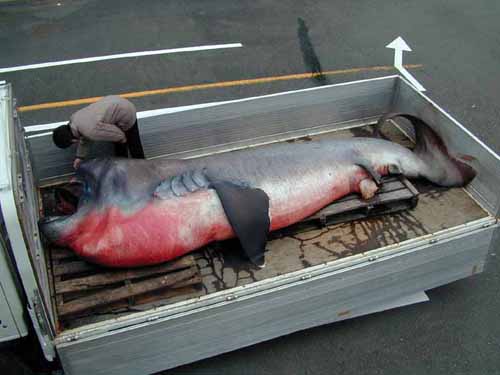
A megamouth shark was captured with a purse seine set off the coast of Kisei-cho Nishiki, Mie, Japan. The purse seine was set at a depth of 200 m around 5:00am on January 23, 2005. We received a phone call informing us of the possible catch of a megamouth shark. We traveled to the fishing port, but by the time we arrived, the megamouth was already dead. This megamouth was a female with a body length of 528 cm. The megamouth was hoisted onto a truck with the assistance of a lift and was transported to the Toba Aquarium where it was placed in a freezer. In the near future, we will taxidermy this animal for display at the aquarium.
This is the third megamouth from the Mie Prefecture. The first time a megamouth shark was captured in the Mie Prefecture was near Owase City, Mikisaki on April 30, 1997. The latest megamouth capture here was in Mihama-cho Atawa Mie on April 23, 1998.
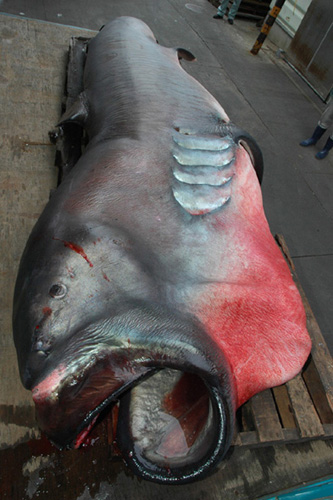
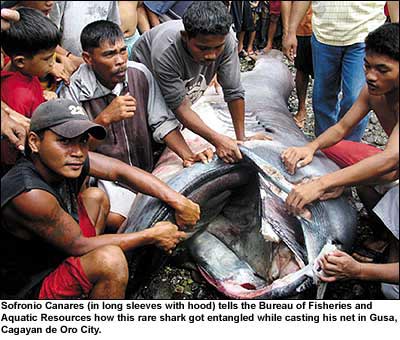
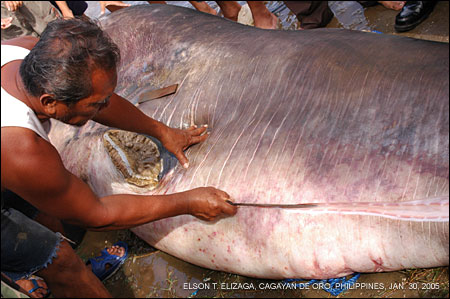
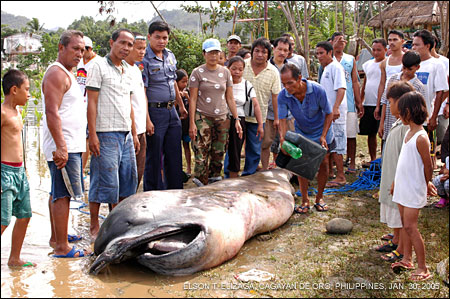
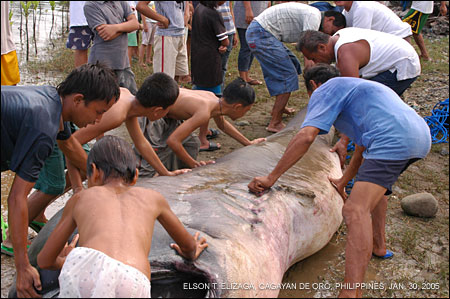
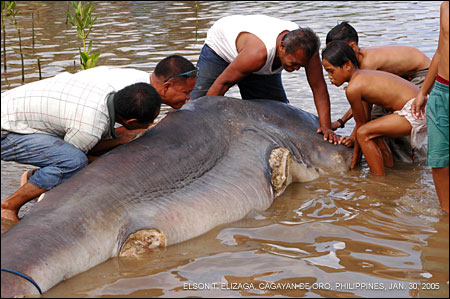
Location: Cagayan de Oro, Philippines
Date: January 30, 2005
Sex: F ?
Length: 417 cm
Disposition: Caught by fisherman, buried
Source: Elson T. Elizaga
Article
Photos © Elson T. Elizaga
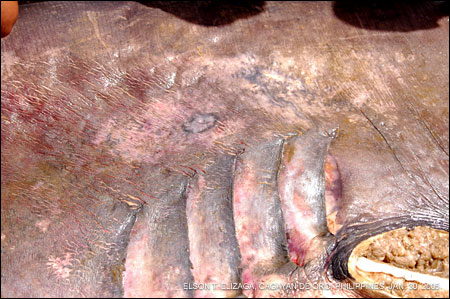
This megamouth was caught in the net of Sofronio Casañares in Macajalar Bay, Philippines at approximately 3 am on January 30, 2005. The fish dragged Casañares’ paddle-driven banca for an hour until it stopped, at which time it was apparently exhausted.
Casañares called another fisherman on a pumpboat to help him bring the fish to the shore of Barangay Gusa, near the estuary of Bigaan River and Villa Ernesto Subdivision, Phase II.
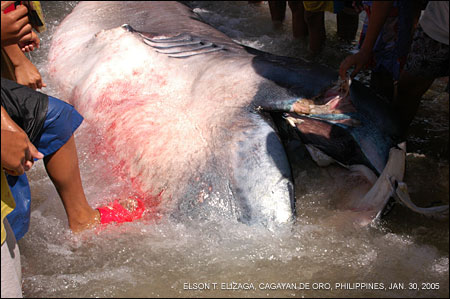
An initial report indicates that Casañares sliced off the fins because he was upset that the fish destroyed his net. However, Casañares hasn’t been interviewed by this author.
Radio station Bombo Radyo reported the find in the early morning. Officials from the Bureau of Fisheries and Aquatic Resources (BFAR), City Agriculture Office (CAO) and several journalists came to document the event. According to Fisheries Administrative Order 208 the BFAR and CAO official buried the shark in the bank of the estuary; this states, a carcass of an endangered marine animal is to be buried after documentation.
BFAR and CAO officials, however, agreed with this writer, who suggested that the animal be first dissected in order to find eggs or embryos, which could be preserved for scientific study. A butcher performed the dissection, with Barangay councilor Prospero Abrio present as witness.
Location: Barangay Namocon, Tigbauan, Iloilo, Philippines
Date: November 4, 2004
Sex: F
Length: 504 cm
Disposition: Stranded on beach
Source: TU Bagarinao
Curator, SEAFDEC FishWorld
SEAFDEC Aquaculture Department
Tigbauan, Iloilo, Philippines
Article
Photos © Isidro Tendencia, AV Technician of the SEAFDEc Aquaculture Department
A female megamouth shark 504 cm long and about 1 ton in weight was stranded on the beach of Barangay Namocon, Tigbauan, Iloilo, Philippines around 5 pm on 4 November 2004. SEAFDEC FishWorld was informed of the stranding the next morning. I immediately recognized the very rare megamouth, and my heart skipped a beat. The megamouth is a recent scientific discovery, the first one having been caught off Hawaii in 1976 and described as Megachasma pelagios by L. Taylor, L. Compagno, and Struhsaker in 1983. The one stranded in Namocon is the third recorded in the Philippines, and only the 26th specimen recorded from around the world, according to Dr. George H. Burgess, Director of the Florida Program for Shark Research, Florida Museum of Natural History (http://www.flmnh.ufl.edu). The formalin-preserved carcass is now specimen AQDM2004 of the fish collection of FishWorld at the Tigbauan Main Station of the SEAFDEC Aquaculture Department.
Megamouth #24 was still alive when it was stranded and the Namocon fisherfolk tried to push it back to sea. But it would not swim out again. Barangay Captain Fred Talaman called the media and the Bureau of Fisheries and Aquatic Resources. The TV crew of ABS-CBN News arrived at the scene and took footage for broadcast the next evening. Hanani Torilla of BFAR did not recognize the megamouth as such, and he advised Captain Talaman to bury the shark (generic local name, ‘bagis’). Crowds gathered around the shark at the beach. The megamouth died at about 10 pm on 4 November. Hector Zayco, proprietor of Sol y Mar Beach Resort, near the site of stranding, called FishWorld the next morning.
I told Captain Talaman that the megamouth was a special and rare shark and that I would like to take care of it at FishWorld, rather than have it buried at the beach. So an outrigger motor boat was arranged and the megamouth was towed about 4 km from Namocon to the SEAFDEC Aquaculture Department. Then it had to be carried by 16 fishermen from the beach to what I thought was a ‘cold room’ at the pilot feed mill. It turned out that the cold room was only airconditioned (coldest at 16 C) and was too small for the shark, and had feed ingredients that would be contaminated. Meanwhile, the 16 fishermen had to go, and the megamouth could not be taken across the highway to FishWorld. So now it lies in 10% formalin in a one-ton fiberglass tank outside of the feed mill. I will have it transferred to FishWorld once we find a proper container for it. It was so easy to decide to keep it, but the logistics of keeping it is turning out to be really difficult.
The first megamouth (5.5 meters long, male) recorded in the Philippines (#11 in the world), was caught in Macajalar Bay off Cagayan de Oro on 21 February 1998 and reported by J. Morrissey and E. Elizaga in the journal Philippine Scientist 36: 143-147 (1999). The second megamouth (5 m long, sex undetermined) from in the Philippines (#18 worldwide) was caught by set gill net also in Macajalar Bay on 6 January 2003. Both specimens were eaten by the fisherfolk.
Megamouth #24 was washed ashore dead in Tokyo Bay, Ishihara, Japan, on 19 April this year.
I had informed Dr. Domingo Madulid of the National Museum of the Philippines and Dr. Paciente Cordero of the National Research Council of the Philippines about the megamouth. I thank Dr Lawrence Liao of the University of San Carlos, and Dr. Kazuya Nagasawa of the SEAFDEC Aquaculture Department for providing some information on the megamouth.
Location: Off Ajiro, Shizuoka, Japan
Date: April 23, 2004
Sex: F
Length: ca. 490 cm
Disposition: Discarded
Sources: Masami Furuta, Toba Aquarium
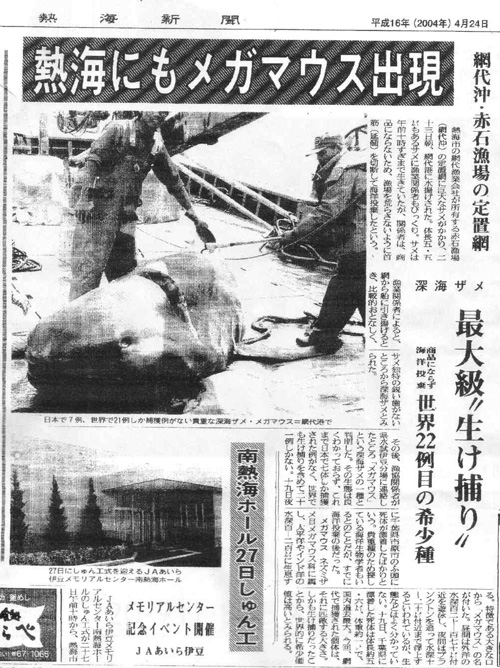
Location: Tokyo Bay, Ikhihara City, Japan
Date: April 19, 2004
Sex: F
Length: 563 cm
Disposition: Washed ashore dead
Source: Alex Buttigieg
A rare megamouth deep-sea shark is displayed after being discovered in Tokyo Bay near Ichihara City, by the Natural History Museum and Institute, April 22, 2004. The shark measures 5.63 meters (18.47 feet) in length, 2,679 lbs in weight, and its mouth is 1.15 meters (3.77 feet) in diameter, which the museum says is the world’s largest of its kind yet reported.
Location: Gapang Beach, northern tip of Sumatra, Indonesia
Date: March 13, 2004
Sex: M
Lencth: 177 cm
Disposition: Frozen (pending)
Source: Lumba Lumba Dive Centre
Article
Photos © Ton and Marjan, Lumba Lumba
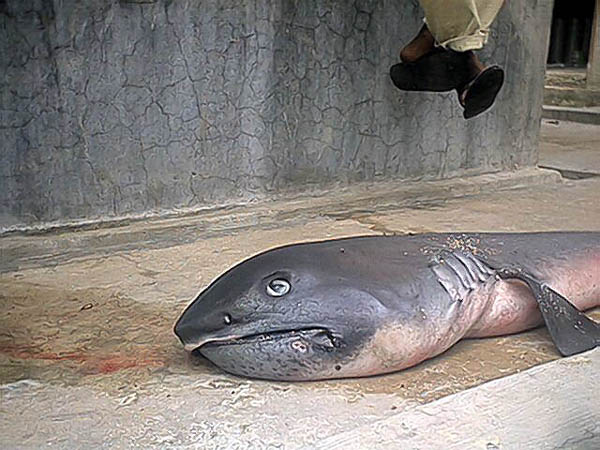
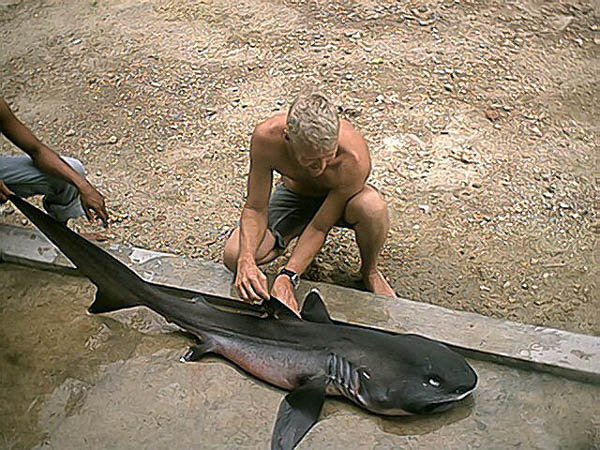
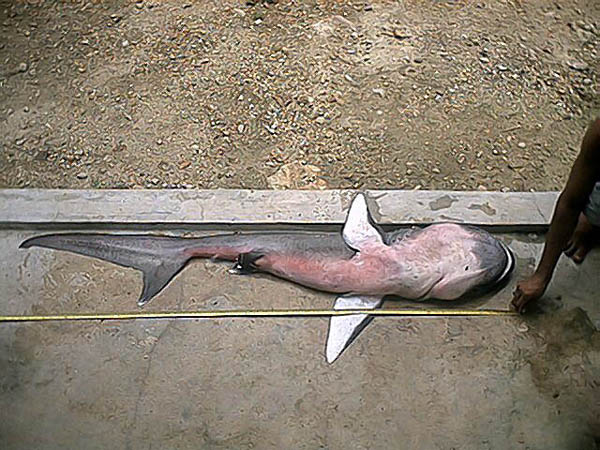
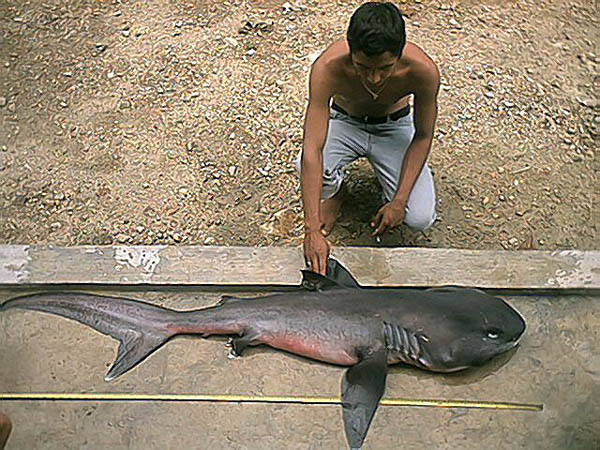
On Saturday March 13 2004, just before noon, a megamouth shark washed ashore in Sumatra. One of the rarest seen sharks in the world, the megamouth was discovered in the tidewater on Saturday by locals. The shark, measuring 1.7 m in length, has since been frozen. The discoverers of the shark are waiting to hear from scientists on what to do with the specimen. If confirmed, this would be the 23rd sighting of a megamouth in the world.
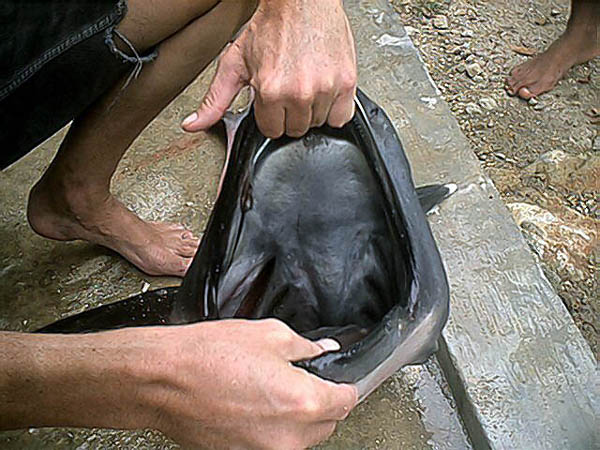
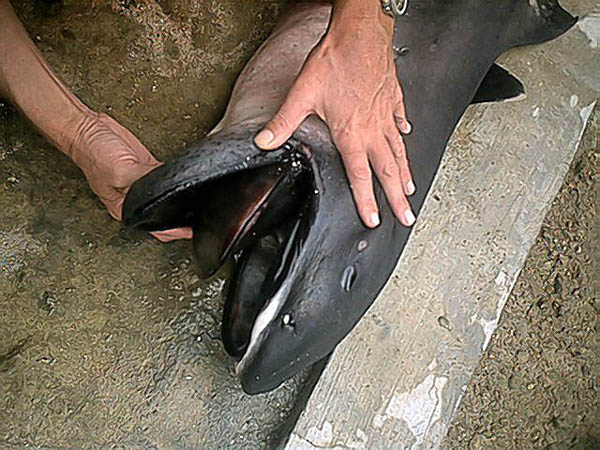
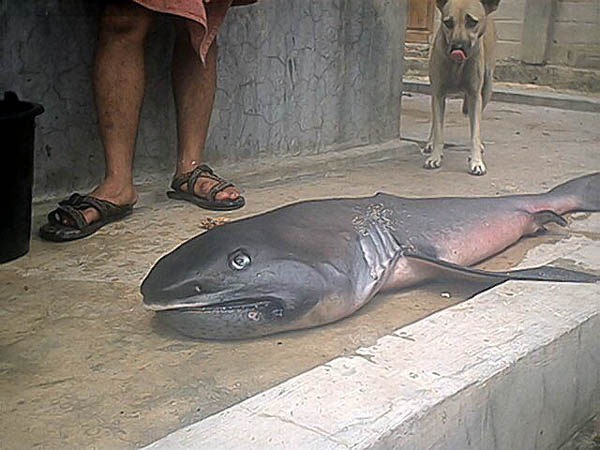
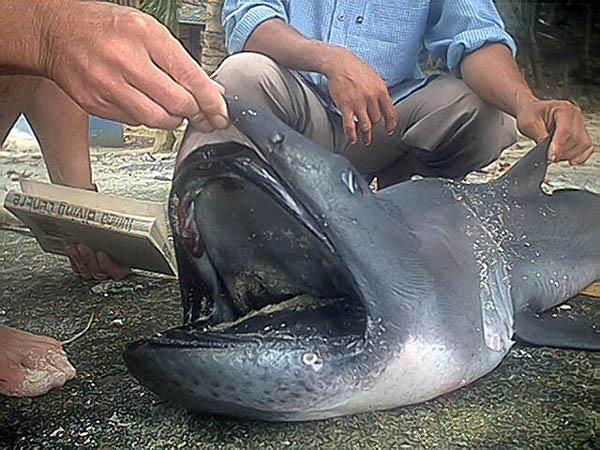
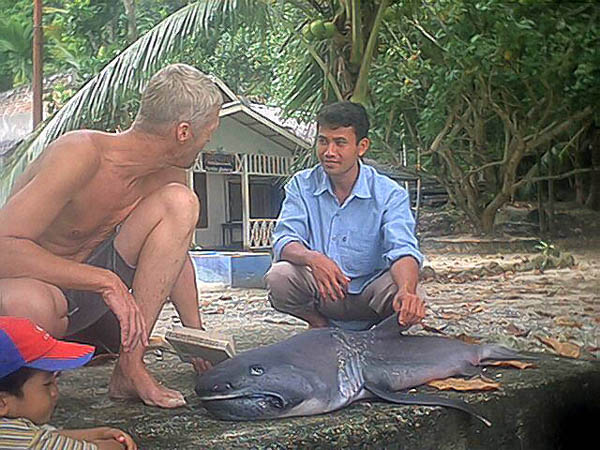
Location: Posorja Port, Guayas, Ecuador
Date: March 8, 2004
Sex: M
Length: 420 cm
Disposition: Sent to market
Sources: Miguel Romero and Justo Liza Santa Cruz
Instituto del Mar del Perú (IMARPE)
Article
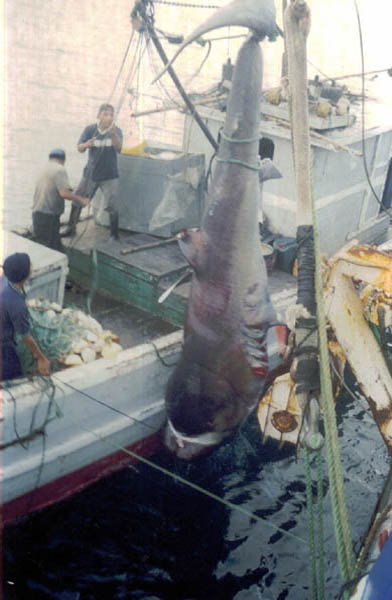
Megamouth Caught for First Time in the Pacific Ocean off the Coast of South America
Photos © Mr. Justo Liza Santa Cruz
On the morning of March 8, 2004 at 7:00 am, personnel of the Instituto del Mar del Peru (IMARPE) were carrying out scientific research on board the Ecuadorian tuna fish ship “BETTY ELIZABETH” when they observed a small artisan craft, also of Ecuador, in trouble. It was inclined on the right side of starboard and in its trammel net (placed the day before) was a very large and heavy fish. It was impossible for the crew to bring up such a large fish. The “BETTY ELIZABETH” assisted them by tying a rope on the base of the caudal fin of the large specimen and raising the trammel net.
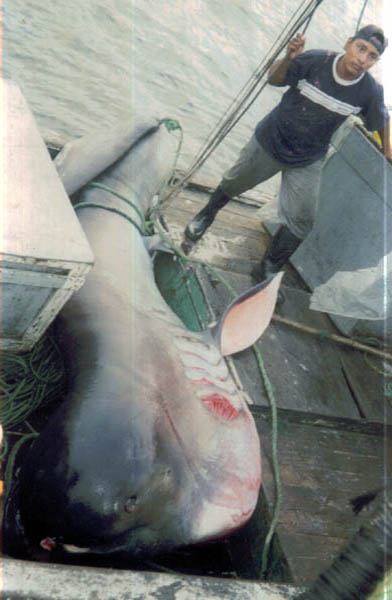
The fish made movements as the net was rising so we thought it was still alive. The fish was observed regurgitating its food consisting of a variety of fishes, mainly the Engraulis ringens “peruvian anchovy”. The specimen was placed on the deck of the small craft with difficulty because its total length was longer than the width of the craft.
The captured specimen was male with a standard length of 4.20 m (from the extreme of its mouth to the base of the caudal fin) and an approximate weight of 600 kg. The fishermen of the small craft told us they were going to take off the fins, head and innards, to cut the fish in filets for human consumption and taken to market in Punta Salinas (Ecuador).
The capture took place at 02°54.374′ S and 81°14.858′ W, at 41.6 nautical miles of the coast, in front of the Posorja Port, Guayas, Ecuador, close to the Peruvian border. In the zone of capture, young specimens of Engraulis ringens “peruvian anchovy” were observed, with approximate total lengths of 7.0 cm, in groups like “spots”. The surface temperature of the sea was 23.6° C. At the moment the fish was captured, the sea was calm, with a light fog and sunshine at the same time.
The photos attached to this report are the only registries of this capture. The species was identified later as Megachasma pelagios “megamouth shark” in the Instituto del Mar del Peru (IMARPE). This report is the first record of this rare species in the Southeastern Pacific region and is the 22nd discovered world-wide.
Artisan ships mainly dedicated to the fishing of Coryphaena hippurus “common dolphinfish” with trammel nets and some tuna fish ships using purse seines are observed in this zone. The crew of the tuna fish ship “BETTY ELIZABETH” said this was the first time this rare species was observed in spite of all the years they have dedicated to fishing, at 19° S 50° N and 130° W.
We thank Mrs. Rita Horta Ali, Chief of Research Technical Scientific Office of Instituto del Mar del Peru (IMARPE) for the facilities to carry out this report.
Miguel Romero Instituto del Mar del Perú (IMARPE) Esquina Gamarra y General Valle. PO Box 22 Callao – Perú Email: mromero@imarpe.gob.pe
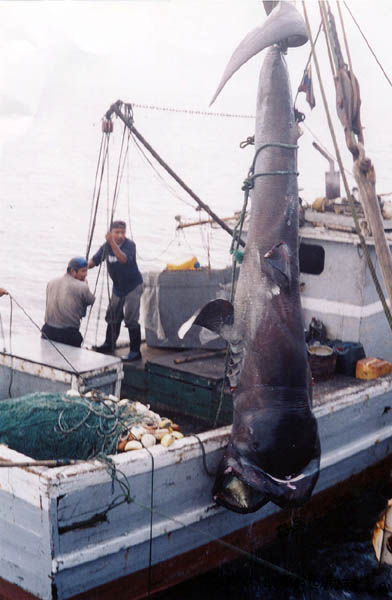
Location: Omaezaki, Sizuoka, Japan
Date: August 7, 2003
Sex: M
Length: 430 cm
Disposition: Tokai University (taxidermy)
This megamouth was 430 cm long. It was found in Omaezaki, Sizuoka, Japan, and was sent to Tokai University for taxidermy.
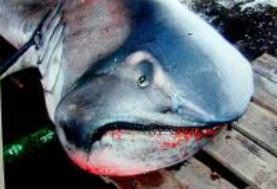
Location: Hualien Province, Taiwan
Date: July 3, 2003
Sex: M
Length: ~250 cm
Disposition: Consumed
Article
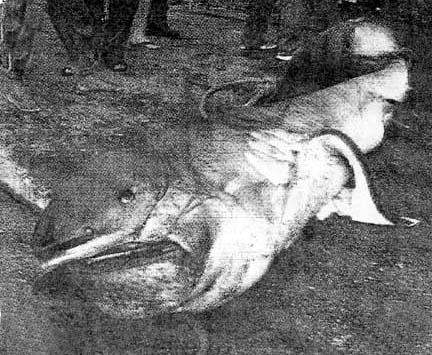 Translation of Japanese article by Victor Lin, courtesy of Henry Mollet
July 4, 2004
Permission granted from Henry Mollet
Hualien Province fisherman, Li, caught a weird fish that looks like a shark at Ki-Lei-Bi sea yesterday; and even the local fishery department officer cannot tell what fish it is. According to Li, who has been fishing for over 40 years, he has never seen a fish like this. Other fisherman also think it is weird. An owner of a seafood restaurant near the dock has bought the fish, and this weird fish ha become a talking topic among fisherman.
According to Lin, he and his son took their fishing boat to 800 m off Ki-Lei-Bi coast at 5 am last morning, to retract the net they had set a day earlier. When they grabbed the net, the weird fish showed up surprisingly. After they took the weird fish back to the dock, those who saw the fish were all astonished.
The fish is about 2.5 m long and weighed 490 kg. Its appearance is very similar to a shark, but it has lips on both jaws. The mouth can open wide and the teeth are tiny and set close together. And these characters are not like those of sharks. Nobody can tell what fish it is. Some fisherman say its mouth looks like a lion, so let’s call it a Lion Shark; some say it has lips so thick and called it an Elephant Shark/
Li, who is 66 years old, says he has never seen such a weird fish after fishing over 40 years.
Chen, who owns a seafood restaurant near by and is now 70+ years old, said he had seen one at Southern Bay Dock about 40-50 years ago and nobody knew which fish it was then. He never expected that he would see it again after all these years in Hualien. However, the identity of the fish still remains unknown.
The fish was finally bought by the seafood store. After gutting, they found the stomach of the fish empty and concluded that this fish mainly fed on tiny fish. It saw some fish stuck in the net and wanted to have a meal and then got caught itself.
Location: Cagayan de Oro City, Philippines
Date: January 6, 2003
Sex: Unknown
Length: 497 cm
Disposition: Consumed
Sources: Edward B. Yasay, Bureau of Fisheries and Aquatic Resources – 10
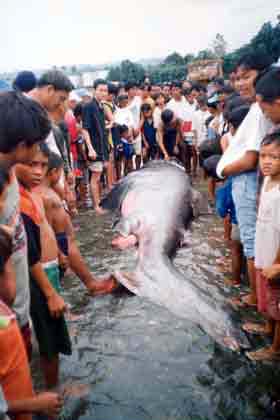
Article
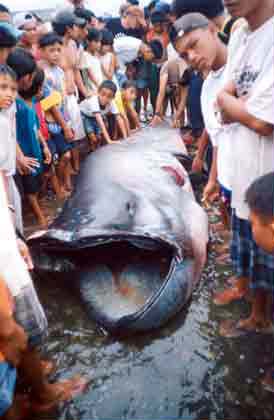
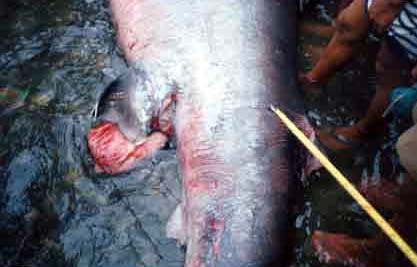
On the morning of January 6, 2003, a call was received by the Department of Environment and Natural Resources (DENR) Regional Office No. 10 informing them of an unusual looking fish caught in the waters of Tablon, Cagayan de Oro City (also along Macajalar Bay and West of Puerto). DENR then relayed the message to the Bureau of Fisheries and Aquatic Resources – 10 (BFAR 10) Regional Director Arlene B. Pantanosas, who immediately sent BFAR 10 personnel to the area to investigate.
According to Mr. Eldiposo Pabaida, the fisherman, who caught the shark, he went fishing at about 5:30 in the morning and about an hour and a half after, at about 120 fathoms deep, when he was hauling his net (bottom set gill net), he noticed that something heavy was on it. Realizing that he could not haul the net on board alone, he called the attention of nearby fishermen and they brought it ashore.
The fishermen had thought it was just a big fish, but when they closely examined it, as they were not familiar with the species.
The fish was already dead when BFAR 10 personnel arrived in the area. Because of the presence of the gill slits and the asymmetrical caudal fin, they could only guess that it was a shark and a rare one. Pictures were taken for documentation. The fish was approximately 4.97 m in length (from the tip of the mouth to the tip of the tail). It was later consumed by the nearby residents.
The shark was measured for total length and breadth. It measured approximately 4.97 m in length and had a body breadth of 1.01 m. Pictures were only taken for identification, since the species was not common to them. This has been the second recorded sighting of the shark in the Philippines and the 18th worldwide.
Location: Natures Valley near Plettenberg Bay, east of Cape Town, South Africa
Date: April 20, 2002
Sex: F
Length: 350 cm
Disposition: Port Elizabeth Museum
Sources: Dr. Malcolm Smale, Port Elizabeth Museum
Article
Photos © Beefy and Tish (Natures Valley Trading Store)
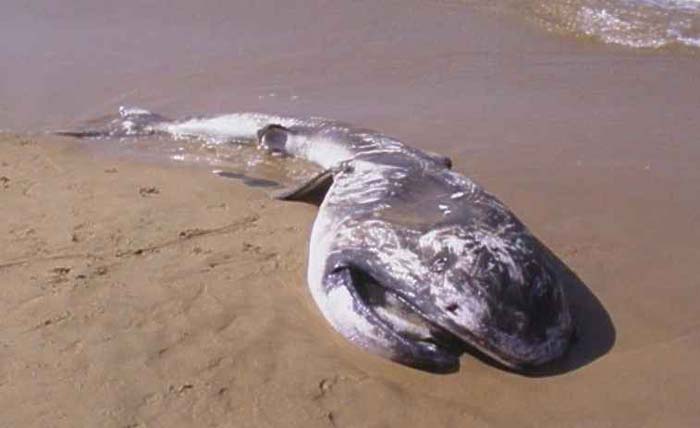
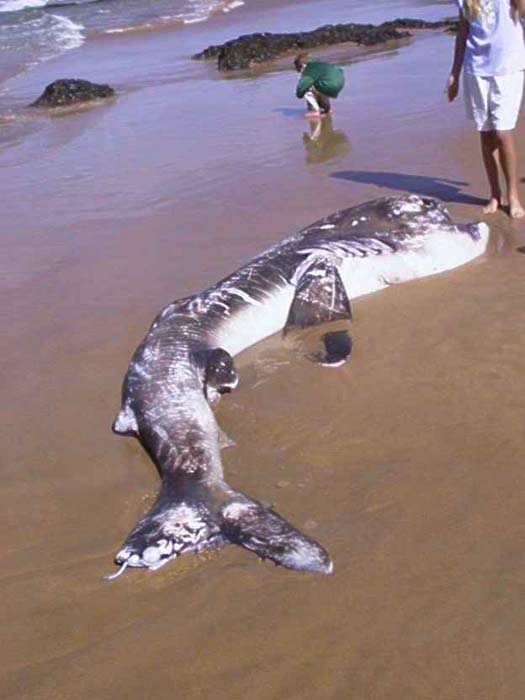
On 20 April 2002, a large shark was stranded at Natures Valley (33o 59′ S, 23o 34’E) in the Western Cape Province, South Africa. Initial reports suggested that it was a whale shark, but subsequent reports and digital photographs confirmed that it was a megamouth, Megachasma pelagios. Dr Vic Cockcroft of the Centre for Dolphin Studies collected it from the beach to ensure that it was not washed out to sea again. It is the first record of this species in South Africa and the Western Indian Ocean and is the 17th discovered world-wide since its discovery off Hawaii was announced in 1976. It was iced early the next morning and collected by Dr Malcolm Smale and Matt Dicken and brought back to the Port Elizabeth Museum. It was placed in a scientific freezer and frozen to -20o C. A preliminary examination showed that the animal, approximately 4m long and female was in reasonable condition, but the skin was scuffed and there was some damage to the fins. It will be examined, measured and dissected by Drs Malcolm Smale (Port Elizabeth Museum) & Leonard Compagno (South African Museum) in early May. Various samples, including tissues for DNA analyses will be saved for future research. Taxidermists will make a mould of the animal for educational displays in museums.
The photos were supplied by
Dr. Vic Cockcroft
Centre for Dolphin Studies
Plettenberg Bay, South Africa
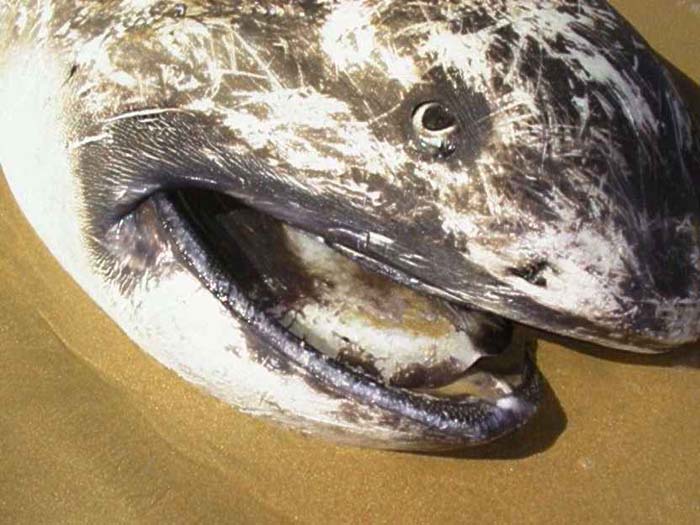
Location: East Indian Ocean (Lat. 02° 17.9′ S Long. 088º 12.7′ E)
Date: January 18, 2002
Sex: M
Length: 235 cm
Disposition: Discarded
Sources: Sopana Boonyapiwat (sopanab@fisheries) and Chavalit Vidthayanon
Department of Fisheries
Ministry of Agriculture and Cooperatives
Bangkok, Thailand
Article
Photos © Sopana Boonyapiwat
Megamouth shark #16 was caught in the morning of 18 January 2002 during tuna purse seine operation by M.V.SEAFDEC in the east Indian Ocean at 02° 17.9´ S, 088° 12.7´ E. It’s total length was 235 cm. and estimated weight was over 120 kg. It was a juvenile male with small claspers. The depth of capture was 150 m. (tuna purse seine depth), and the total depth at the site was 4000 m. Sea surface temperature was 26.8° C. The specimen was discarded. The date recorded on the photographs is incorrect because of a mistake of setting the camera.
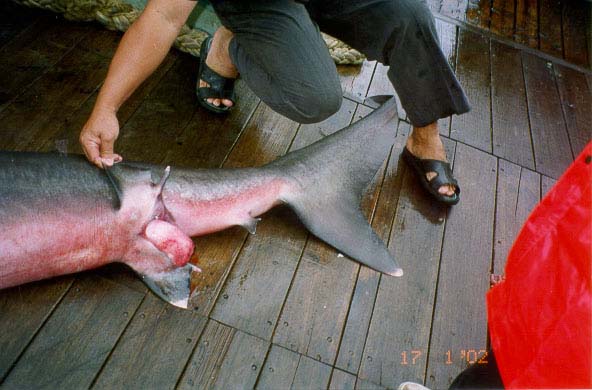
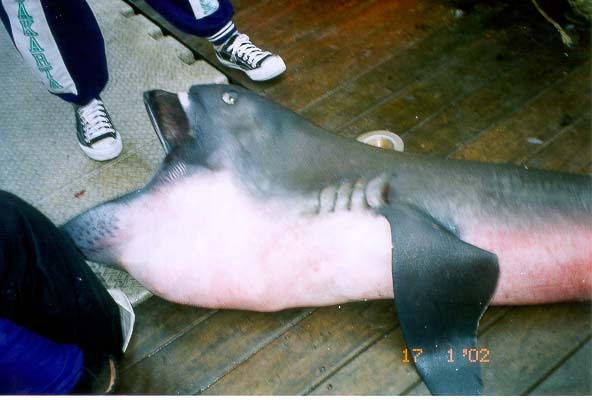
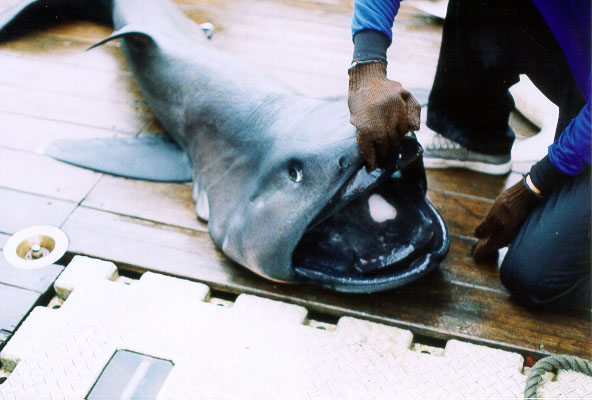
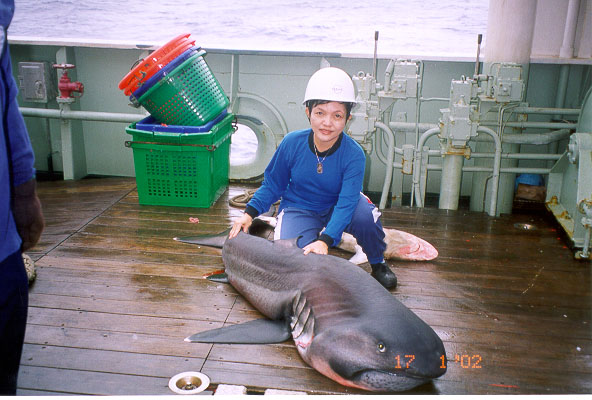
Location: 42 mi. NW of San Diego, California, U.S.A.
Date: October 19, 2001
Sex: M
Length: 548 cm
Disposition: Released
Source: Don Petersen
Observer Program Coordinator
National Marine Fisheries Service, Southwest Region
Article
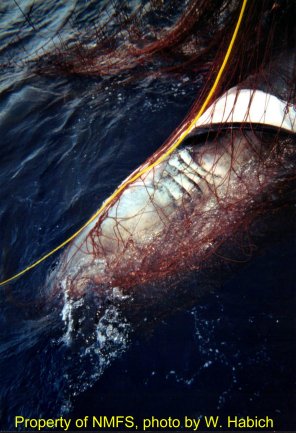
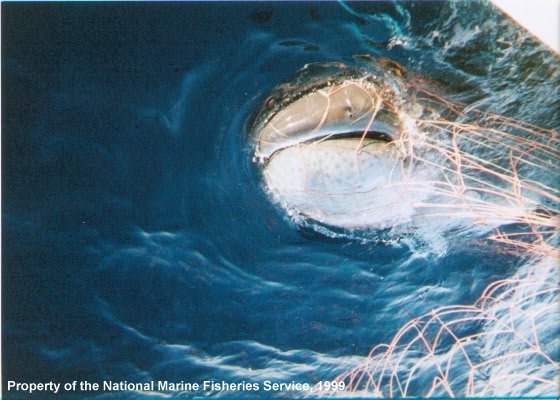
On October 19, 2001, another Megamouth shark (male, approx. 18 ft. fork length) was caught in a drift gillnet and released alive in good condition. A U.S. National Marine Fisheries Service observer was aboard the commercial swordfish vessel, approx. 42 miles northwest of San Diego, California. The observer was able to collect a tissue biopsy and take many color photographs including one of the upper jaw with white lip and lower jaw with dark spots on a white chin. The observer also noted the presence of claspers. Water depth at this location is 460 fms. and the sea surface temperature was 65.8 F. This is the fourth (November 1984, October 1990, October 1999) Megamouth shark caught off Southern California in a drift gillnet targeting swordfish.
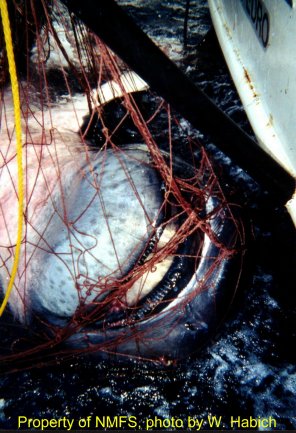
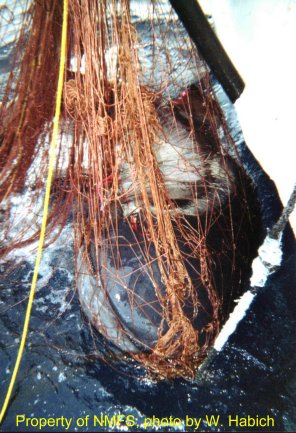
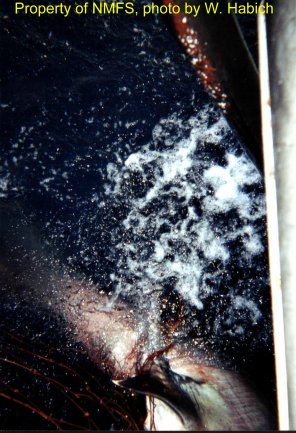
Location: 30 mi. W of San Diego, California, U.S.A.
Date: October 1, 1999
Sex: F
Length: 518 cm
Disposition: Released
Source: Don Petersen
Observer Program Coordinator
National Marine Fisheries Service, Southwest Region
Article
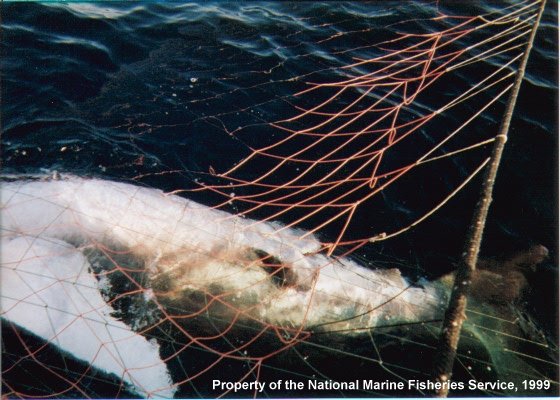
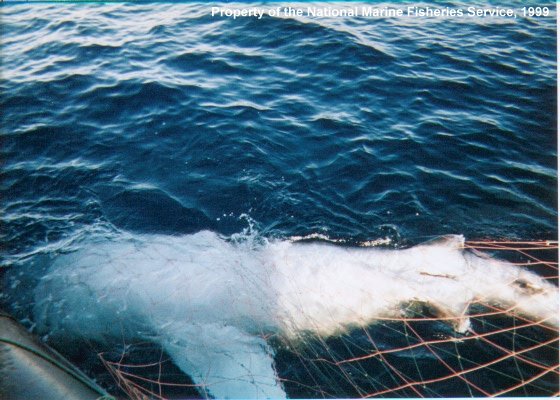
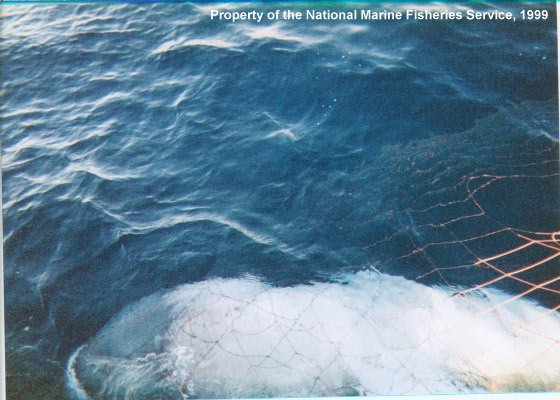
On October 1, 1999, a megamouth shark (female, aprox. 17 ft) was caught in a drift gillnet and released alive in good condition. A National Marine Fisheries Service observer was aboard the commercial swordfish vessel, 30 miles west of San Diego, California. The observer was able to take four color photographs including one of the upper jaw (white lip) / lower jaw (dark spots on white chin) and others of the underside of body (no visible claspers). Water depth at this location is 190 fms. and water temperature was 67.2 F. This is the third (November 1984, October 1990) megamouth caught off Southern California in a drift gillnet targeting swordfish.
Location: Manado, North Sulawesi, Indonesia
Date: August 30, 1998
Sex: Unknown
Length: ca. 5 m.
Disposition: Swam away
Sources:
Pietro Pecchioni
Kuda Laut Project
Manado, North Sulawesi
Indonesia
www.kudalaut.com
ppecchioni@hotmail.com
Carla Benoldi
Department of Zoology, University of Milano, Milano, Italy.
cbenoldi@cibra.unipv.it
Supported by WWF Italy – whale watching program – Manado, North Sulawesi, Indonesia
Article
Sperm Whales Spotted Attacking Megamouth Shark
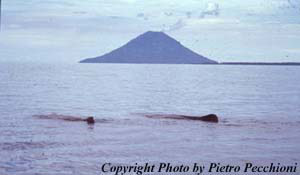 Manado, North Sulawesi, Indonesia, 30th August ’98, 10:00 am – we were studying the whale population with a group of WWF Italy volunteers off the coast of the island of Nain in the Bunaken archipelago (124° 50′ 3″ N, 1° 46′ W) when we witnessed a remarkable event. While looking for cetaceans we encountered three examples of Sperm whales (Physeter macrocephalus) “attacking” a shark. As our boat approached, the 10-12 meters long, the Sperm whales swam off.
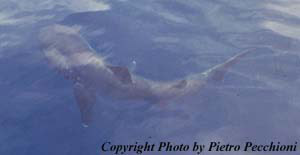
At this point we clearly saw the profile of a large shark (about 5 meters). The base of the dorsal fin and the gills showed signs of the whales’ attack and the shark was swimming slowly and still rather bewildered at the surface. It was probably a planktivorous shark with a large head in proportion to its body. It had white marks on the tips of its fins and mouth and a dark triangular mark under its throat. The upper lobe of the caudal fin was very large. We had found an extremely rare specimen of Megamouth shark (Megachasma pelagios)!
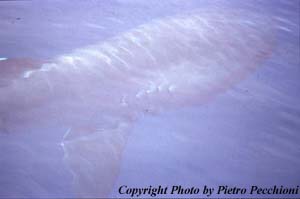 Megamouth sharks are plankton-feeder deep sea animals. It is very rare to meet and observe them near the surface where they usually come only at night, following small crustacean preys. Sperm whales are usually considered squid feeders but there are a few notes about small deep sea sharks’ presence in their diet.
Since the last sighting of Megachasma pelagios (the eleventh) in Cagayan de Oro (Philippines) on 21st February 1998, this is one of the few sightings in open sea as opposed to animals that were stranded or caught in fishing nets. It is also a significant event for studies of the relationship between whales and sharks – was it an attack, playfulness or just curiosity that attracted the Sperm whales to the Megamouth shark?

Ed. Note: This is actually the 13th record of the megamouth shark. Number 12 was captured on 23 April, 1998 in the waters south of Japan very near the site where megamouth shark number 10 was taken. (see Yano, K., Tsukada, O. and M. Furuta. 1998. Capture of megamouth shark number 12 from Atawa, Mie, Japan. Ichthyological Research 45 (4) : 424-426). This is the second report of a cetacean attacking a shark in the space of one year.
Location: Cagayan de Oro, Philippines
Date: February 21, 1998
Sex: M
Length: ca. 549 cm TL
Disposition: Consumed
Source: Amorim, A. F., Arfeli, C. A. and Castro, J. I.
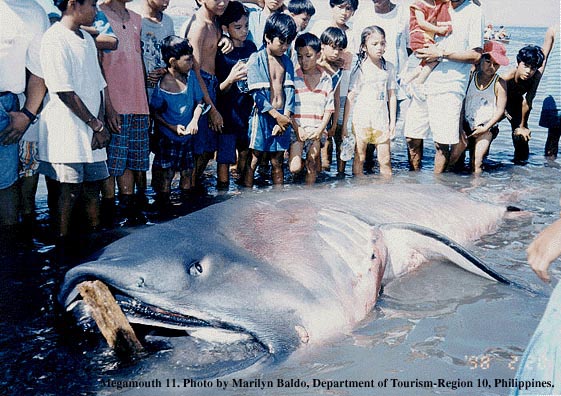
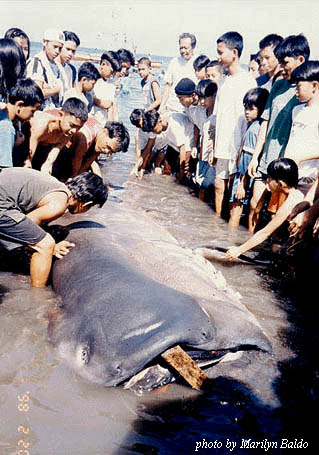

For more information on megamouth11 see:
- Morrissey, J.F. and E.T. Elizaga. Capture of megamouth #11 in the Philippines. The Philippine Scientist 36: 143-147. 1999.
- Megamouth in Cagayan de Oro, EcoNews and The Capture of Megamouth 11, EcoNews.
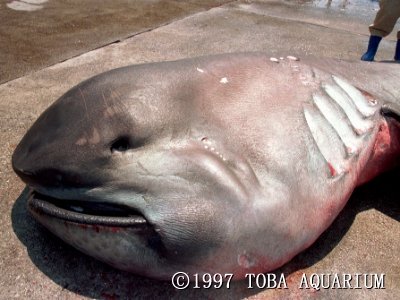
Location: Mikizaki, Owase City, Mie, Japan
Date: April 30, 1997
Sex: F
Length: 500+ cm
Disposition: Toba Aquarium
Sources: Yano, K.; Yabumoto, Y.; Tanaka, S.; Tsukada, O., and Furuta, M.
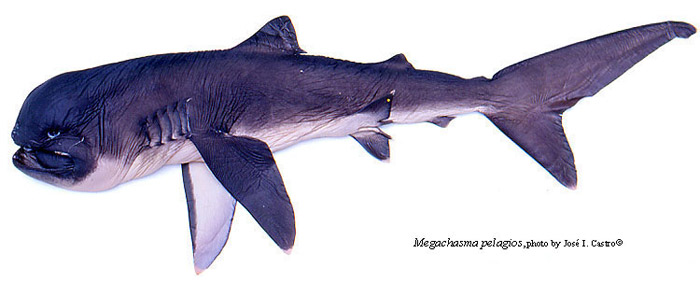
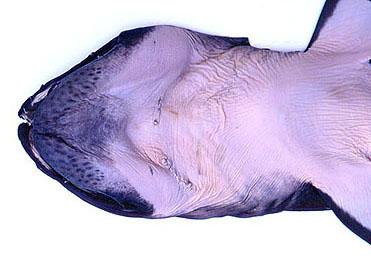
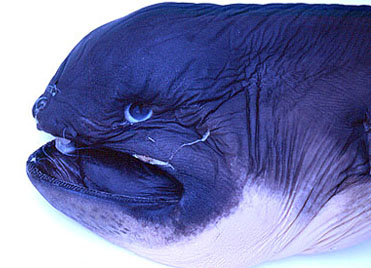
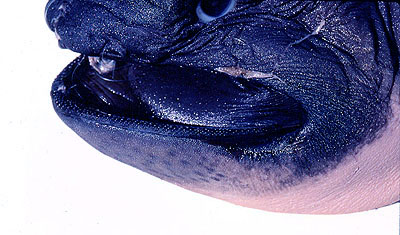
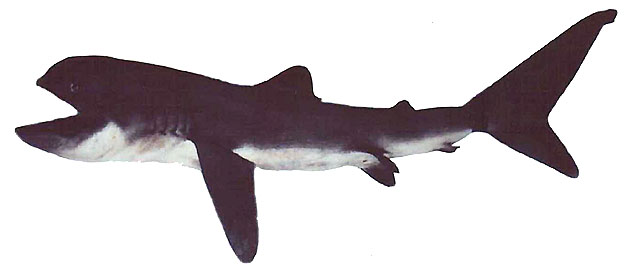
Location: Southern Brazil
Date: September 18, 1995
Sex: M
Length: 190 cm TL
Disposition: Instituto de Pesca (São Paulo, Brazil)
Source: Amorim, A. F., Arfeli, C. A. and Castro, J. I.
Photos by José I. Castro & Otto B. F. Gadig
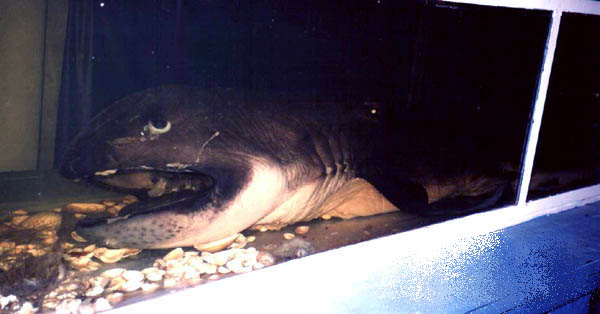
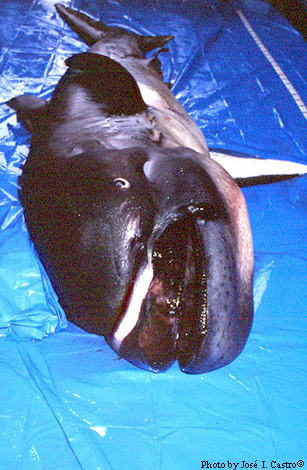
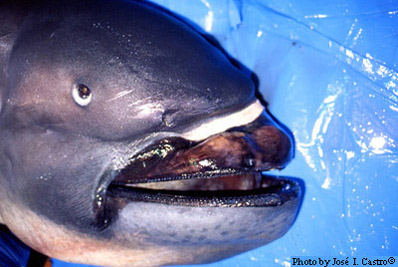
Location: Hakata Bay, Japan
Date: November 29, 1994
Sex: F
Length: 471 cm TL
Disposition: Marine World (Fukuoka, Japan)
Source: Castro, J. I., Clark, E., Yano, K., and Nakaya, K.

Location: Dana Point, California, U.S.A.
Date: October 21, 1990
Sex: Male
Length: 494 cm TL
Disposition: Tracked
Sources: Lavenberg, R. J.
Article
by Tom Haight
All photos © Tom Haight
Like so many people, as a teenager I became fascinated by the oceans after reading a book called “The Silent World” written by the late Jacques Cousteau. I knew that I had to explore the oceans and enjoy the peace and serenity it offers to those who try to capture the untold beauty it represents.
If you are like me, I am sure that you dream of doing something that has never been done before. If you are lucky you will never stop the dreaming, because sometimes those dreams do come true.
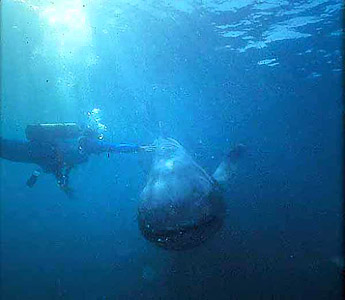
On October 22, 1990 my dream became reality. I shot underwater photographs and video of a living megamouth shark.
The summer of 1990 in Southern California was one full of surprises brought on by ocean temperatures that were warmer than usual. Some of the unexpected treats were large schools of yellowtail, dorado, trigger fish and a few sea turtles. Naturally the biggest surprise of all was the living megamouth shark.
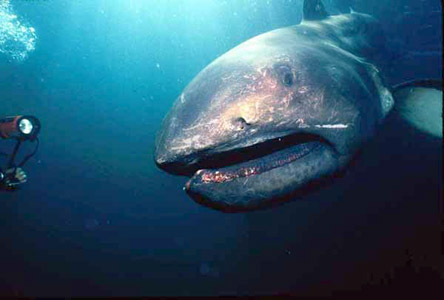
Megamouths are so rare that they were not known to exist until the first one was discovered off the coast of Hawaii in 1976. Four more specimens were discovered off the coasts of California, Australia and Japan prior to the Dana Point megamouth, but none had lived long enough to be studied or photographed alive.
I was at my Capistrano Beach home editing slides of baby Garibaldi, a local fish, when a friend called to tell me that a live megamouth had been accidentally captured in a local fisherman’s drift net. This would be the sixth megamouth seen by man. When he hauled up the net, the fisherman knew that he had something unusual and he towed it seven miles by the tail, back to Dana Point Harbor. It was there in the harbor that it was finally identified as the rare megamouth shark. Dr. Don Nelson, a shark behavior expert at California State University in Long Beach, was summoned to come down. He planned the radio tagging, study and release of the shark.
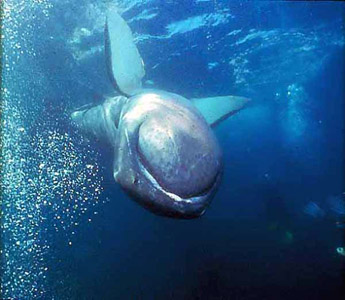
“That thrill of a lifetime” came at 1:30 P.M. when I slipped over the side of my boat and finally saw the shark. The shark was approximately 15 feet long and weighed about 2,000 pounds. The mouth was about 3 feet wide, big enough for a small diver with gear to swim into. This megamouth, like the previous five, was a male, which was evident by the claspers on the underside of the shark. These gentle giants of the deep feed on krill and plankton so even though they have many vestigial teeth they are not considered a threat to larger animals.
As we approached, the shark seemed to welcome our attention and showed no apparent signs of nervousness, which is more than I can say for the divers in the water, including myself.
I spent nearly four hours in the water with the shark, and I was lucky enough to not only capture the event with still photos and video footage, but also to assist in the studying, tagging and releasing of a creature that is hardly ever seen by man.
During that time we used a length of rope with equally spaced knots to measure the length and circumference of the shark.
Naturally we had to take some tissue samples of the shark in order for the marine biologists to try to determine if it was healthy.
Two transmitters were attached to the shark – one to track it vertically in the water column and the second one to track it horizontally.
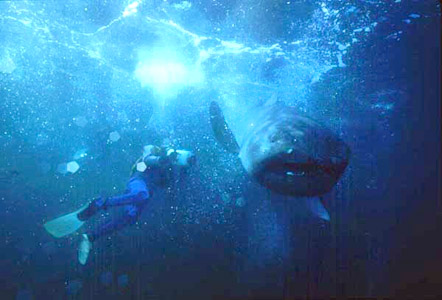
We were constantly touching this strange visitor who was usually at a depth of about 450 feet during daylight hours. He did not seem to mind our prodding, but rather tolerated us as if we were just a part of his daily routine.
After all the measurements and tissue samples were taken and the transmitters were attached, the rope that restrained the shark by the tail was finally severed. It was exhilarating to see him swim slowly and calmly away from us to the safety of the deep.
The radio transmitters that allowed him to be monitored for the following three days revealed a vertical migration pattern. From dawn to sunset he swam slowly at 450 to 500 feet into the prevailing current, apparently feeding on krill that were at that depth during the daytime. From sunset to sunrise he ascended to 39 to 46 feet below the surface to feed on the krill as they also ascended. The extreme daylight depth could explain why the megamouth shark is so rarely spotted. Dr. Nelson stated that the tracking of the vertical migration was one of the most significant shark research events in modern history.
Since the Dana Point megamouth in 1990, eleven more have been seen, but none photographed alive underwater. For me, this once-in-a-lifetime encounter with a rare visitor from inner space was definitely the high point of my 40 years of diving. So please, keep on dreaming. Your dream could be the next one to come true.
Contact Tom Haight: tom@oceanimages.com
Location: Hamamatsu City, Japan
Date: January 23, 1989
Sex: Male
Length: 400+ cm TL
Disposition: Discarded
Source: Nakaya, K.
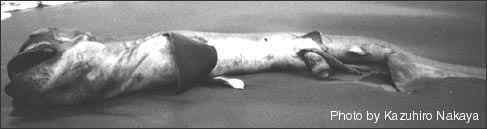
Location: Mandurah, Australia
Date: August 18, 1988
Sex: Male
Length: 515 cm TL
Disposition: Western Australia Museum
Source: Berra, T. M. and Hutchins, J. B.
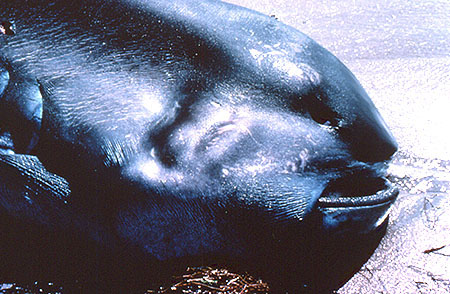
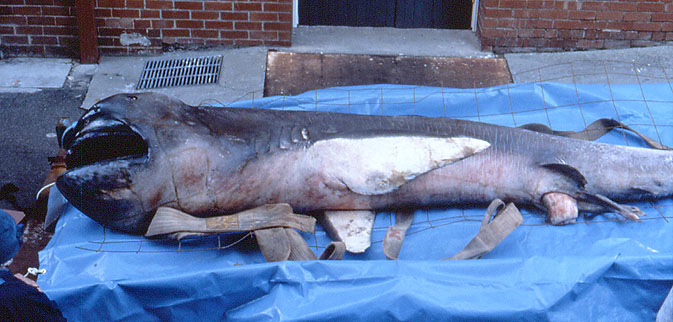
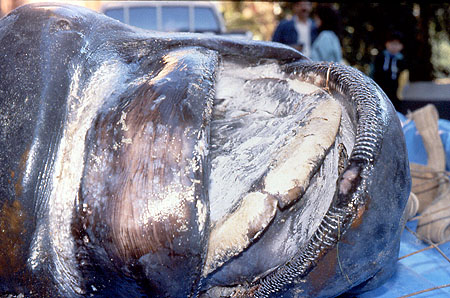
Location: Catalina Island, California, USA
Date: November 29, 1984
Sex: Male
Length: 449 cm TL
Disposition: Los Angeles County Museum (Los Angeles, California)
Source: Lavenberg, R. J. and Seigel, J. A.
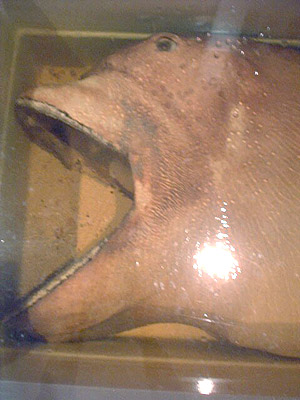
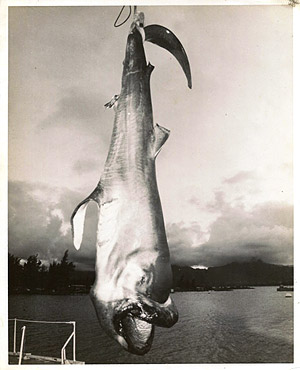
Location: Oahu, Hawaii, U.S.A.
Date: November 15, 1976
Sex: Male
Length: 446 cm TL
Disposition: Bernice P. Bishop Museum (Honolulu, Hawaii)
Source: Taylor, L. R., Compagno, L. J. V., and Struhsaker, P. J.
Article
by Hugh Gallagher
Photos © Hugh Gallagher
On November 15, 1976 I tied a figure-8 slip knot around the caudal peduncle of a megamouthshark resulting in its capture. This was the first recorded specimen of this order, family, genus and species ever taken. The fish was totally unknown before this day.
This event went unheralded for many years because it was a classified operation for the U.S. Navy. The Cold War was still on and we were monitoring Soviet submarine activity. We deployed a sonar array three miles long at a depth of 500′ over a three day period. At each deep end were sand bags to keep it down and a parachutes, acting as a sea anchors, to prevent the array from fouling into a bird nest. The array had a retrieval line attached to it, leading to the surface with a buoy on it for recovery.
The mission was ending and all we had to do was retrieve the gear. But the shark ate one of the parachutes – he must have thought it was a food source. The parachutes we were using had alternating orange and white panels. I don’t know if that had any special significance because of the 500′ depth. At 100′ red and orange colors are lost, at 300′ blues and greens are lost and any colors then turn to purple; it gets pretty dark after that.
I was a civilian contractor (for the Naval Undersea Center at the Kaneohe Bay Marine Corps Air Station on Oahu. I was a crewman on a semi-submersible platform (SSP) called the SSP Kaimolino, a SSP prototype that was always breaking down.
If there was a special irony in this for me, it was that I’d just been fired.
This was my last day on the job.I was to return to the Hawaiian sport fishing trade, where I’d been working as a deckhand for the previous three years.
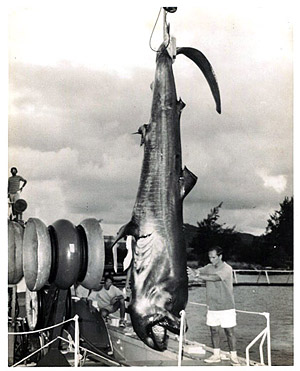
On board the TRB was a scientific team from the University of Houston. They had developed a long range sonar system and were trying to sell it to the Navy. We were over thirty miles north of Oahu, well off the 1,000 fathom ledge, on the abyssal plain.
A word about this sonar apparatus might be of interest. Powered by pieso-electric crystals, one element sent out signals and another element would receive the echoes through the same antenna. We actually had a little dingy on the surface tethered to the array. In its watertight hull was housed a 10 hour reel-to-reel tape machine to record the receiver’s data. We would recover it at the end of each day – it was a three day project. These strong signals go until some subsea structure breaks them up and disperses them. In this case from the Hawaii area to the Japanese Isles, the Aleutian Isles and half way to the continental US west coast, but the mid-Pacific ridge scattered the signals.
Swimming into this web of technology came a hungry 16′ shark. He had eyes the size of softballs to pierce the purple gloom, both jaws dotted with phosphorescent photophores that glowed to attract krill (small shrimp-like creatures) and a tongue the size of a man to gulp down whatever he could lure. He also had two claspers for mating (I guess he needed a spare). These claspers can be seen in the first photo when he’s lying on the sloping deck of the TRP. There is also a deep crease visible where the original 5/8″ Dacron line I used to originally catch him bit into his caudal peduncle. The photo is a bit of an optical illusion due to the sloping deck of the TRB – I really don’t have the legs of a dwarf.
Spotting a cloud of “krill”), he gobbled it down. But this mushy cloud trapped him by getting hung up in his tiny teeth. They were only ¼” mako-type teeth but there were 10 rows of them, 100 each per row. He choked on the parachute!
So this is the end of the last day of a three day project and we can’t get the gear in. We had plenty of hydraulic pressure, the retrieval winch was working, but completely bogged down, and it acted as though we were fouled on the bottom. There was a 500′ column of water on top of this guy holding him down. This goes a long way to explain why no previous specimens were found. Living that deep, they’d just sink when they died.
One second there was a bunch of us blankly staring into a cobalt-blue sea wondering what to do and the next the whole mess boiled out of the water. The shark surfaced twisted up in the parachute – all I saw at first was the tail. The upper lobe of his 6′ thresher tail hissed through and parted the air like the sword of Damocles. We scattered like bowling pins. The engineer disappeared into the engine room and I never saw him again. He may still be there.
Thinking Captain John Hobbs might like to be advised of this recent development, I went to the wheelhouse. Word had preceded me.
“What have we got there, Gallagher?”
“It’s a shark all right”.
“Well cut it loose, we’re running late and heading for the barn”. .
Before I cut the beast loose to his watery grave, I wanted to have a look at him. What were they going to do? They’d already fired me.
After three years of catching big tuna, marlin and frisky mahi’s, I knew my way around a back deck. No gaffs were on board so I got our only tool – an 8′ boat hook. This was a real solid Navy thing with a strong oaken handle and a silicon-bronze head. Taking aim and making sure I could dodge that wicked tail, I let it fly like a harpoon right into his side, point blank. If he had any life in him I wanted to know before, not during, my removal of his shroud.
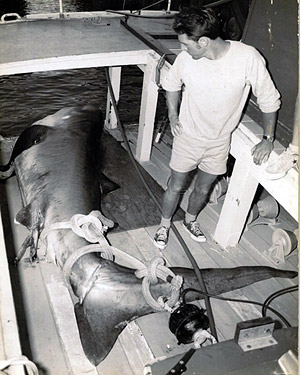
Using the boat hook I peeled the parachute off his body. He just kept getting longer and longer. When he first came up only that big tail was exposed. The caudal peduncle was bigger than my waist.
The pectoral fins were 6′ long and hung off him like those on a humpback whale. The main body was long, slender and graceful. But that head had to be the ugliest thing I’d ever seen; half of his weight seemed to be in that head. I saw his eyes were rolled and he was a goner. But he did look magnificent.
Since nobody had a clue as to what it was, the skipper changed his mind and the task began on how to get him in; we were going to be late now anyway.
I was the only one with any experience handling big fish, so I kept after him. While another deckhand sat on my calves, I hiked over the side and tied a figure-8 slip knot out of 5/8″ Dacron line around his caudal peduncle. We cleated off the bitter end and he swung around, head downstream. Seawater flushed through his gills and washed the parachute out of his mouth. We buoyed it and recovered it later. We held that fish on that line for over an hour and it sang like the e-string on my mandolin.
Being the lame-duck, coal-passing, fired-deckhand that I was, nobody was paying my other landing ideas much attention. They finally listened to me but not before we had a go at dragging that Rock-of-Gibraltar head-first up the ramp using the retrieval winch designed by the lead scientist for the project. That task failed miserably.
We then bent a two-legged bridle onto my 5/8″ line; one leg to the aft deck project retrieval winch; the other leg forward, all the way to the bow anchor winch capstan. We then idled down swell, got a little way on, stopped, backed momentarily and took up slack on the winches. We washed him into the boat. At last his chin rested on the edge of the ramp. We tied him off with at least a dozen lines. I’ll never forget threading lines through his gill slits and out his mouth to secure him. He was twitching for hours – but we were both shuddering.
The wheelhouse conversations on the way in were unbelievable. The lead scientist immediately laid claim to the jaws but by the time we got in, I had him talked into a full body mount. Never mind that he’d have to build a new wing on his house to display him.
We got in well after dark but there was a fair crowd waiting, including an official US Navy photographer. This brought to mind the best trick I ever learned in the sport fishing business: always get in the pictures!
Good thing too. Since nobody remotely knew what we’d caught, it was decided to bring out some ichthyologists from the University of Hawaii or Bishop Museum the next day.
We weighed him in at 1,660 pounds with a hydraulic scale attached to a crane and visible in photo #1. We then lowered him into Kaneohe Bay for the night. The next morning, as he was being raised, the tail parted from the body and he slid back into the bay. So the boat crew got in the only decent pictures taken of him.
He got whisked away to the Bishop Museum in Honolulu where he now rests in his own crypt of preservative. They later turned down a request from the Smithsonian Museum in Washington, DC for the specimen.
Because of the Navy’s security net around the mission, nothing was written up about either the capture or an explanation of the type of fish it was. After several years of silence, I remembered another trick from the sport fishing business and contacted the International Game Fish Association (IGFA). I sent along my own set of ‘official US Navy photographs’ and filled out the paperwork for the world record.
I was going to need a new jacket for all my new patches…but they told me the parachute exceeded their maximum line class of 130 pound test. They did give me a nice write-up in their newsletter though.
This page was compiled and revised by Tyler Bowling, Sebrina Brooks, and Colin Connealy