VENOMOUS
Other common names
Pigmy Rattlesnake, Pygmy Rattlesnake
Basic description
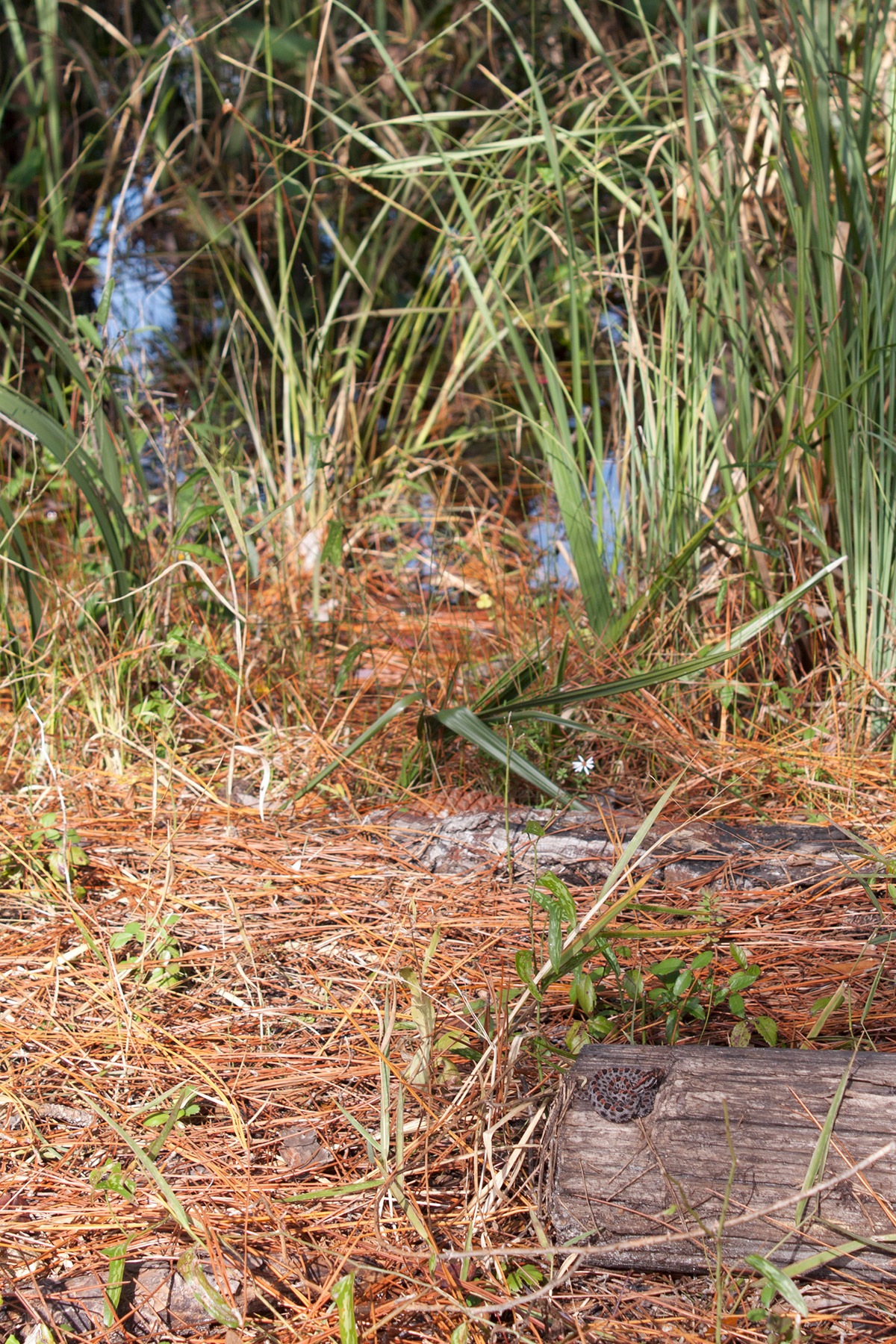
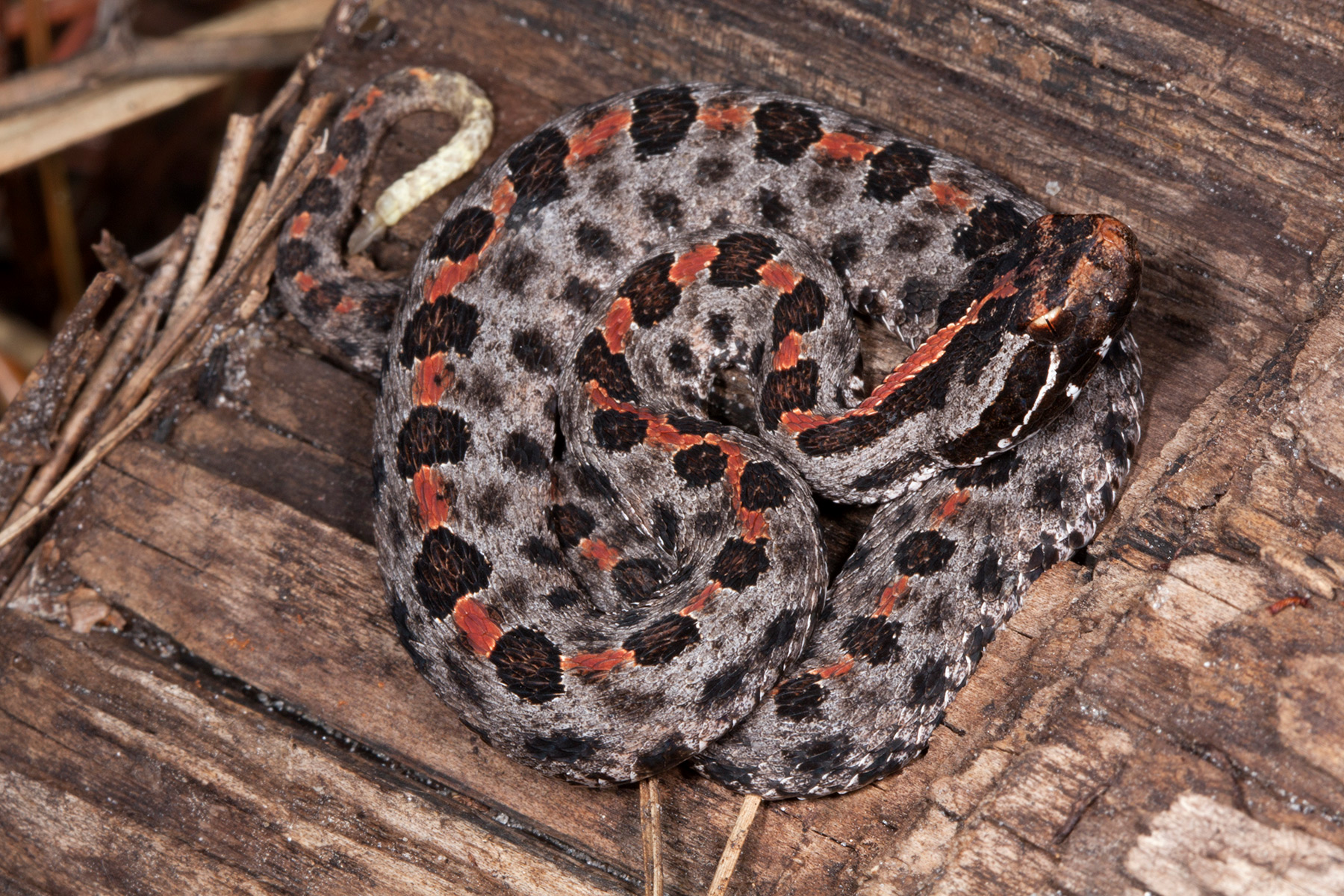
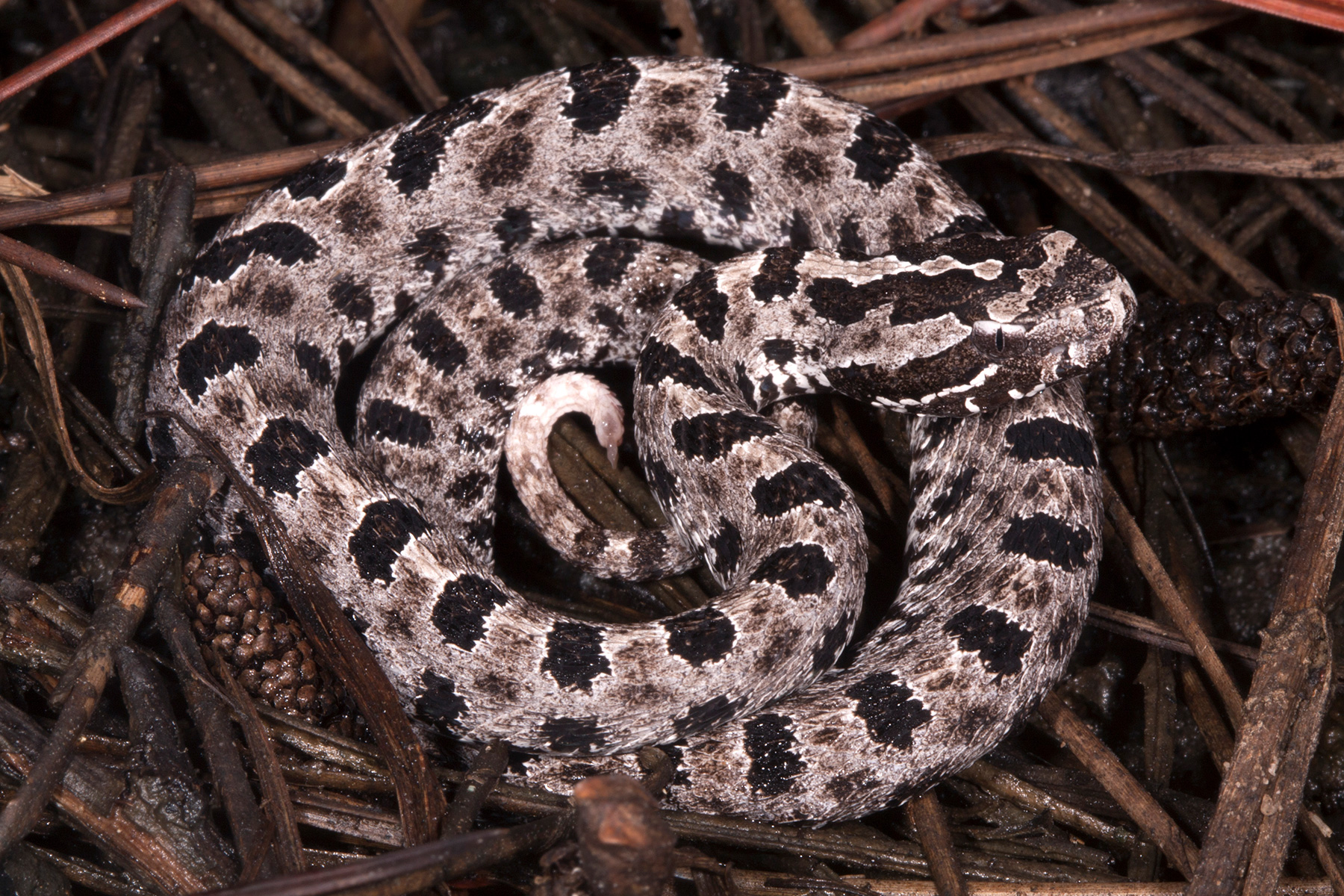
Most adult Dusky Pygmy Rattlesnakes are about 12-24 inches (30-61 cm) in total length. This is a very small snake, but it is thick for its size. The body color varies from light to dark gray, and a lengthwise row of black or charcoal blotches disrupts a reddish-brown stripe running down the middle of the back. The tail is slender and ends in a tiny rattle. The head is distinct from the neck and has a black diagonal line just behind the eye. The coloration of juveniles is the same as described for adults, except the tail tip of juveniles is bright sulfur-yellow in color.
Range in Florida
Dusky Pygmy Rattlesnakes are found throughout Florida and in every county. They are not known to occur in the Florida Keys, but they have been found on some barrier islands (e.g., St. Vincent in Franklin county).
Assessment of risk to people and pets
VENOMOUS The Pygmy Rattlesnake bites are painful but generally not considered life-threatening to people or pets. However, bites can be more serious to children and small pets. As with all venomous snakebites, the victim should seek immediate medical care from a physician or hospital experienced in treating snakebites. Pygmy Rattlesnakes are not aggressive and avoid direct contact with people and pets. Most bites occur when the snakes are intentionally molested or accidentally stepped on.
Comparison with other species
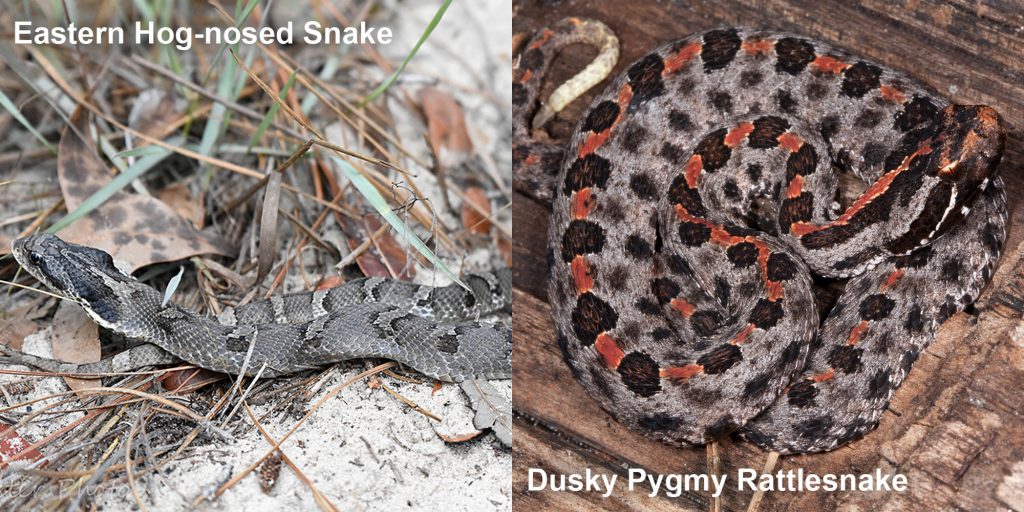
Non-venomous hognose snakes (species in the genus Heterodon) are often confused with the Dusky Pygmy Rattlesnakes because they have similar patterns and live in similar habitats. However, hognose snakes have both an upturned nose (rostral scale) and round pupils, and they lack both facial pits and rattles.
Eastern Hog-nosed Snake (Heterodon platirhinos) Non-venomous
Pygmy Rattlesnake. Photo courtesy of Todd Pierson.
Southern Hog-nosed Snake (Heterodon simus) Non-venomous
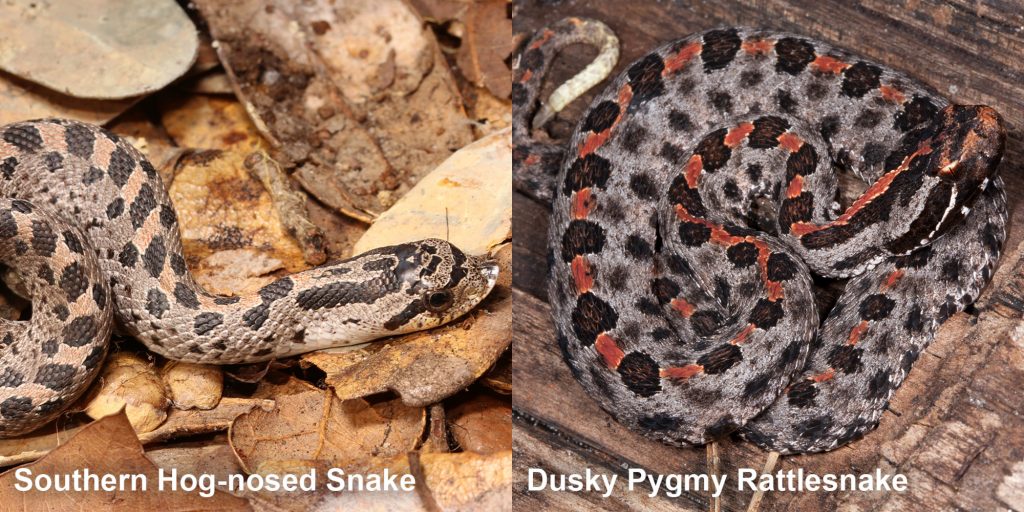
Pygmy Rattlesnake. Photo courtesy of Todd Pierson.
North American Racer (Coluber constrictor) Non-venomous Juvenile Black Racers are small and have a pattern of reddish-brown saddles down their backs on a gray background. Furthermore, they may strike and vibrate the tip of their tail to produce a buzzing sound in leaf litter. As such, these non-venomous snakes are commonly confused with pygmy rattlesnakes. However, juvenile black racers are pencil thin, have tiny heads with large eyes and round pupils, and lack rattles on their tails.
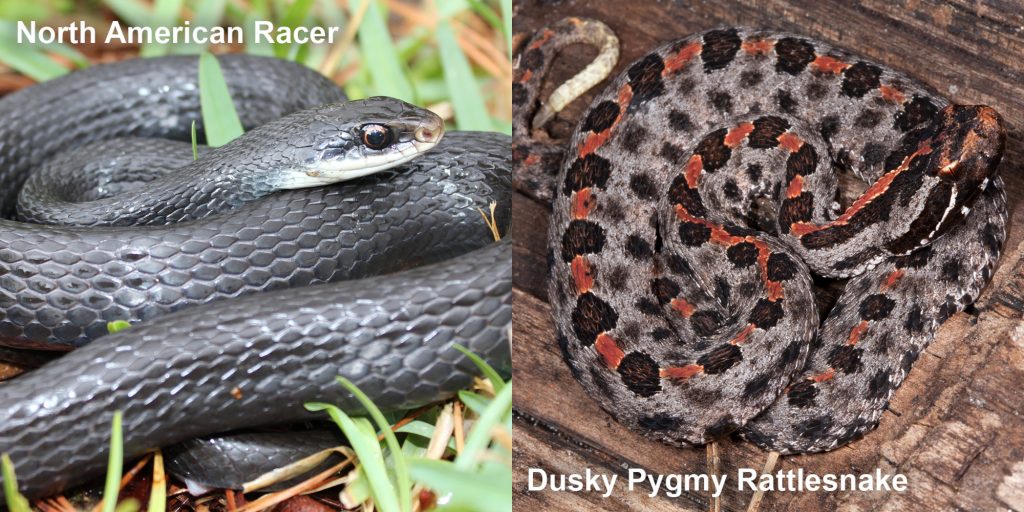
Pygmy Rattlesnake. Photo courtesy of Todd Pierson.
Share your observations
You can help scientists better understand the biology and distribution of this species by sharing your observations. Send photos or videos of interesting observations, along with associated information, by emailing the herpetology staff at the Florida Museum for documentation in the Museum’s Herpetology Master Database. You can also post your observations on iNaturalist.
Additional helpful information
Do you have snakes around your house? Learn how to safely co-exist with snakes.
Still have questions about snakes or identifications? Feel free to email the herpetology staff at the Florida Museum with your questions or feedback on this profile.
Banner photo courtesy of Todd Pierson. Please credit any photographers on the page and see our copyright policy.