Science Stories Archive
Archived Stories - Evolution and Extinction
Fossils Offer Clues to North Florida's Past
(11/2007) Last season, nearly 220 complete skeletons were excavated from Haile 7G – some encased in plaster jackets, and some wrapped in protective tissues – and transported to the Museum’s Vertebrate Paleontology division, where they will...
Herbarium Plays Vital Role to Researchers Worldwide & Specializes in Neotropical Orchids
(05/2007) The Herbarium at the Florida Museum of Natural History is run jointly by the Museum and the University of Florida Institute of Food and Agricultural Sciences. Including the associated fossil plant collection, it houses about 500,000 vascular plants, moss and lichen...
Museum Paleontologist Discovers Most Primitive Primate Skeleton
(04/2007) The roots of the primate family tree are now more clearly defined in the fossil record, and about 10 million years older than thought, according to Florida Museum of Natural History vertebrate paleontologist Jonathan Bloch and...
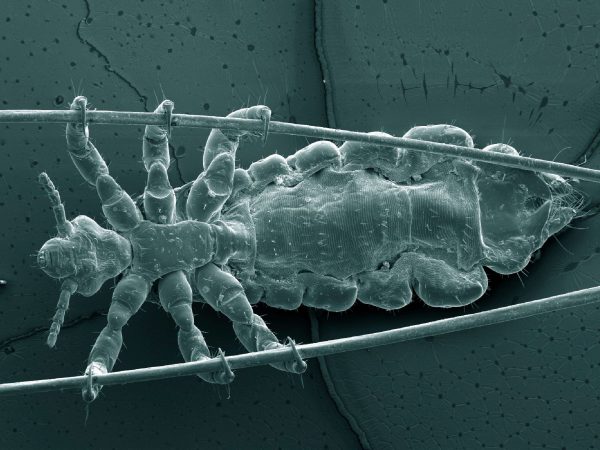
Human Pubic Lice Acquired from Gorillas Gives Evolutionary Clues
(03/2007) About 3.3 million years ago, lice found on gorillas began to infest humans, Reed said. That they took up residence in the pubic region may have coincided with humans’ loss of hair on the rest of their bodies...
Plants on the Move: Study Provides Evidence Many Plants Expanded Ranges Via Russia-Alaska Land Bridge
(03/2007) Florida Museum of Natural History Paleobotany Curator Steve Manchester has concluded a three-year National Science Foundation project comparing 50-million-year old fossil forests of Europe, Asia and North America, aimed at unraveling ancient patterns...
'Terror Bird' Arrived in North America Before Land Bridge
(01/2007) Evidence from a study led by the Florida Museum of Natural History confirms that the carnivorous, seven-foot-tall "terror bird" likely arrived in North America from South America several million years before a land bridge connected the two continents...
Lost and Found?
(05/2006) Every so often scientists discover a plant or animal that was thought to be extinct. A dramatic example is the Coelacanth (Latimeria chalumnae), a prehistoric-looking fish found off the coast of Madagascar in 1938. It had been presumed that this type of primitive...