History of the Environmental Archaeology Program
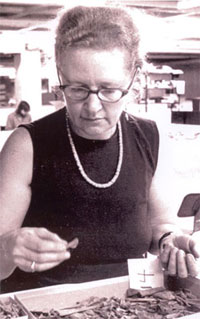
The Environmental Archaeology Program (EA Program) of the Florida Museum of Natural History was initiated in 1961 by Elizabeth S. Wing as an NSF-funded research project in zooarchaeology within the Florida Museum Department of Natural Sciences. The project, which focused on the identification of vertebrate animal remains from archaeological sites, continued with outside support until 1969. In that year state-funded lines for an assistant curator and a technician (collection manager) of Zooarchaeology were established within the Florida Museum. In 1990, the Zooarchaeology program was transferred to the Florida Museum Department of Anthropology. In 1997 the Zooarchaeology Program was renamed as the Environmental Archaeology Program to reflect its increasing focus on the broader aspects of this science. The Environmental Archaeology Program then joined the Museum’s newly created Department of Natural History which combined anthropology and the natural sciences and emphasized the important link between the disciplines.
The three components that are now the focus of the Environmental Archaeology Program–animal remains (zooarchaeology), plant remains (archaeobotany), and soils (archaeopedology, one part of geoarchaeology)–combine to provide evidence for past human uses of natural resources and the consequences of such use. This information allows us to better understand past ways of life as people adapted to their changing environments. Wing refined and encouraged the Environmental Archaeology Program until her retirement in 2001 when Kitty F. Emery took over as Assistant Curator. Wing continues her research as Curator Emeritus. Wing has recently been selected as a member of the National Academy of Science (2007).
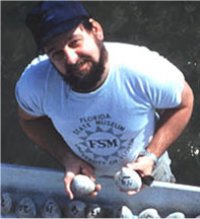
The history of this program has been one of steady expansion aimed to encompass a broader perspective on ancient environments rather than strictly the identification of animal remains from archaeological sites. At its inception, vertebrate remains were the focus of study. That focus expanded to include invertebrate-especially molluscan-remains. Former collections manager Irv Quitmyer (now retired) has been instrumental in developing techniques that integrate the invertebrate taxa of shell middens with the vertebrate component in the broader zooarchaeological analyses. His integrative approach encompasses the study of maritime people (pre-Columbian and Historic) of the southeastern U.S., Caribbean and Central America.
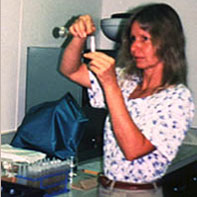
The important botanical component was added with the work and guidance of Lee Newsom, now of Pennsylvania State University. Donna Ruhl is carrying this work forward with research on and curation of the EA Program’s comparative seed collection and the waterlogged and terrestrial archaeobotanical remains. Ruhl’s archaeobotany research examines such topics as Florida’s prehistoric peoples’ plant husbandry practices and paleoclimatic impacts, and Colonial landscape changes and transculturation. In 1993, past collections manager, Sylvia Scudder (now retired), received her MS degree in Soil Science and initiated analyses of anthropogenic soils (archaeopedology). These studies aid in locating and interpreting intra-site cultural features, delineating site boundaries and settlement patterns, and reconstructing past landscapes. Scudder has recently retired but the EA Program continues with archaeopedological work through Emery’s research.
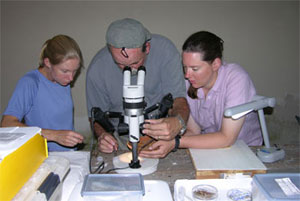
Emery’s focus on integrated research on animal, plant, and geologic remains in Central America ties these elements together to create a holistic approach to the description and understanding of ancient environments. Her research examines the impact of human activity on the ancient landscapes of Mesoamerica and the cultural and historical factors that influenced ancient resource-management decision-making among the complex social groups of the region.