Alumni and Associates
| Sarah Allen | Richard Barclay | Nareerat Boonchai | Judy Chen |
|
Yunfa Chen Zhiduan Chen |
Sarah Corbett | Felipe De La Parra | Min Deng |
| David L. Dilcher | Boglárka Erdei | Meng Han | Fabiany Herrera |
| Shusheng Hu | Carlos Jaramillo | David Jarzen | Hui Jia |
| Nathan Jud | Rebecca Koll | Elizabeth A. Kowalski | Margaret Landis |
|
Xiangchuan Li |
Xiaoyan Liu | Amy McClain | Paula Mejia-Velasquez |
| Roger Moore | Yuling Na | Elizabeth O’leary | Fani Plascencia |
| Mihai E. Popa | Bob Spielbauer | Greg Stull | Tao Su |
| Bainian Sun | Chunlin Sun | Ge Sun | Qi Wang |
| Xin Wang | Yongdong Wang | Yufei Wang | Michael C. Wiemann |
| Sanping Xie | Xiaoqing Zhang | Zhekun Zhou | Hai Zhu |
 Sarah Allen
Ph.D., 2017
Advisor: Dr. Steven R. Manchester
Department of Biology, University of Florida
Current address:
Assistant Professor, Biology
Penn State Altoona
Dr. Allen’s research is focused on Cenozoic fossil floras from western North America. Her broader research interests include: paleobotany, paleoclimatology, paleoecology, plant systematics, plant anatomy, and plant morphology. Dr. Allen teaches many of the botany courses at Penn State Altoona.
At UF, Dr. Allen studied a fossil flora from the Blue Rim escarpment of the Eocene Bridger Formation in southwestern Wyoming. This flora contains leaves, wood, and reproductive structures from multiple horizons. In contrast to the nearby Green River Formation, little paleobotanical work has been done in the Bridger Formation even though it is well known for its vertebrate fossils. The Blue Rim flora allows for research opportunities in systematics, paleoclimate, and paleoecology. In addition, temporal and geographic comparisons both within the stratigraphic section and throughout the Greater Green River Basin can be made.
Formerly, as an undergraduate at Hobart and William Smith Colleges, Dr. Allen completed a project on a Late Cretaceous macrofossil florule from the Hell Creek Formation in Montana. My work included both systematic and paleoclimate analyses. Dr. Allen presented this work in Cincinnati, OH at NAPC in 2009 and a manuscript, co-authored by my undergraduate advisor, Dr. Nan C. Arens, was published in 2014 (Geological Society of America Special Paper 503, p.173-207).
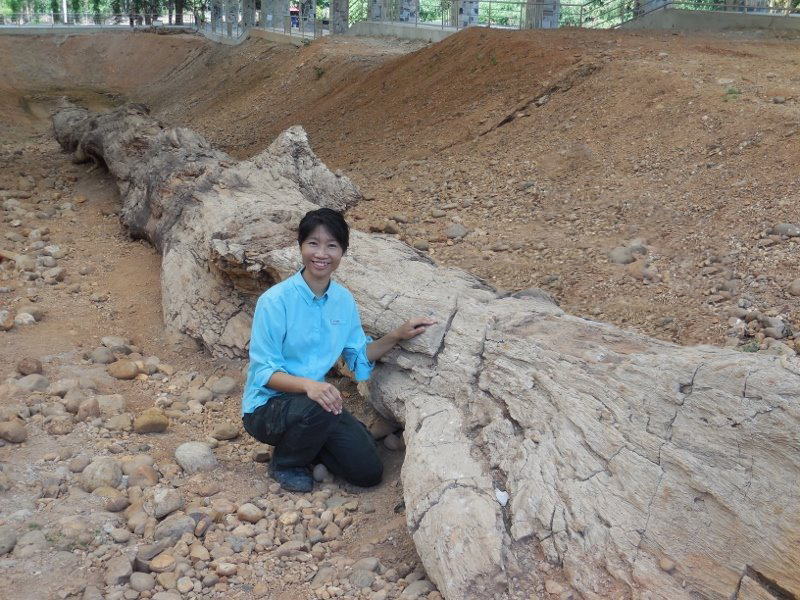 Nareerat Boonchai (Aom)
Ph. D., 2012, Jilin University
Research scholar at FLMNH (August 2009 – June 2010, June – November 2011, October 2016 – April 2017)
Advisors: Dr. Steven R. Manchester and Prof. Sun Ge
Aom is a paleobotanist from the Palaeontological Research and Education Centre, Mahasarakham University, Thailand. She has worked at the Museum of Petrified Wood and Mineral Resources, Nakhon Ratchasima Rajabhat University, during 2003 – 2015. Her work responsibilities include research, organizing educational programs, foreign affairs, and planning and caring for the exhibits. She conducted research on systematic affinities and paleoenvironment of Eocene petrified wood from Southwestern Wyoming, USA, under the Ph.D. program (2008–2012) supported by the China Scholarship Council (CSC).
Her research focuses on Cenozoic fossil woods (comparative anatomy, systematic, ecological aspects of fossil dicot woods) and their paleoenvironmental implication. Additionally, she is interested in museum exhibition and developing paleontological parks and museums. Her recent projects are petrified wood exhibits and a conservation project on some of the world’s longest fossilized trees (range from 22-72m long) as well as helping local communities and related organizations in Thailand establish geoparks for becoming a member of UNESCO Global Geoparks Network.
She is building a multidisciplinary team with national and international colleagues for scientific research collaboration at the Petrified Forest Park in Tak Province, northwestern Thailand, to share and develop knowledge on petrified trees conservation practices. This conservation effort aims to conserve in situ outdoor fossil trees properly and preserve the integrity of the fossil trees for future generations to learn and enjoy this significant natural heritage. For more information about this project, please visit http://www.savingfossiltreesthailand.org
 Judy Chen, Ph. D., 2009
Advisor: Dr. Steven Manchester
Email: ijuc@hotmail.com
Research: Phylogeny of the grape family (Vitaceae) based on morphology. For my dissertation I investigated features of flower, fruit, stem, pollen, seeds, and development among modern and fossil species of Vitaceae to gain an improved understanding of phylogeny and improved classification of this family which is now widely distributed in both the Northern and Southern Hemispheres.
In addition, my work in paleobotany has included a review of the fossil seed record of water lilies (Nymphaeceae) with emphasis on a new species we recovered from the Eocene of Shandong Province, Northeastern China (Chen et al, 2004), and I have made a palynological investigations of the Middle Eocene Huadian flora of Jilin Province, Northeastern China using micromanipulation techniques to study isolated fossil pollen grains by both Scanning Electron and Light microscopy.
Iju Chen and Steven R. Manchester. 2011. Seed morphology of Vitaceae. International Journal of Plant Sciences. 172 (1): 1-35.
Iju Chen and Steven R. Manchester. 2007. Seed morphology of modern and fossilAmpelocissus (Vitaceae) and implications for phytogeography. American Journal of Botany. 94: 1534-1553.
Steven R. Manchester and Iju Chen. 2006. Tetracentron Fruits from the Miocene of Western North America. International Journal of Plant Sciences, 167(3): 601-605.
Iju Chen, Steven R. Manchester, and Zhiduan Chen. 2004. Anatomically preserved seeds of Nuphar (Nymphaeaceae) from the Early Eocene of Wutu, Shandong Province, China. American Journal of Botany 91: 1265-1272.
Sarah Corbett
MS, 2004, Department of Botany.
Advisor: Dr. Steven Manchester
Corbett, Sarah Lynn, 2004. The Middle Miocene Alum Bluff flora, Liberty County, Florida. MS Thesis, University of Florida, Gainesville, Florida, 96pp.
Abstract
The Miocene flora of Alum Bluff, Liberty County, Florida, is significant because of the relative rarity of Tertiary, and especially Miocene, fossil plant localities in eastern North America. After conducting a paleofloristic study including leaves, seeds, fruits, and pollen at Alum Bluff, implications for understanding Miocene climate, biogeography, and paleoecology of the region were inferred. The first study of the flora of the Alum Bluff site was conducted on leaf impressions by E.W. Berry in the early twentieth century. Berry studied only leaf macrofossils and identified 12 leaf species. Recent collections and further examination of specimens reveals 22 identified taxa, seven morphotypes of uncertain taxonomic affinity, and 21 examples of unknown taxonomic affinity are also present in the flora. Berry described the flora as being tropical with some temperate elements found in the Florida panhandle today; however, recent finds such as Paliurus, which is extinct in North America but present in Eurasia today, suggest different floristic affinities and indicate that the flora was warm-temperate. The composition of the flora was compared with modern floras and other Miocene floras to determine the environmental conditions present at Alum Bluff in the Miocene. It was found that the Alum Bluff flora an elm-hickory-cabbage palm forest (similar to that of North central Florida today) occurring along a river or near a river delta. Biogeographical implications of the Florida panhandle region during the Miocene were inferred based on the floral composition of Alum Bluff. The use of fruit, seeds, pollen, and leaves increased the known diversity of the Alum Bluff flora, making it a paleobotanically important case.
 Felipe De La Parra
Master of Science in Geology, 2008
Advisor: Dr. David Dilcher
My interests are in the fields of Paleobiology and Paleoecology, with emphasis in Paleobotany. I am interested in biotic diversity, its causes and how it relates to ecological stability. I am also interested in how vegetation communities have responded to environmental crises in the present and geological past. I would like to approach these questions using paleobiological information by applying mathematical and statistical methods and by constructing theoretical models to understand the dynamics of the vegetal communities in the geological past. I think this information can help us to understand modern communities and their response to the present environmental pressures.
I’m planning to work in several questions:
- Taxonomic rates in plants and its measurement it in the fossil record.
- The effect of sampling and incompleteness of the fossil record in the measure of taxonomic rates.
- Construction and use of confidence intervals on discrete sampling schemes.
- Quantitative analysis of palynological information.
- Use of geometric morphometrics in palynomorphs.
- Mass extinction events and their evolutionary consequences.
- The ecological role of rare species in vegetation communities.
- Development and construction of strong biostratigraphic frameworks.
- Measurement of diversity in the fossil record.
- Testing hypothesis about plant diversification patterns in the tropics.
- Evaluate the response of the vegetation to climate changes.
- Modeling and selectivity of extinction and origination episodes.
- Time series analysis and cyclostratigraphy in continental sediments.
Current address:
Lider Grupo Bioestratigrafia
Instituto Colombiano del Petroleo
Km 7 via Piedecuesta
Edificio 10 piso 3, Colombia
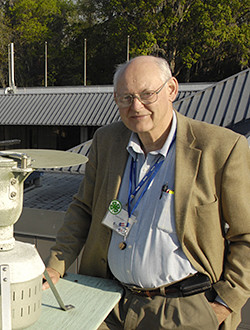 David L. Dilcher, Ph.D., NAS
Graduate Research Professor
[Retired]
Address: 2260 E. Cape Cod Drive
Bloomington, IN 47401, U.S.A.
Email: dilcher@indiana.edu
Angiosperm evolution; the origin of flowers to the reproductive biology of the first flowering plants. The evolution of diversity in early angiosperms, the recognition of early phylogenic lines of relationship between major taxa, trends in evolution of the group. Tertiary age radiations of angiosperms and their phytogeography. Evolutionary Biology. Plant/animal coevolution. Biostratigraphy, Biodiversity, Global Vegetational Change.
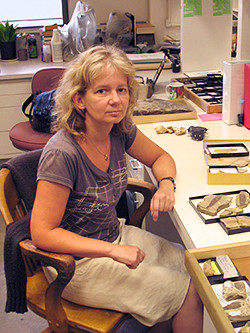 Boglárka Erdei, Ph.D.
Hungarian Museum of Natural History
Budapest, Hungary
Email: erdei@bot.nhmus.hu
Dr. Boglárka Erdei, Hungarian Museum of Natural History, Budapest. Fulbright Fellowship at FLMNH in 2010, and return visitor 2013, concentrating on comparative investigations of Cenozoic cycads of the Northern Hemisphere and those living today. In addition to studying the nice fossil collection of the FLMNH one of the main focuses of my visit (HAESF Fellowship, 2013-2014) to investigate both macro- and micromorphological, traits of modern cycads that may be useful in tracing and identifying fossil cycad remains. The Cenozoic history of cycads seems to offer findings that probably means a challenge for traditional ideas of the origin of modern genera. During the fellowship as a basis for the investigation of fossils, the excellent living cycad collection of the Montgomery Botanical Center in Miami helps my morphological studies on the leaves, cones, seeds and pollen of cycads.
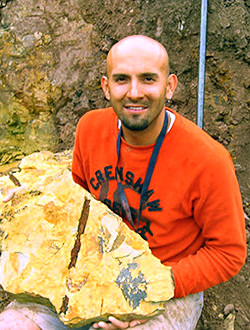 Fabiany Alberto Herrera Tolosa
Ph.D., 2014
University of Florida
Carlos Jaramillo’s Research Group
Smithsonian Tropical Research Institute Panama
Email: fherrera@flmnh.ufl.edu
Birth place: Bucaramanga, Colombia
My research focuses on the evolutionary origin of the South American rainforests by looking at plant macrofossils. I am interested to know when and how the tropical rainforests appeared in the Neotropics, what mechanisms have produced the high species diversity and the characteristic family composition. I want to reconstruct the paleoclimatic, paleoecological and paleobiogeographical conditions under which the ancient Neotropical rainforest flourished, particularly during the Late Cretaceous, Paleogene and Middle Miocene. I am also interested on the systematic and taxonomy of Neotropical fossil plants.
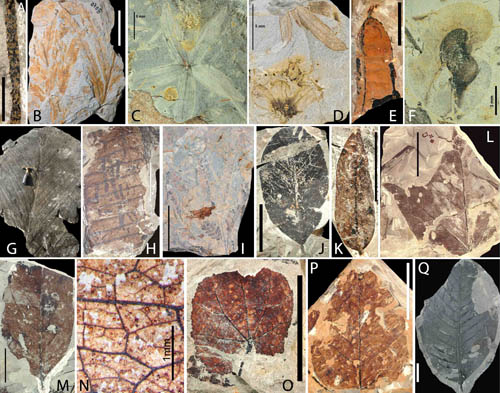
Meng Han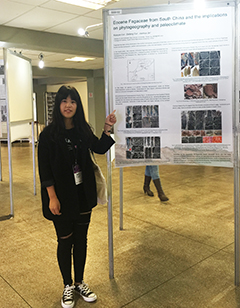
Ph.D. Student; Visiting Scholar (8/2016–8/2017)
Sun Yat-sen University; Florida Museum of Natural History
Advisors: Dr. Steven R. Manchester and Dr. Jianhua Jin
Email: hmeng1207@163.com
My research focuses on fossil leaves and fruits from the Cenozoic of East Asia. Previously, I studied the fossil specimens of Paliurus (Rhamnaceae) in detail, and involved in parts of the work about Machilus (Lauraceae), Cyclosorus (Thelypteridaceae) and participated in a research related to paleo-CO2. My current interests center on the family of Burseraceae from the Oligocene and Miocene of Guangxi Province, South China. I took CT scan experiment for Burseraceae fossil fruits and compared them with the modern samples as well as other fossil records reported before to understand the linkages between them. I hope to gain a better understanding of the phylogeny and biogeographic history of this family. Next, I will also spend time on the fruits of Menispermaceae. The related fossils are also collected from Guangxi Province, and they are mummified, which can uniquely provide us a far more detailed identification feature of the plants. I am also interested in the fossil floras from North America. Then I can compare them with the fossils from East Asia to understand the implications of these macrofossils on their paleogeographic history, paleoenvironment and paleoclimate.
 Shusheng Hu
PH.D., 2006
Dissertation (abstract):
PALYNOMORPHS AND SELECTED MESOFOSSILS FROM THE CRETACEOUS DAKOTA FORMATION, MINNESOTA, USA
The middle cenomanian palynomorphs and selected mesofossils from the Dakota Formation of south central Minnesota were investigated. A total of 218 of palynomorphs were recovered. Terrestrial palynomorphs include 41 types of angiosperm pollen in which six types are described as new species, 42 types of gymnosperm pollen, and 78 types of spores of fern and fern allies. Spores of fern and fern allies are most diverse among the terrestrial palynomorphs. Other palynomorphs include two types of megaspores, ten types of algal spores and colonies, seven types of fungal spores and fruiting body, 18 types of dinoflagellate cysts, and 20 types of acritachs. Based upon the occurrence of Artiopollis indivisus, Balmeisporites glenelgensis, Cicatricosisporites crassiterminatus, Dictyophyllidites impensus, and Nyssapollenites sp., the age of the Cretaceous sediments exposed in south central Minnesota is probably middle Cenomanian. Pollen analysis indicates that wind-pollinated angiosperms probably were not dominant around coastal lakes, swamps, and the inland meandering river areas during middle Cenomanian. There are distinct angiosperm species gradients from coastal areas to inland meandering river areas. Also the coastal lake areas appear to have higher angiosperm diversity than that in the inland meandering river areas. The characteristic vegetational elements of the coastal swamps during middle Cenomanian were diverse angiosperms, dominant ferns and fern allies, and a relative low abundance of gymnosperms. The Trochodendrales and Buxales of the eudicots, which were not recovered from leaf fossil records, probably were present during middle Cenomanian based upon the angiosperm pollen records. Two new marattioid ferns, Goolangia minnesotensis Hu, Dilcher, H. Schneid. et Jarzen gen. et sp. nov. and Mesozoisynangia trilobus Hu, Dilcher, H. Schneid. et Jarzen gen. et sp. nov., are described based on charcoalified isolated sporangia and synangia. These fossils provide evidence for the existence of marattioid ferns during the mid-Cretaceous in North America and give the first unequivocal documentation of the Marattiaceae in post Jurassic times. Spores of Goolangia minnesotensis are comparable with the dispersed spore Dictyophyllidites impensus, which was distributed from Arizona to Alberta in west central North America during middle Cenomanian.
Carlos Jaramillo
Ph. D., 1999
Geology and Botany
Smithsonian Tropical Research Institute
 David M. Jarzen, Ph.D.
Cleveland Museum of Natural History
1 Wade Oval Drive, University Circle
Cleveland, OH 44106
Email: djarzen@cmnh.org
DAVID M. JARZEN is a Research Associate at the Cleveland Museum of Natural History, in Paleobotany and Paleoecology (2011 to current). Born in Cleveland, Ohio, he grew up in northern Ohio. Influenced by his uncle Edward MacArthur and High School biology teacher, William Barker, he gained an early interest in biology and natural history of the cool-temperate environment. He earned his B.S. degree in 1967 from Kent State University majoring in Biological Sciences, and two years later, working under the direction of Alan Graham, received his M.A. degree in Botany from the same institution. In 1973 he was awarded the Ph.D. in Geology from the University of Toronto through the support and tutelage of Geoffrey Norris.
Research interests in the nature of extant and fossil plant life, have provided extensive field work in all regions of Canada and the United States, as well as Europe, Africa, Panama, Latin America, New Zealand, several islands of the South Pacific, and several localities within Australia. His work incorporates a global view aiming to understand the evolution of plant life during Earth’s history, with an emphasis on fossil floras recorded from the Paleogene, Neogene and Cretaceous of the world. His publications of scientific papers number about 300, including both refereed papers, popular articles, professional reports, and book chapters. His work has been incorporated in several radio and television productions including CBC’s “Nature of Things” with David Suzuki, the PBS NOVA Series, the NHK (Japan) Series “The Miracle Planet”, the National Film Board of Canada, the Discovery Channel and other North American, Canadian and Australian cable networks.
David has served as President of the Canadian Association of Palynologists (1979-1980), Secretary-Treasurer to the International Federation of Palynological Societies (1984-1988); Vice President of the IFPS (1992-1996), and from 1988-1996 he represented the Canadian Association of Palynologists as Councillor to the IFPS. He has served as President-Elect (2000-2001) to the Palynological Society (TPS-AASP), and President of the Northern Ohio Geological Society from 2013 to 2014. He was an invited Visiting Scholar to the Department of Geology & Mineralogy (1987-1988) of The University of Queensland, Brisbane, Australia, and in 1991 and 1994 to the Botany Department of the same university. In 2005 he was invited to Australia once again, this time to work with colleagues at the Queensland Museum in Brisbane, Queensland. A short-term appointment as a member of the Graduate Faculty, Anthropology Department at Kent State University in 2017, tapped David’s research interests into the early history of humans.
David has been a member of 34 learned scientific societies, including the prestigious Explorers Club, as well as the honorary scientific society, Sigma Xi. He has served the scientific community and general public through slide lectures, videos, CD ROMs, newspaper and other popular publications. The Palynology and Paleobotany databases at the Canadian Museum of Nature (Ottawa, Canada) were designed and developed by David in co-operation with the Canadian Heritage Information Network (CHIN) and have been used as the hallmark for several collection databases at the Canadian Museum of Nature and elsewhere in Canada and the USA.
At the Florida Museum of Natural History (University of Florida) he completed the restructuring of the 300,000 specimens of the Paleobotany/Palynology Collections, including a 7,700-specimen collection of extant reference pollen, spore and phytolith slides, and has raised the museum standards for research and display to a par with other quality museums. While at the Marie Selby Botanical Gardens in Sarasota, Florida (2002-2003), he enriched the cultural level of educational programs and introduced the gardens and the community to internationally respected speakers through his Speaker’s Bureau and lecture series. In 2003, David was elected as Fellow National to the Explorers Club, and in 2005 he was elected Fellow of the Ohio Academy of Science. David is listed in American Men and Women of Science, Who’s Who in Ontario (Canada), Who’s Who in Canadian Science, Who’s Who in Science and Engineering, as well as Who’s Who in America and Who’s Who in the World. In 2019 David was named as the recipient of the Kent State University Alumni Associations Professional Achievement Award. Now in semi-retirement, David with his wife Susan, continue to teach natural history at Kent State University, Department of Anthropology and is a class instructor at the Baldwin Wallace University, Institute for Learning in Retirement.
Currently David is a Research Associate at the Cleveland Museum of Natural History (CMNH), where he continues research on Paleogene palynofloras from tropical areas. While at the CMNH, he was responsible for the donation of the Daniel Livingstone African Pollen collection to the CMNH, greatly adding to the palynological holdings of the museum. The Livingstone collection includes microslides and vials of modern and Pleistocene pollen and diatoms, with a focus on African localities.
David’s extra-curricular activities include music that enhances the soul, nature photography, watching trains, satirical writing, botanical illustration, and all aspects of natural history. With his best friend, field partner and wife, Susan, he explores the natural history of the world at every opportunity.
Research Interests and Curriculum Vitae
Nathan A Jud, Ph. D.
Postdoctoral Associate, PCP-PIRE
Florida Museum of Natural History
University of Florida
Gainesville, FL 32611-7800, USA
Email: najud@flmnh.ufl.edu; naj35@cornell.edu
Interests: Fossil woods and fruits from the Neotropics; early angiosperm evolution.
 Rebecca Koll
Ph.D., 2018
Department of Biology
Florida Museum of Natural History
Advisor: Dr. Steve Manchester
 Elizabeth A. Kowalski, Ph.D.
Florida Museum of Natural History
University of Florida
Gainesville, FL 32611-7800, USA
Tel: 352 273-1933
Fax: 352 846-0287
Email: ekowalsk@umich.edu
or kowalski@flmnh.ufl.edu
MAJOR RESEARCH INTERESTS
- Cenozoic paleobotany, paleoecology, paleoclimatology, paleobiogeography.
- The relationship between plants and climate, and how that can be used to determine terrestrial paleoclimate.
- The relationship between climate change and uplift, and how plants can be used to document paleoelevation change.
- Distribution of variability in plant leaf morphology due to climate and phylogeny.
Long Li
Ph.D. Student; Visiting Scholar (8/2016–8/2017)
Sun Yat-sen University; Florida Museum of Natural History
Advisors: Dr. Steven R. Manchester and Dr. Jianhua Jin
Email:617100536@qq.com
I mainly study Cenozoic fossil woods including comparative anatomy, systematic, ecological and their paleoenvironmental implication. Before i come to Florida Museum of Natural History , I studied petrified woods from south China and have completed some researches on Gymnosperm fossil woods of Podocarpaceae, involved in collection and identification of mummified fruits, leaves, pollen and woods from Guangxi, south China.
My current work focuses on Cenozoic petrified woods from Northwest US (Wyoming, Montana and North Dakota) and have identified some taxa of Cupressaceae, Euphorbiaceae, and Violaceae. These taxa are similar to fossil woods from south China. After finishing classification of petrified woods from Northwest US, relationship of Palaeogene flora between North America and East Asia will be discussed according to fossil woods together with other fossil remains, and study the origin, migration, evolution and phytogeography of the recognized species. I am also interested in reconstructing paleoclimate by using growth ring and coexistence approach.
 Xiaoyan Liu
Ph.D., 2015, Sun-Yat Sen University
Advisors: Dr. Steve Manchester and Dr. Jianhua Jin
Visiting Researcher at Florida Museum of Natural History (10/2013–10/2014)
I am interested in studying fossil leaves, flowers and fruits of the family Betulaceae and Fagaceae and comparing them with the modern plants to understand the linkage between the fossils and the modern ones. And I also take an interest in understanding the implications of these macrofossils on their paleogeographic history, paleoenvironment and paleoclimate. My research herein mainly focuses on Alnus leaves and reproductive structures (infructescences and staminate inflorescences) from the Eocene of Oregon, western North America. I am very glad to have isolated some in situ pollen grains from a well-preserved catkin under the help of Dr. Steven R. Manchester. Next, I will conduct my research on investigating features of leaves, infructescences, staminate inflorescences and in situ pollen grains under both Light and Scanning Electron Microscopes and comparing them with those of modern species in order to find some implications on the development of this genus.
Amy McClain
MS, 2000
Department of Botany
Paula Mejia-Velasquez
Ph.D., 2015, University of Florida
Advisor: Dr. Steve Manchester
I am interested in determining the floristic patterns of angiosperms and other groups of plants on tropical latitudes during the early radiation of angiosperms using palynology (Lower and Mid Cretaceous), and to infer how those patterns may be related to climate.
For my research I will analyze palynological samples from several low latitude sites in Colombia, Peru, Brazil, Surinam, Cameroon, Nigeria and Egypt. I plan to reconstruct the floristic composition of each site and use that floristic composition as a proxy to infer the dominant climatic conditions of each site. Then I plan to use the resulting climatic information to determine the main climatic patterns on the tropics during the unparallel diversification of angiosperms. The results of my research will provide information of the environmental and floristic conditions of tropical latitudes during the fast diversification of flowering plants. This will provide tools to better understand angiosperm evolution: how and under which conditions early angiosperms radiated and diversified in the tropics.
 Yuling Na
Ph.D., 2015, Jilin University
Advisors: Dr. Steve Manchester and Dr. Chunlin Sun
Visiting Researcher at Florida Museum of Natural History (10/2013–10/2014)
My research mainly focuses on Mesozoic paleobotany and paleopalynology in North China. In this area, there are many localities that yield abundant and well-preserved fossil plants, allowing me to reconstruct the paleoclimate and paleoecology for these areas based on the systematics and morphology of the megafossils. I am just starting my work on fossil spores and pollen collected from the Jurassic and Cretaceous in North China. I am also greatly interested in the arthropod-insect coevolution in geological time and plan to do research on the fossil materials collected from the Middle Jurassic in Daohugou area, Inner Mongolia, to find the evidence of interaction between the plants and the insects.
 Elizabeth O’leary
Master of Science, 2007
Advisor: Dr. Steve Manchester
Thesis: O’Leary, E. L. 2007. Taxonomic distribution of modern fin-winged fruits and the fossil history of the Combretaceae in the United States based on fin-winged Fruits. Master of Science Thesis, University of Florida, Gainesville.
Manchester, S.R. and E. O’Leary. 2010. Distribution and identification of fin-winged fruits. Botanical Review 76:1-82.
Mihai E. Popa, Ph. D.
Faculty of Geology and Geophysics
Laboratory of Palaeontology
University of Bucharest
1, N. Balcescu Ave., 010041
Bucharest, Romania
Website: http://mepopa.com/index.htm
Bob Spielbauer, M.S.
Department of Biology
Florida Museum of Natural History
Advisor: Dr. Steven Manchester
Gregory W. Stull
Ph.D.
Department of Biology
Florida Museum of Natural History
Advisors: Dr. Steven R. Manchester and Dr. Pamela S. Soltis
Email: gwstull@ufl.edu or gwstull@gmail.com
I study the evolutionary history of angiosperms, using data from both fossil and modern plants (morphology, DNA sequences) to understand phylogeny, character evolution, and temporal and geographic patterns of diversification.
For my dissertation, I am studying the fossil record, phylogeny, and biogeographic history of the pantropical angiosperm family Icacinaceae. The Icacinaceae are unique among tropical groups in that they have an extensive fossil record, particularly in the Paleogene, consisting primarily of distinctive endocarp remains. For the paleobotanical component of my dissertation (supervised by Dr. Manchester), I am surveying new and previously described fossils of Icacinaceae from North and South America, Europe, Asia, and Africa, with close reference to modern endocarp morphology across the family. This will allow me to document the ages and former distributions of both extinct and extant lineages of Icacinaceae, which appear to have been important constituents of thermophilic Paleogene floras, particularly in Europe and North America.
My phylogenetic work on Icacinaceae (supervised by Dr. P. Soltis) will include a broader investigation of basal lamiid phylogeny (which will be necessary to determine the precise placement and circumscription of the family), as well as a relatively comprehensive examination of genus- and species-level relationships within the family. For both phylogenetic parts, I am sequencing complete plastid genomes using next-generation sequencing technologies. Ultimately, I will synthesize the phylogenetic and paleobotanical components for dating, biogeographic, and diversification analyses, resulting in a comprehensive picture of the evolutionary history of Icacinaceae.
Xin Wang
Ph. D., 2004
Department of Geology
University of Florida
Xiaoqing Zhang
Ph.D. student, Visiting Scholar (10/2018-10/2019)
Nanjing Institute of Geology and Palaeontology, Chinese Academy of Sciences
University of Science and Technology of China
Florida Museum of Natural History
Advisors: Dr. Steve Manchester and Dr. Yongdong Wang
Email: xqzhang927@126.com; xqzhang927@gmail.com
I have a strong interest in the Mesozoic plants and the palaeoenvironment reconstruction. My research mainly focuses on early Mesozoic floras, especially those across the Triassic-Jurassic boundary. Studies on the relationship between these macrofossils and their paleogeographic history, paleoenvironment and paleoclimate are very appealing to me.
I am also interested in the Mesozoic fossil materials from North America. As a visiting scholar at the Florida Museum of Natural History, I am currently working on two projects. One project is to try to better understand the morphology and possible affinities of Tricalycites, a genus of Cretaceous winged fruits. Under the guidance of Dr. Steven R. Manchester, I have examined the fossil specimens using epifluorescence microscopy and micro-CT scanning. These results help us better characterize the morphology and its possible affinities, and provide us a better understanding of Late Cretaceous coastal vegetation, and the diversification of angiosperms.
The other project that I’m currently working on is to use micro-CT scan data on the calcified reproductive organs (probably belong to the Gnetales) from the Jurassic Morrison Formation to reveal their internal structures. The results provide some important information for us to better understand the affinities of these fossils.
I received the best student poster award for my presentation “Tricalycites and a new genus of winged fruit from the Cretaceous of North America” (Click to download) at the 1st Asian Palaeontological Congress held in Beijing, China, November 17- 20, 2019.
Hai Zhu
Postdoctoral Associate, visiting researcher (Oct. 2018 to April 2020)
Advisor: Dr. Steven R. Manchester
Email: zhuh_sy@outlook.com
My research interests are studying Cenozoic paleobotany and paleoclimate. Before I came here, I received my Ph.D. degree in July 2016 from Kunming Institute of Botany, Chinese Academy of Sciences under the guidance of Prof. Zhekun Zhou, and my doctoral thesis is focusing on the plant diversity, paleoenvironment and paleoclimate of a late Pliocene carpoflora of Saying Formation in Northwestern Yunnan, China, and I made detailed taxonomic and phytogeographic studies on the fruit/seed fossils of several taxa (Aralia, Zanthoxylum, and Eurya). Currently in FLMN I am still working on some coniferous fossils from that flora, meanwhile I am doing some researches on maple fruit and leaf fossils collected from western North America (e.g., Eocene John Day Formation and Miocene Succor Creek Formation) and Staphylea fruit fossils from late Oligocene Woodworth flora, Montana with the aid of micro-CT scanning method. I am keen on field work for fossil collections as well as modern plant investigations.